
Last updated August 26, 2026
Free on-site gate assessment - hinges, posts, and your LiftMaster or Nice gate operator checked before anything is quoted
The assessment is free and the quote is the invoice.
 Before
 After
After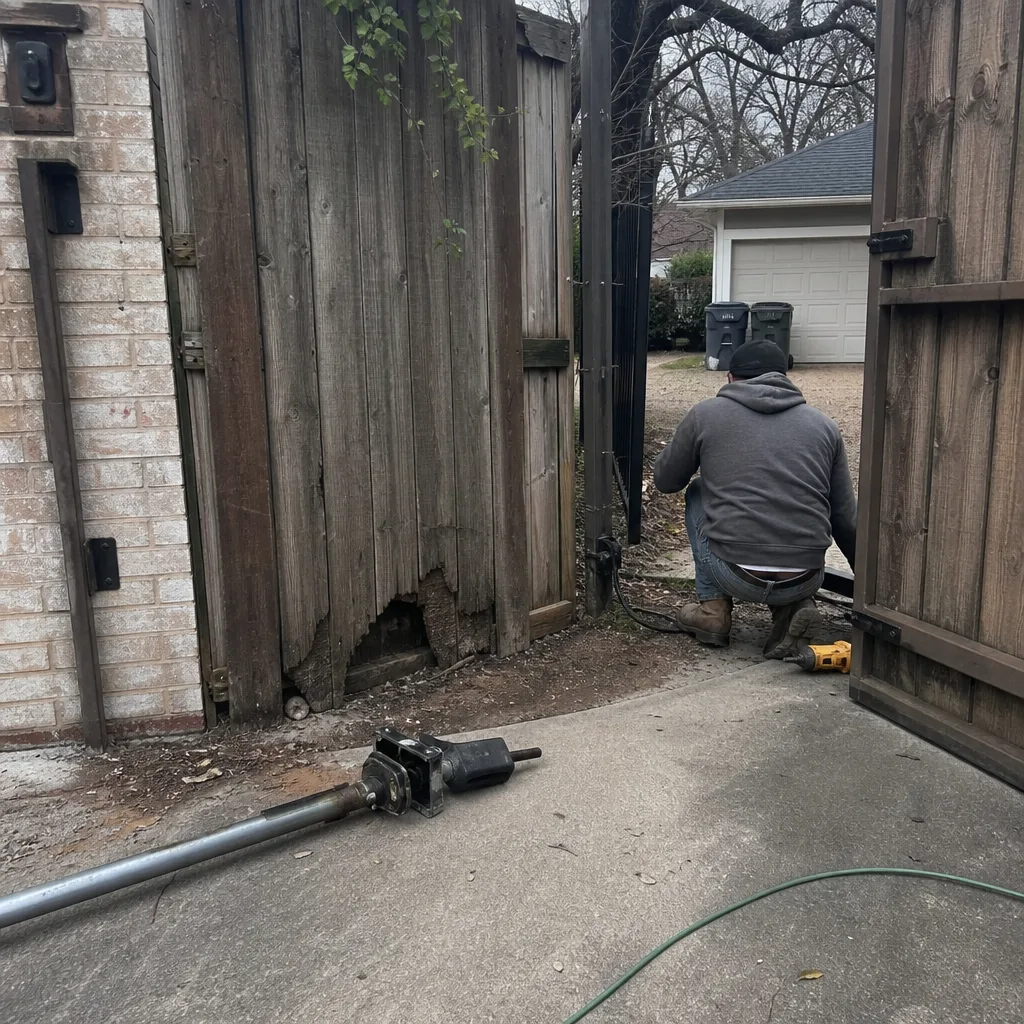 Before
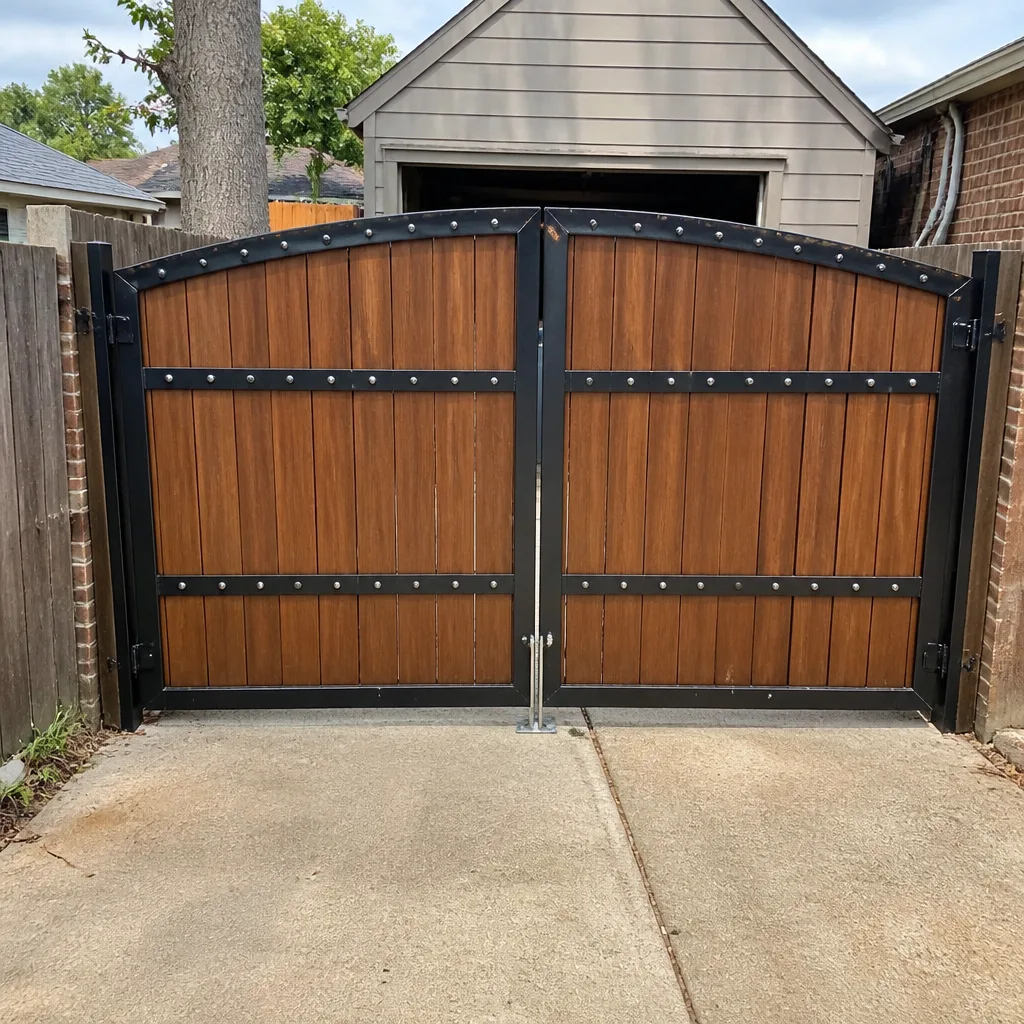 After
After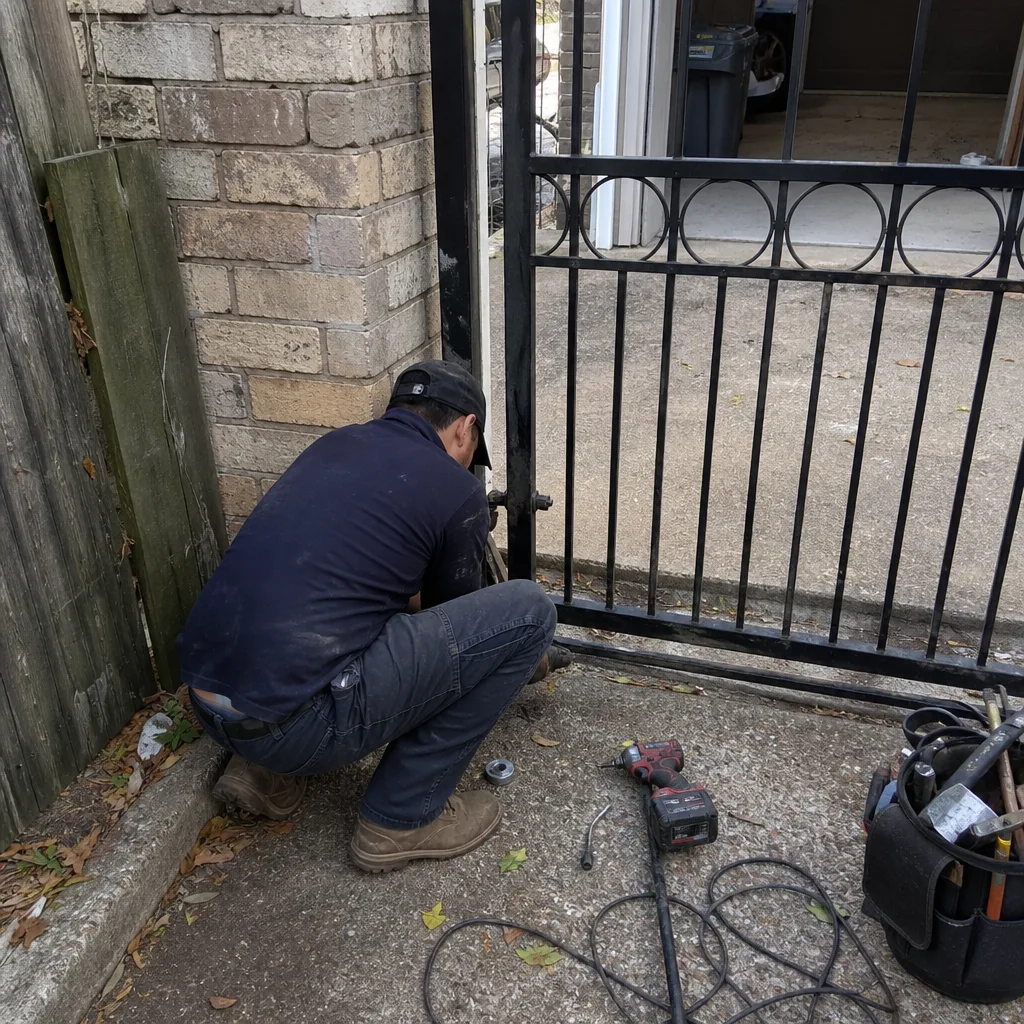 Before
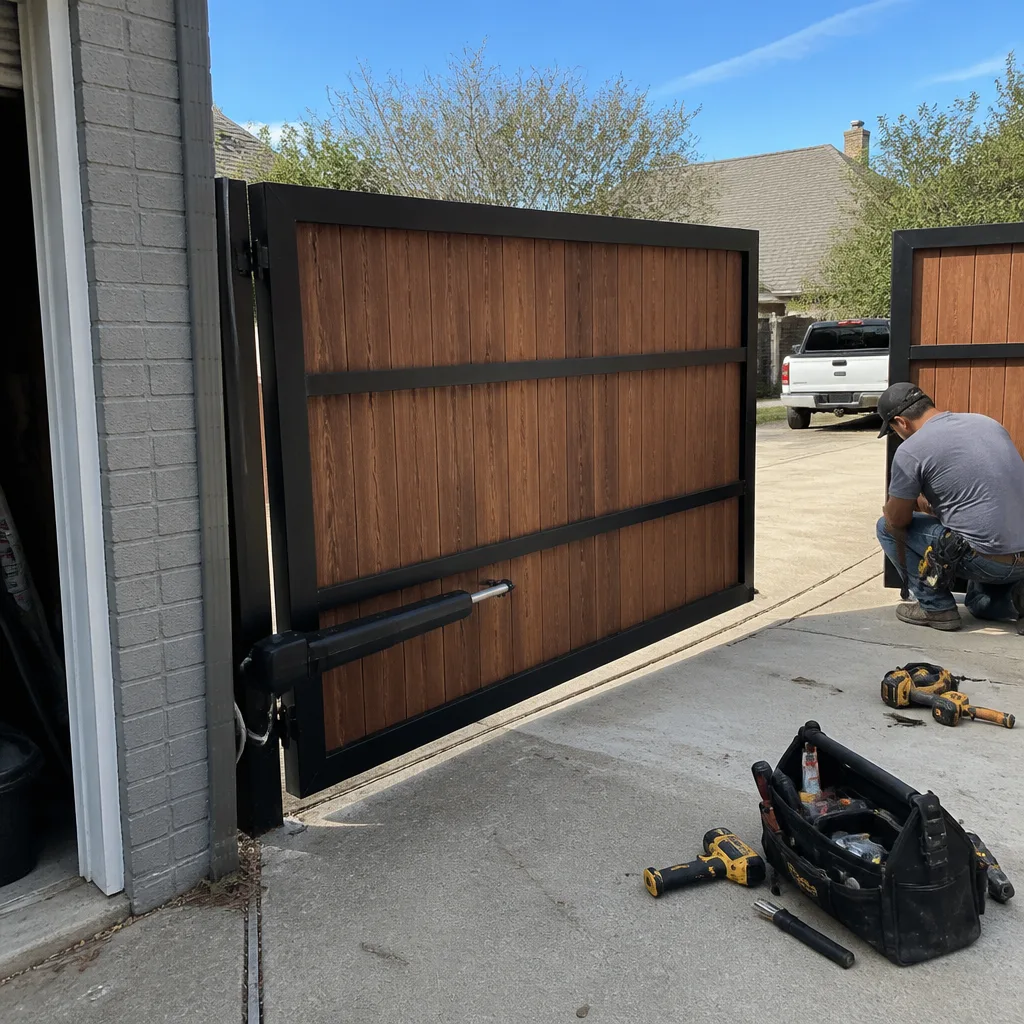 After
AfterThe Complete Guide to Gate Repair in Arlington
Here’s a number that tells you more about the gate repair business than any brochure: the most common callback we get in Arlington isn’t a gate that broke twice. It’s a gate that was never actually fixed the first time. Somebody showed up, swapped a part, collected a check, and drove off before the real problem had a chance to show itself again. This Gate Repair guide walks through how to diagnose a gate before you spend a dollar on parts, so the next repair you pay for is the last one you’ll need for a long while.
Quick Answer
Gate repair in Arlington typically costs $150 to $2,500 depending on whether you’re dealing with a hinge, a post, a motor, or a full structural failure. The key to not paying twice is diagnosing the root cause before touching a bolt, because a gate that sags or drags usually has a post problem hidden underneath, not a hinge problem. A reputable Arlington gate repair company will come out, look at the whole gate, and tell you exactly what’s wrong before quoting a number, as explained in our Gate Repair Cost Breakdown: The Arlington Homeowner’s Reference for 2026.
Table of Contents
- Structural Failure vs. Mechanical Failure: Know Which One You’re Dealing With
- Why Arlington’s Clay Soil Is the Root of Most Gate Problems
- The Three Gate Types Common in Arlington and How Each One Fails
- The Difference Between a Six-Month Repair and a Six-Year Repair
- What On-Site Welding Actually Means (and Why It Matters)
- Common Mistakes to Avoid
- When to Call a Professional
- Frequently Asked Questions
Structural Failure vs. Mechanical Failure: Know Which One You’re Dealing With
A gate has two systems working together, and most repair confusion comes from treating one when the other is failing. The structure is the post, the hinges, the frame, the welds. The mechanism is the operator, the chain or arm, the sensors, the board. They fail differently, they sound different when they fail, and they cost very different amounts to fix.
Structural failure is quiet and gradual. A post starts leaning a few degrees. A weld develops a hairline crack. A hinge sags until the gate drags on the ground on the latch side. None of this happens overnight, and none of it announces itself with a noise. You’ll notice it because the gate starts looking lopsided or the latch no longer lines up.
Mechanical failure is almost always loud or sudden. The operator hums but the gate doesn’t move. The chain snaps. The sensor stops detecting and the gate reverses for no reason. A Limit switch goes bad and the gate runs but won’t stop at the right spot.
Here’s the diagnostic sequence we walk through on every call in Arlington:
- Open the gate manually. If it moves freely and stays where you put it, the structure is fine and you’re looking at a mechanical issue. If it drags, sticks, or swings shut on its own, the structure has a problem.
- Check the post lean. Put a level on the post. More than a degree or two off plumb means the post is moving in the soil, and no hinge adjustment will fix that.
- Look at the welds. Rust trails, cracks, or gaps at the weld points are structural failures waiting to become bigger ones.
- Listen to the operator. A grinding noise means a gear or chain issue inside the operator. A hum with no movement usually means a capacitor or a limit switch problem.
- Test the safety sensors. Block the beam while the gate is closing. If the gate doesn’t reverse, the sensors are misaligned or dead, and that’s a mechanical fix that’s usually quick and inexpensive.
The point of this sequence is simple: understand what’s wrong before you pay anyone to fix anything. A gate that sags in the hinge post, not in the middle, and that is where we start every diagnosis. Our gate repair service in Arlington begins with this exact walkthrough, because swapping a motor onto a leaning post is like putting a new engine in a car with a cracked frame. It’ll run for a while, then it’ll fail again, and you’ll be angrier the second time.
Why Arlington’s Clay Soil Is the Root of Most Gate Problems
Arlington sits on expansive clay soil. What that means in plain terms is the ground under your gate post swells when it’s wet and shrinks when it’s dry, and it does both with enough force to move concrete. A gate post set in that soil is never truly stationary. It moves a little every season, and over five or ten years, a little becomes a lot.
We see this pattern constantly in neighborhoods across Arlington. Post lean isn’t random. It follows the same seasonal rhythm: wet spring, dry summer, wet fall. Each cycle works the post a little looser in its footing. By the time the gate is dragging on the ground, the post has usually been moving for years, and the owner didn’t notice because the movement was gradual.
This is why a repair that ignores the post will always come back. Here’s what the cascade looks like:
- A gate post starts leaning because the clay soil shrinks and swells around the concrete footing.
- The lean shifts the weight of the gate onto the hinges at an angle.
- The hinges start to bind and sag, which makes the gate drag on the latch side.
- The dragging gate puts additional load on the operator, which wears the gears and the chain faster than they should wear.
- Eventually, the operator fails, and the owner calls for a new motor, when what the gate actually needed was a post reset and a proper hinge.
If you’re in Arlington and your gate sags, drags, or doesn’t close all the way, the first thing to check isn’t the hinge. It’s the post. A plumb post with a well-set footing can carry a gate for two decades. A leaning post will eat hinges and operators forever.
The Three Gate Types Common in Arlington and How Each One Fails
There’s no one-size-fits-all gate, and there’s no one-size-fits-all repair. Arlington homes tend to have one of three gate types, and each has its own failure pattern.
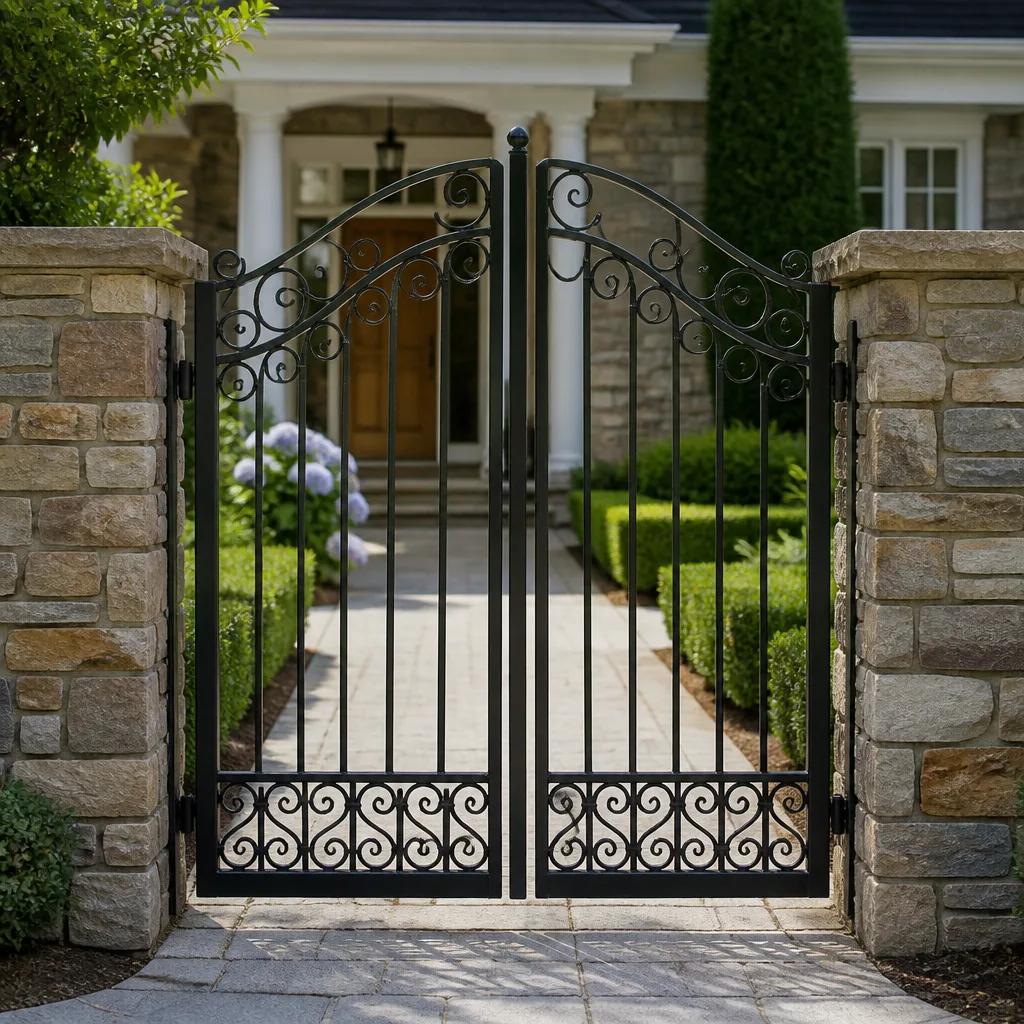
Ornamental Iron Gates
These are the classic wrought-iron-look gates you see on older Arlington properties and higher-end homes. They’re heavy, they’re welded, and they look great for a long time. When they fail, it’s almost always at the welds. The pickets stay solid, but the joints where the pickets meet the frame start to crack after years of expansion and contraction from Texas heat. The gate will develop a rattle, then a sag, then a full structural wobble. Ornamental iron also rusts from the inside out, especially at ground level where the bottom rail sits close to wet soil.
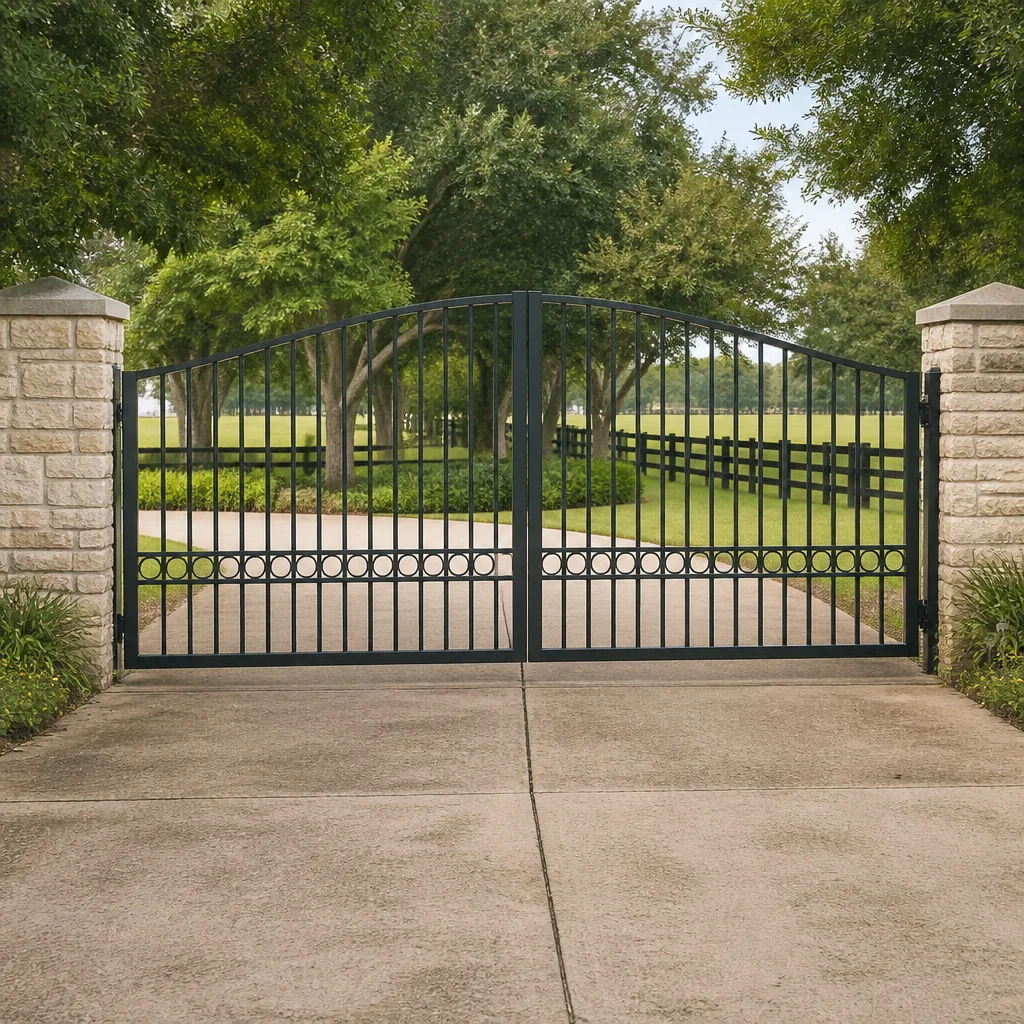
Tubular Steel Gates
Tubular steel is lighter than ornamental iron and much more common on newer Arlington homes. The failure pattern here is hinge wear first. The thinner tubing can’t hold a hinge screw as securely as solid iron, so the holes wallow out and the gate starts to sag. The tubing itself rarely breaks, but the hinge mounts do. Homeowners often mistake this for a bent gate when it’s actually a hinge-mount problem that’s easy to fix if you catch it early.
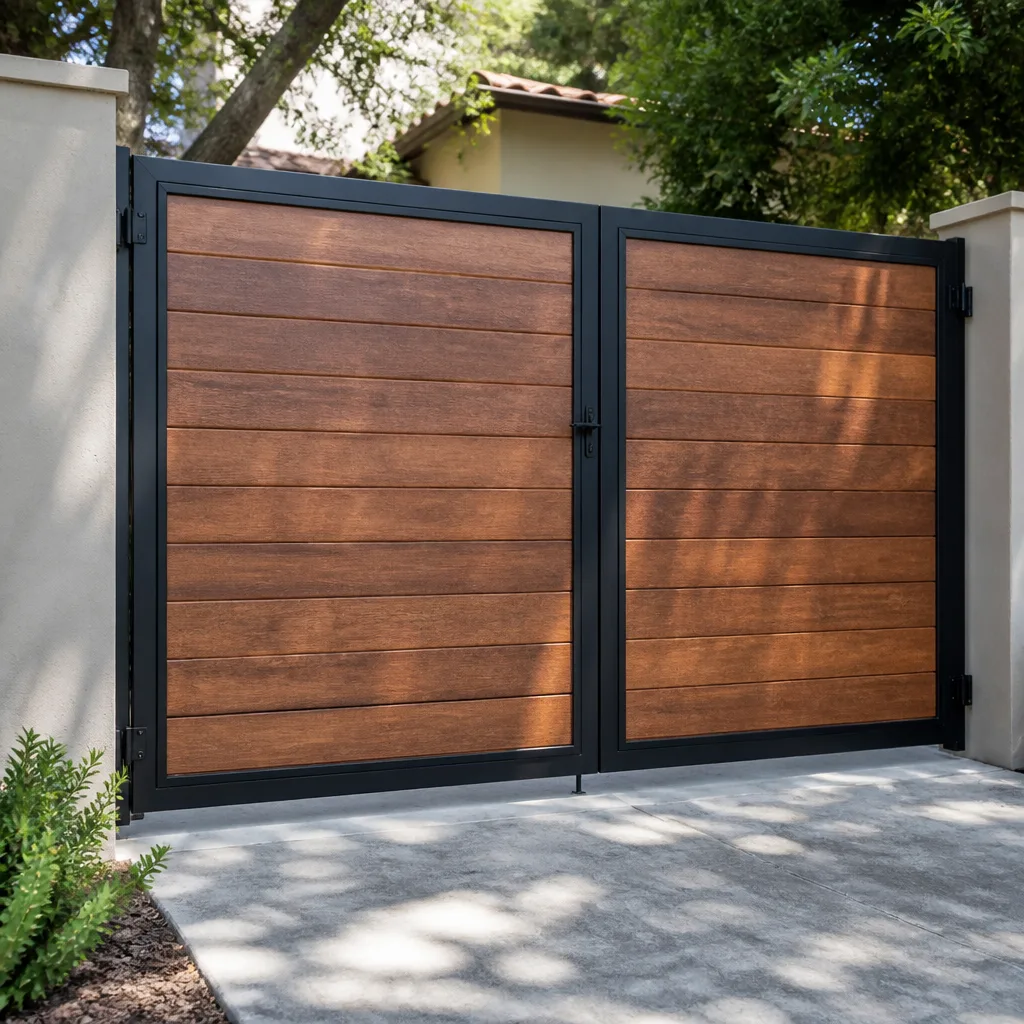
Wood-Framed Gates
Wood gates are heavy in a different way. A wood gate doesn’t sag from metal fatigue, it sags from the frame racking. The screws that hold the frame together work loose in wet weather and the gate parallelogram itself. Wood gates also rot at the bottom, especially the bottom rail and the hinge stile, because Arlington gets real rain in spring and fall. A wood gate with a rotting bottom rail will drag no matter how tight the hinges are, because the gate itself is losing its structure.
Each of these gate types needs a different repair approach. An ornamental iron gate needs a welder. A tubular steel gate needs new hinge mounts or a reinforced hinge plate. A wood gate needs a rebuilt frame with proper corner brackets. Applying one repair logic to all three is how you end up paying for the same fix twice.
The Difference Between a Six-Month Repair and a Six-Year Repair
Everything in this guide comes down to one question: is the repair you’re paying for going to last six months or six years? The difference isn’t the quality of the parts. It’s whether the person doing the work found the root cause.
A six-month repair treats the symptom. It adjusts the hinge so the gate closes for now. It greases the chain so it stops making noise. It tightens the sag out of the frame. It works, for a while, and then the underlying problem comes back, because the post is still leaning or the weld is still cracked or the gear is still wearing against a misaligned sprocket.
A six-year repair starts with the post. It starts with the weld. It starts with finding out why the gate failed and fixing that first, then fixing the damage the root cause created. This takes longer, and it costs more up front, but it costs far less over the life of the gate.
Here are the questions to ask any Arlington gate repair company before you hire them:
- Can you show me the root cause, not just the symptom? A good tech will walk you to the gate and point at the failing post or weld. If they can’t show you the cause, they’re guessing.
- Are you welding on site or taking the gate to a shop? On-site welding means the gate is fixed where it hangs, not hauled off and brought back.
- Does the repair include resetting the post if it’s out of plumb? If the answer is no, the repair is temporary.
- What’s your guarantee, and is it in writing? If they hem and haw, walk away. We put the 90-Day Done Right Promise in writing on every job. If it’s not done right, we make it right. That’s not marketing. That’s the whole deal.
The name is on the shop, and the shop is down the road. That is the oldest accountability there is, and it’s the difference between a tech who’s passing through and someone who will still be here when the gate misbehaves in winter.
What On-Site Welding Actually Means (and Why It Matters)
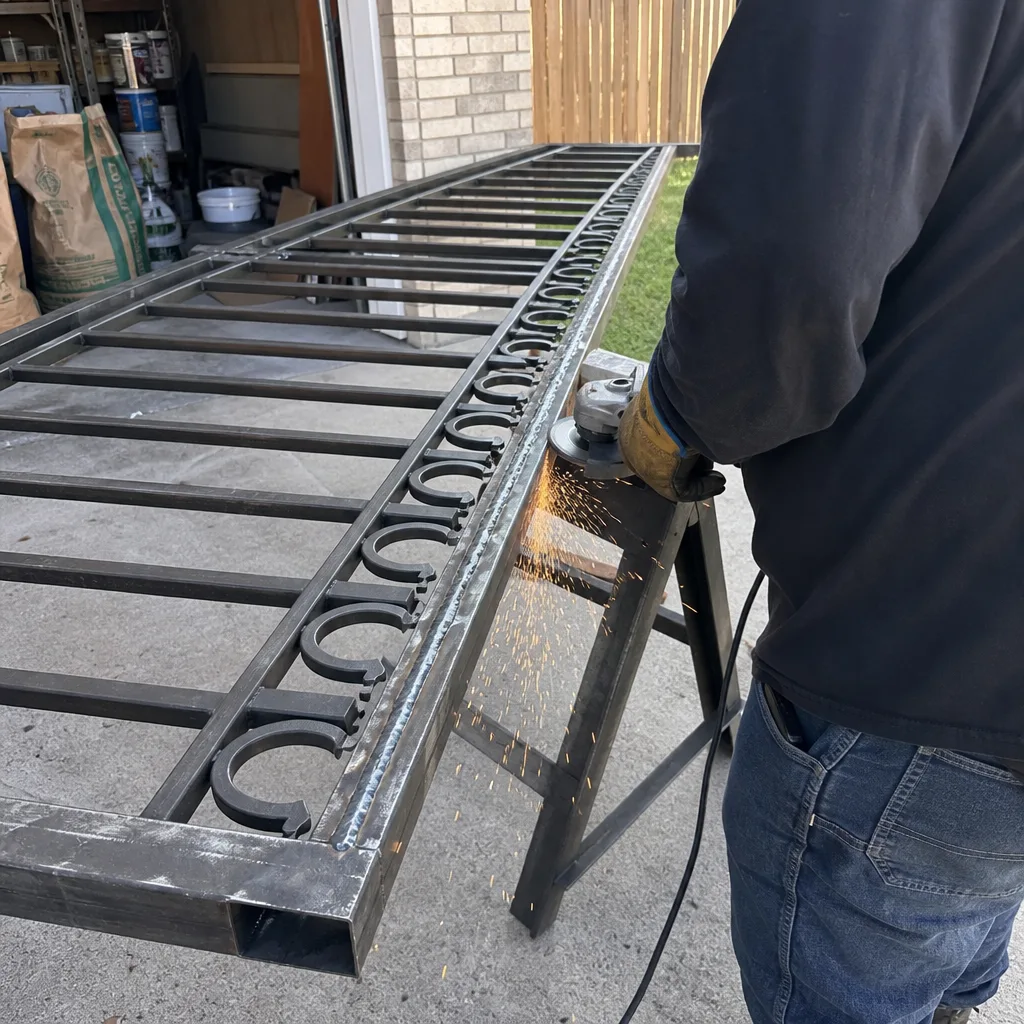
When a gate repair company says they do on-site welding, it means the welder comes to your driveway with the equipment in the truck and fixes the gate where it hangs. It does not mean they take the gate off, haul it to a shop, weld it there, and bring it back days later.
This distinction matters more than most people realize. A gate that’s welded off-site has to be uninstalled, transported, repaired, transported again, and reinstalled. That’s two more chances for damage in transport, two more chances for misalignment on reinstall, and a longer timeline for you. A gate that’s welded on site stays in its existing position, so the welder can see exactly how it sits against the post and account for any lean or shift.
On-site welding also tells you something about the company doing the work. It means they carry a welding rig, which is a significant investment. It means they have a licensed welder on staff, not a handyman with a MIG gun they borrowed. And it means they’re set up to do real structural repair, not just bolt-a-patch-and-go work.
We have been welding gates on site in Arlington since 2001. The welder is on the truck. The gate stays in your driveway. When we’re done, the gate is straight, the hinge is solid, and the whole assembly works like it should. If you’re comparing repair quotes, ask the question directly: “Are you welding this gate on site, or taking it somewhere?” The answer will tell you a lot about what kind of repair you’re actually paying for.
If you’re still in the research phase, our Gatewood Fence & Gate home page walks through how we approach every job, and our gate installation service in Arlington covers what we do when a gate is beyond repair.
Common Mistakes to Avoid
- Replacing the operator before checking the post. A gate operator in Arlington usually fails because the gate it’s moving has gotten heavier over time from post lean or hinge drag. A new motor on a leaning gate is just a new motor waiting to burn out.
- Adjusting the hinge instead of resetting the post. Hinge adjustments buy time, but they don’t fix the soil movement that caused the sag. You’ll be back inside a year.
- Ignoring a slight rattle or squeak. Metal on metal noise is a weld cracking or a hinge wearing. By the time it becomes a loud clunk, the repair is bigger and more expensive.
- Letting a wood gate sit on wet ground. The bottom rail soaks up water from Arlington’s spring rains, and rot sets in faster than you’d think. A gate that sits on wet ground is a gate that’s rotting from the bottom up.
- Patching a weld over rust without cleaning the rust. Welding over rust creates a weak joint that will crack again. The rust has to be ground out first, and not every repair shop does that.
- Putting off a sensor or safety-edge fix. Sensors that don’t work are a safety liability, not just an inconvenience. If the gate’s safety edges or photo eyes aren’t functioning, get them fixed promptly.
When to Call a Professional
Call a professional when the gate post is leaning out of plumb, when a weld has cracked, when the gate drags on the ground on the latch side, or when the operator makes a grinding noise it didn’t make before. Also call if the gate is closing with any force behind it, if the safety sensors aren’t reversing the gate when blocked, or if the gate is so heavy you can’t open it manually without real effort. Gate springs, cables, and operators can all hold serious tension or energy, and a gate that lets go can injure someone. High-tension springs and cables on a gate should be serviced by someone who knows how to handle that stored energy safely. We always recommend leaving tensioned components to a trained professional.
Gatewood Fence & Gate offers free estimates in Arlington. Call (817) 241-4067 and a live person answers, day or night. Not a voicemail, not a call center. We’ll set a time, show up, and give you a straight answer.
Frequently Asked Questions
Gate repair in Arlington typically runs $150 to $2,500 depending on the scope. A simple sensor or limit switch fix is on the low end, a hinge rebuild is in the middle, and a full post reset with on-site welding is on the high end. Every job gets a written price before any work starts, agreed up front, so there are no surprises at the door.
For emergency gate repairs in Arlington, yes, often the same day, especially if a gate is stuck open or stuck closed and leaving the property unsecured. We answer the phone around the clock and prioritize security failures. Call (817) 241-4067 and describe what’s happening; we’ll tell you straight whether we can get there today.
The most common cause of a sagging gate in Arlington is post lean from the expansive clay soil. The post moves in the wet-dry cycle, the hinges go out of alignment, and the gate starts to drag on the latch side. Fixing the hinge without addressing the post is a temporary band-aid. The post is where the real repair starts.
Yes. We service LiftMaster, FAAC, BFT, and Linear operators, along with five other major brands. Whether it’s a residential swing gate or a commercial slide gate operator, we carry parts for the common failures and can source what we don’t stock. Our gate motor and opener service in Arlington covers diagnostics, repair, and replacement for all the major brands.
If the post is intact and the frame is structurally sound, repair is almost always the cheaper and better option. A gate with a cracked weld or a bad operator is usually worth fixing. If the bottom rail is rotted through on a wood gate, or the post is rusted out at ground level, or the frame is twisted beyond straightening, replacement starts to make more sense. We’ll tell you which one we’d do if it were our gate, and you’ll get an honest answer either way.
Yes. Estimates are free, and there’s no trip charge inside the county. We also offer a free second opinion on any written estimate from another company. If someone quoted you a number and you want a straight read on whether it’s fair, bring it in. $40 off any repair over $200, and a permanent 10% discount for seniors and veterans. Call (817) 241-4067 and ask.
The Bottom Line
Most gate repair problems in Arlington come back because the root cause was never found, but you can avoid that with more guides & resources like this one. It was never the hinge. It was the post. It was never the motor. It was the drag caused by the post. If you remember one thing from this guide, remember to fix the cause before you fix the symptom. A gate that’s diagnosed right and repaired by someone who welds on site and stands behind the work will serve you for years. That’s what the 90-Day Done Right Promise is for. That’s what we’ve been doing in Arlington since 2001. We’ll come look at your gate, point at the problem, and give you a number before we touch a single bolt.
Call (817) 241-4067 for a free estimate on gate repair in Arlington. A live person answers. Hal will be there himself, or you can drive to the shop and look him in the eye.
Written by Hal Gatewood, Owner at Gatewood Fence & Gate, serving Arlington since 2001.