
Last updated August 26, 2026
Free on-site gate assessment - hinges, posts, and your LiftMaster or Nice gate operator checked before anything is quoted
The assessment is free and the quote is the invoice.
 Before
 After
After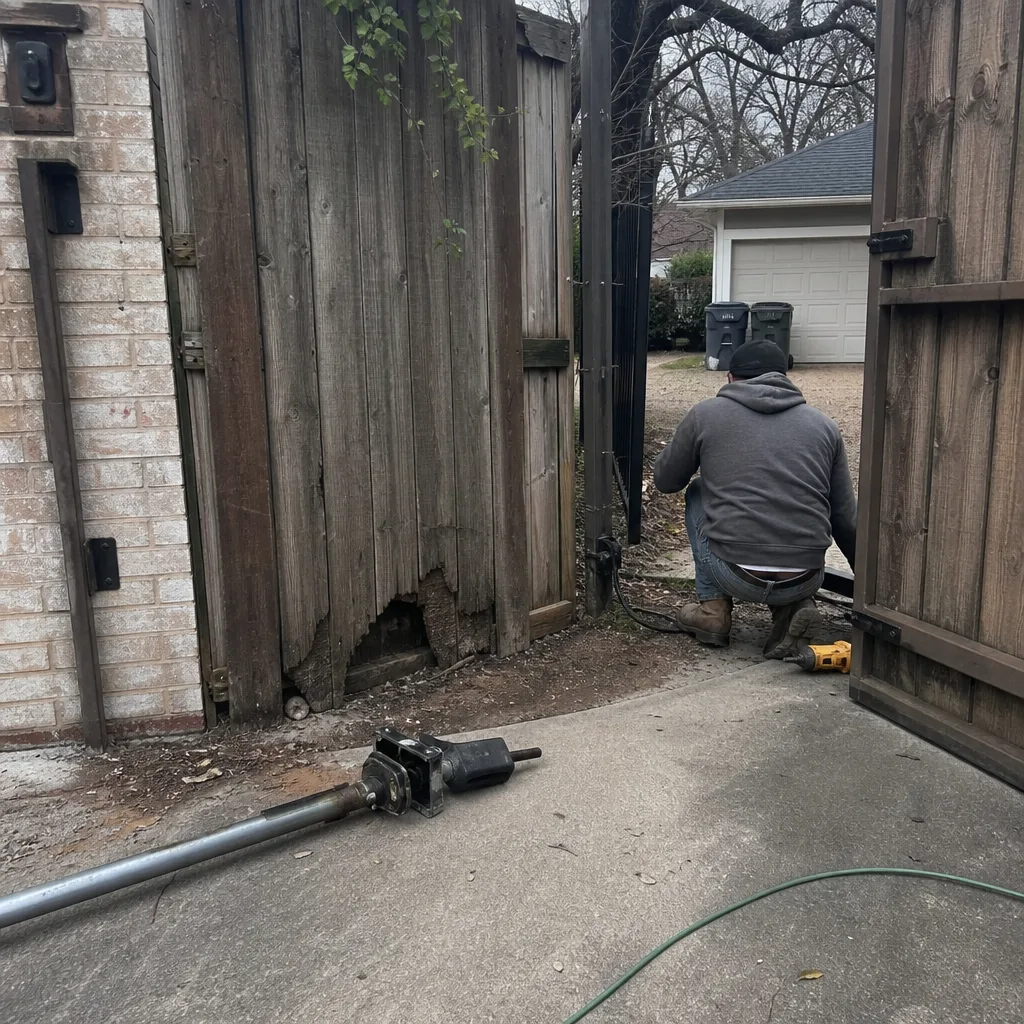 Before
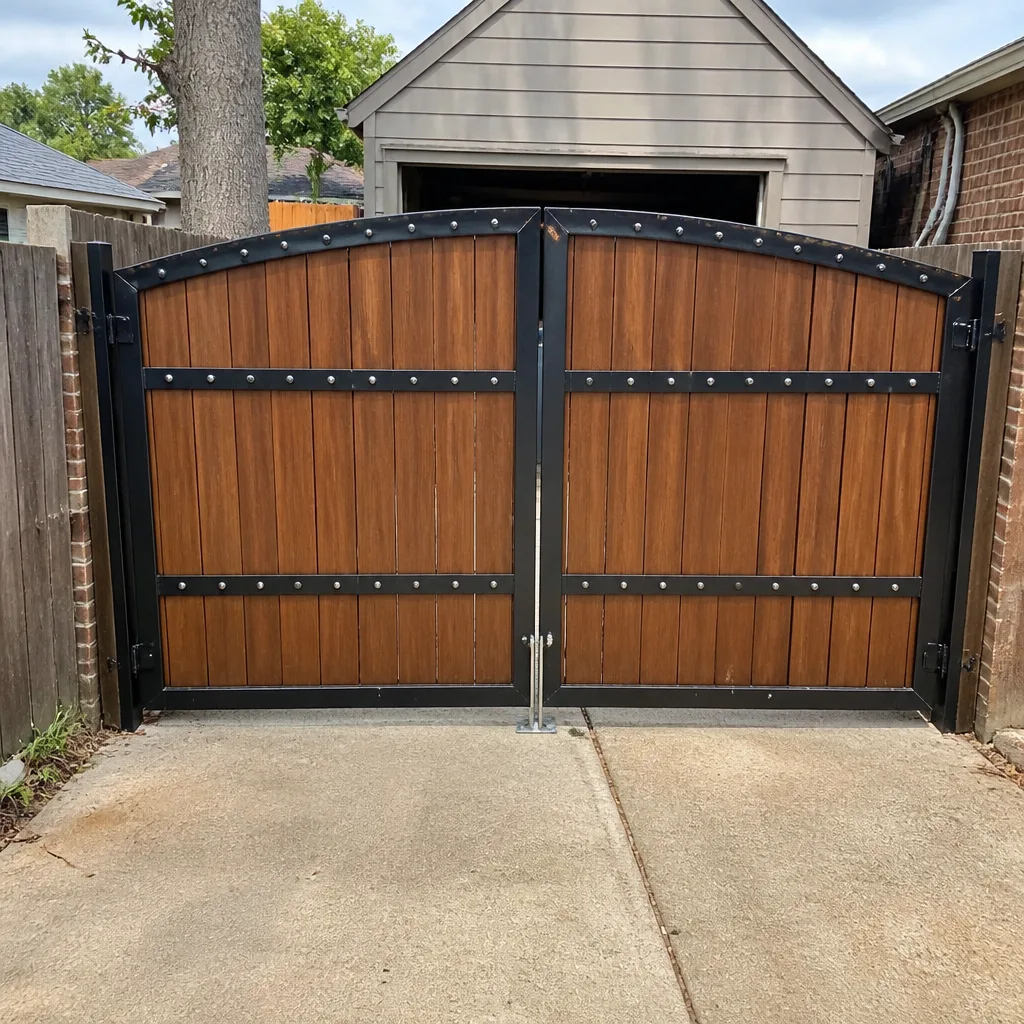 After
After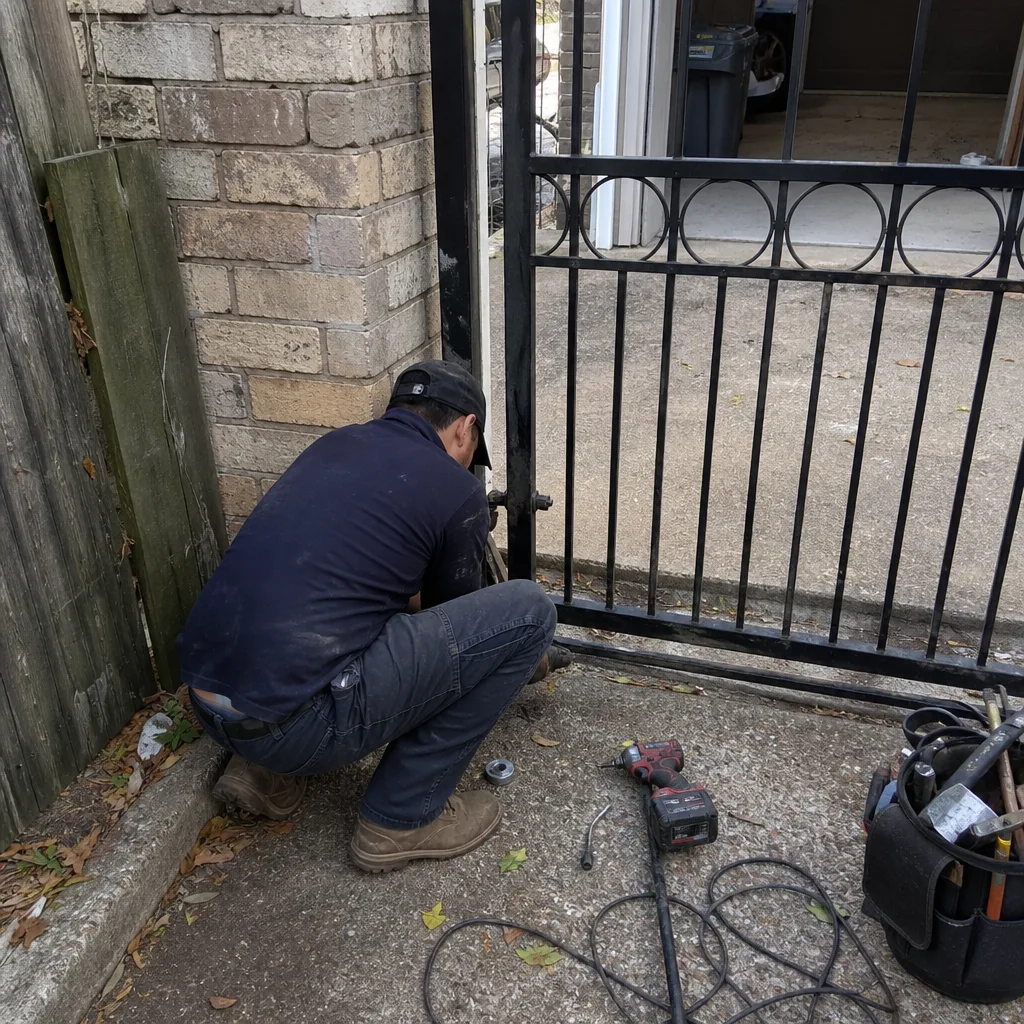 Before
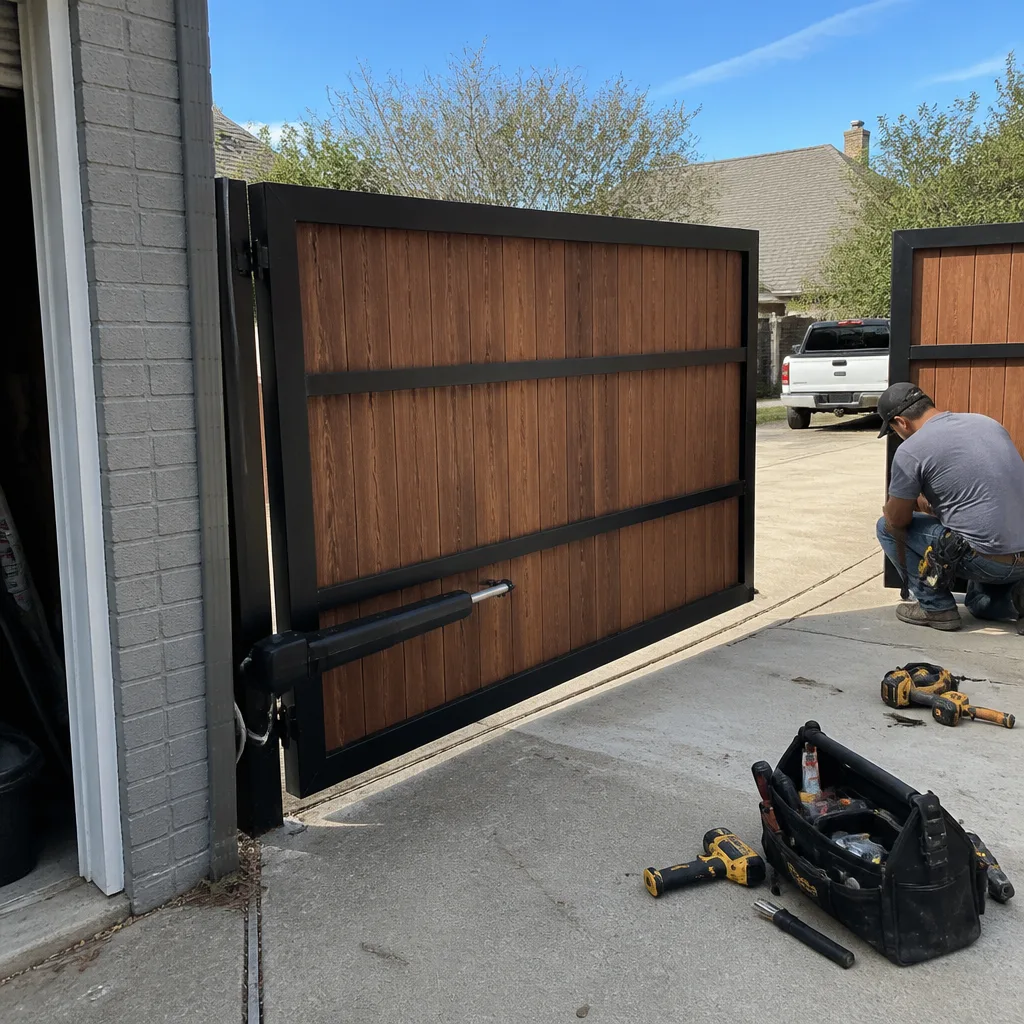 After
AfterGate Repair Maintenance Checklist for Arlington Homeowners
Hal has pulled gates off hinges that homeowners swore they “maintained regularly.” Turned out they were lubricating the wrong parts and never once checked the post footing, which had been walking for two years. If that sounds familiar, you’re not alone. Arlington’s climate doesn’t do subtle: the summer heat expands steel, the winter freeze-thaw cycles shift red clay soil, and the result is a gate that fails in predictable ways you can catch early. For a deeper look at what to watch for, see our Gate Repair Warning Signs: A Arlington Homeowner’s Reference Guide. This checklist is built around what actually fails here, in this zip code, not a generic PDF that ignores where you live.
Quick Answer
A proper gate maintenance checklist for Arlington homeowners covers five physical inspection points per gate: hinge welds, post footing, operator mounting bolts, chain or belt tension, and safety sensor alignment. Walk the checklist every sixty days, plus one full inspection before summer hits and one after the first hard freeze. Most Arlington gate failures we see are caught in the hinge post, not the middle of the panel, and the fixes cost pennies compared to the replacement quotes people get quoted after the fact.
Table of Contents
- The Five Points You Actually Have to Touch
- Why the Wrong Lubricant Is Worse Than None at All
- How to Check Post Footing Without Digging
- The Summer Heat Warning You Can Hear Before You See
- Freeze-Thaw and Red Clay: Arlington’s Ground Shift Problem
- What You Can Do Yourself Versus What Needs a Welder
- A Seasonal Maintenance Schedule for Arlington Gates
- Common Mistakes to Avoid
- When to Call a Professional
- Frequently Asked Questions
The Five Points You Actually Have to Touch
Most homeowners glance at a gate and call it good. A glance tells you the gate is still standing. It doesn’t tell you the hinge weld is cracking, the post is walking, or the operator bracket has loosened to the point where the motor is grinding against its own mount. We’ve been repairing gates in Arlington since 2001, and the gates that last are the ones where somebody puts hands on them every sixty days. Here are the five points that need physical inspection, what you’re feeling for at each one, and what failure looks like before it becomes a $1,800 replacement.
- Hinge welds and hinge bolts. Put your hand flat on the gate panel near each hinge and lift up. A quarter inch of play is normal on a rolling gate. A half inch of clunk is not. Look at the weld itself: a hairline crack looks like a dark line running along the edge of the bead. If the hinge is bolted rather than welded, check for bolts that have backed out a thread or two. In Arlington, the expansion and contraction from summer heat to winter cold works bolts loose over about three years. We see it constantly in Dalworthington Gardens and Pantego, where the gates are steel and the summers are unkind.
- Post footing. Stand at the end of the gate and sight down the post like you’re aiming a rifle. Is it plumb? Now look at the ground right where the post enters the concrete or soil. A gap that’s wider than a nickel means the post is moving. More on this below, because it’s the single most common failure in Arlington and the one almost nobody checks.
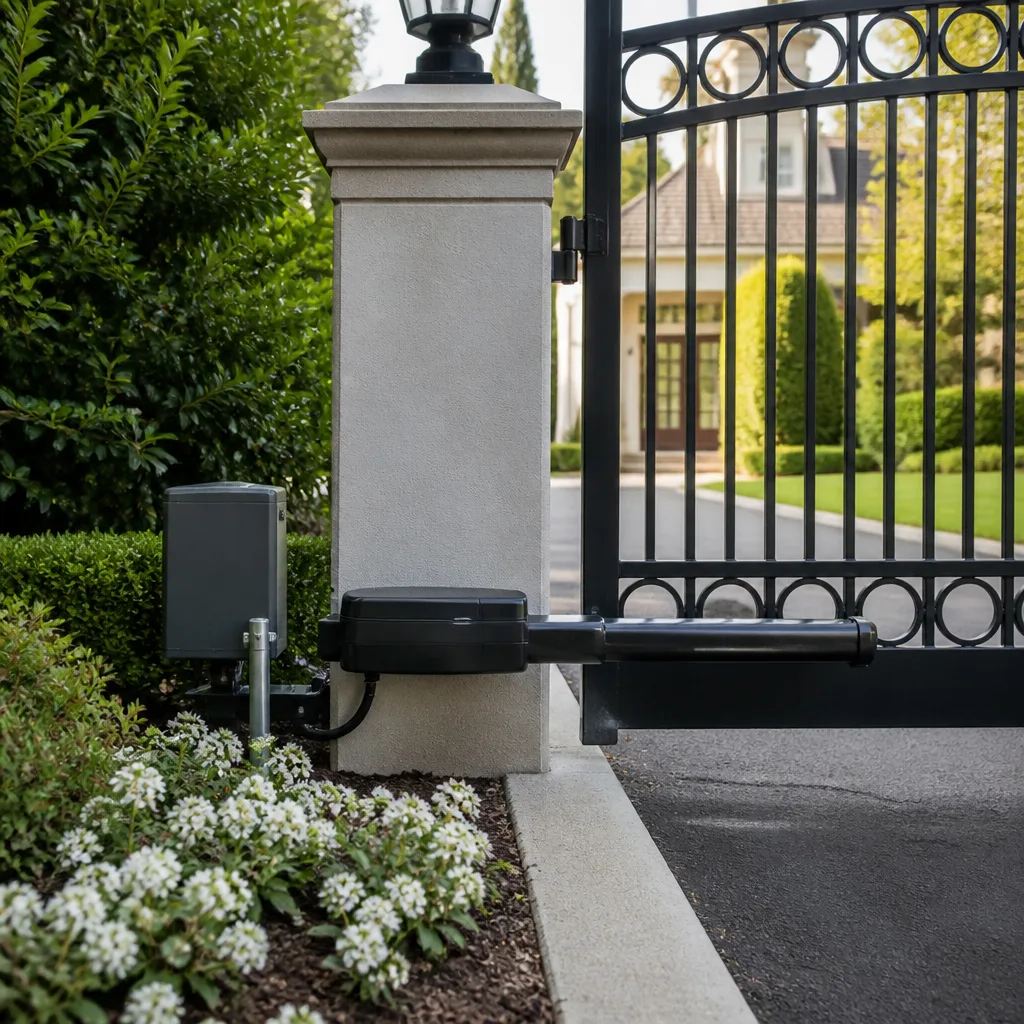
- Operator mounting bolts. If you have an automatic gate, the opener is bolted to a steel plate or directly to the post. Put your hand on the operator housing and try to rock it. It shouldn’t move at all. A visual check works too: look for rust stains trailing down from the bolts. Rust stains mean water has been sitting in the bolt holes, and the bolts are corroding from the inside. In Arlington’s clay-heavy soil, spray from irrigation systems combined with our humidity means these bolts corrode faster than the gate itself.
- Chain or belt tension. On a slide gate, find the chain and press down in the middle of the top run with two fingers. It should deflect about an inch, maybe a little less. A sagging chain that droops visibly is going to skip teeth on the sprocket, and then the gate starts jolting as it opens. On a swing gate, you’re checking the arm between the operator and the gate. If the arm’s attachment points are wallowed out, the gate will develop a shudder you can feel through the ground.
- Safety sensor alignment. These are the little photo eyes mounted about six inches off the ground on either side of the gate opening. If they get bumped by a mower, a trash can, or a teenager, they’ll sit slightly misaligned and the gate will refuse to close all the way, or reverse for no reason. The check is simple: both sensor lights should be solid, not blinking. A blinking light means the beam is broken or the sensor is out of alignment. A quick wipe with a dry rag fixes more than half of these.
That’s the whole list. Five points, about ten minutes, every two months. The homeowners in Arlington who do this don’t see us much. The ones who don’t see us after the gate has already taken a fall onto the driveway.
Why the Wrong Lubricant Is Worse Than None at All
The most common maintenance mistake we see in Arlington isn’t a lack of lubrication. It’s lubrication with whatever was sitting on the garage shelf. WD-40, penetrating oil, chain lube from the motorcycle. None of those belong on an automatic gate operator, and some of them actively cause the failures they’re meant to prevent. Here’s the straight answer: if you’re going to lubricate a gate, use a dry lubricant on the operator’s internal chain and nothing, or a light spray grease designed for gate hardware, on the external moving parts. If you’re reaching for WD-40, stop. That product is a solvent, not a lubricant. It displaces moisture and then evaporates, taking whatever real lubrication was there with it.
What actually happens when you use the wrong product
On an automatic gate, the operator’s internal chain or screw drive runs inside a housing. When you spray a wet lubricant into that housing, it doesn’t stay on the chain. It runs off, drips down, and collects at the bottom of the housing along with dust, pollen, and the fine particles that blow out of Arlington’s red clay soil. That mixture becomes a paste. The paste clings to the chain and sprockets, builds up over a few months, and then the motor is working against its own sludge. The sound that follows is a grinding whine that shows up right before the overload sensor trips and the gate stops moving. If you’d done nothing, the chain would have just stayed a little dry and functioned for years.
We’ve also seen penetrating oil creep into the operator’s limit switches and ruin the electrical contacts. That’s a $200 to $400 repair, depending on the brand. Ghost Controls and DoorKing operators both have sealed housings, but seals age, and penetrating oil finds aged seals. Mighty Mule swing arms are a little more forgiving, but the same rule applies: nothing wet inside, nothing that leaves a residue.
What to use instead
- Dry lubricant spray for the internal chain on slide gate operators. Graphite or PTFE-based. Spray it lightly on the chain, wipe off any excess.
- White lithium grease on hinge pins, bushing points, and the manual wheel assemblies on rolling gates. It’s thick enough to stay put, and it won’t attract dust the way axle grease will.
- Dielectric grease on low-voltage electrical connections at the control board and sensor terminals. A thin smear on each terminal prevents the corrosion that Arlington’s humid, clay-dust air encourages.
The rule of thumb: wet lubricants belong on farm equipment that sees rain. Gate operators are dry-run machines. They live in sealed or shielded housings, and they work best when they stay dry inside. Over-lubricating with the wrong product is a $300 mistake dressed up as maintenance.
How to Check Post Footing Without Digging
A gate sags in the hinge post, not in the middle. That’s the first thing to understand. When a gate swings low on the latch side, most people assume the panel bent. It didn’t. The post leaned. And once that post starts moving, no amount of hinge adjustment fixes it for long. Fix the panel without the post and you’ll fix it twice. Here’s the two-minute visual test any Arlington homeowner can do without touching a shovel or a level.
Step-by-step: The Post Walk Test
- Stand directly behind the gate post, a few feet back, and close one eye. Sight the post against the fence line. If the post leans even a few degrees, you’ll see it as a gap between the post and the fence line on one side.
- Look at the base of the post where it meets the concrete footing. Scan for a hairline gap or separation. In Arlington, our red clay soil expands and contracts with moisture. That movement works posts loose slowly, and the first visible sign is a hairline crack in the concrete collar itself.
- Push the gate firmly at the latch corner, not the hinge corner. Watch the post while you push. A healthy post doesn’t move. A post that’s walking will shift a visible amount, even if it’s just an eighth of an inch. That’s your sign the footing is compromised.
- Tap the concrete around the post with a hammer handle. A solid sound is dense and quick. A hollow or dull thud means the concrete has cracked away from the post below grade, leaving a void.
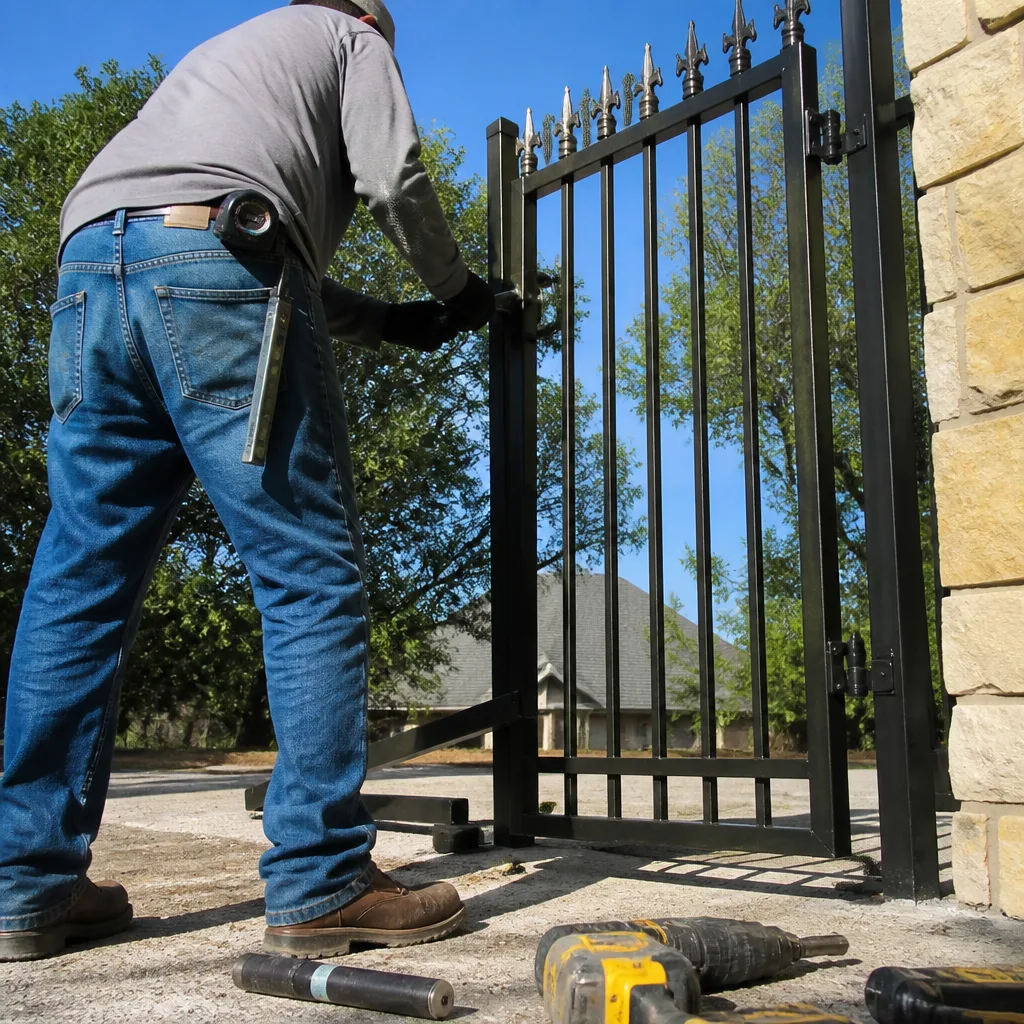
If you catch a walking post early, the repair is a matter of re-setting the post with fresh concrete and bracing it. If you ignore it, the post eventually pulls out of the ground, the gate falls, and the hinges tear through the panel. At that point, the gate usually needs welding on top of the post work. We do that welding on site, at your Arlington property, instead of hauling the gate off. If you’re not sure whether the post has moved, a Gate Repair professional can assess it-sometimes a free second opinion beats guessing. Call us and we’ll tell you straight.
The Summer Heat Warning You Can Hear Before You See
Arlington summers don’t kill gate operators with dramatic failures. They kill them with a sound. It’s a higher-pitched whine than normal, a thin edge on the usual motor hum, and it happens in the heat of the afternoon more than in the morning. Most people don’t notice it until the gate stops moving entirely, and by then the motor windings have been cooking for weeks. Here’s what that sound is, and why it’s the warning you should be listening for every July and August.
Automatic gate operators generate heat internally when they run. On a 95-degree Arlington afternoon, the operator’s internal temperature can climb past 160 degrees. Motor windings are insulated with varnish. That varnish has a thermal rating, and sustained high temperatures break it down a little at a time. The whining sound is the motor drawing more amperage than it should because the lubrication inside the gearbox has thinned with heat, and the gears are making contact with less cushion than they had in spring. Left alone, the operator runs hotter, the varnish degrades further, and eventually the motor shorts internally.
You can’t make a summer in Arlington cooler. But you can keep the operator cool enough to survive dozens of them. The single most effective thing is to make sure the gate itself moves freely. A gate with proper hinge alignment and a clear track reduces the load on the motor dramatically. That’s the part you control. The second most effective thing is shade. If your operator is mounted on a post that gets direct afternoon sun, a simple sun screen or repositioned landscaping can drop its operating temperature by fifteen degrees. We’ve had customers in the Viridian and near Lake Arlington whose operators went from annual summertime failures to a decade of quiet operation just by putting the motor on the shaded side of the post.
If you hear that whine on a hot afternoon, don’t keep running the gate and hope it works itself out. Shut the operator off at the breaker, call a professional, and describe the sound. In our experience, the ones who call at the whine stage spend $150 on a gearbox rebuild. The ones who wait for the silence spend $900 on a new operator. The name on the shop is on every invoice, and we’d rather see the $150 repair.
Freeze-Thaw and Red Clay: Arlington’s Ground Shift Problem
Arlington doesn’t get the kind of deep freezes that northern states do, but we get something worse for gates: dozens of freeze-thaw cycles every winter. The temperature hovers near freezing at night, warms into the forties or fifties in the afternoon, and that daily cycle works water into every crack in your concrete and every seam in your gate. The water freezes, expands, and acts like a wedge. Repeated enough times, it cracks concrete, loosens post footings, and shifts the gate’s entire geometry. And the red clay underneath your yard makes it worse.
Red clay soil, which covers most of Arlington, does something specific when it gets wet: it expands. When it dries, it contracts. A dry summer tightens the soil around gate posts; a wet winter softens it. That cycle pushes posts up and out, a few thousandths of an inch at a time. By the third or fourth year, the post is a quarter inch or more out of plumb, and the gate is dragging on the latch side. This is the “walking post” we described earlier, and it’s the root cause of more Arlington gate failures than anything else.
What can you do about the ground shifting? You can’t change the soil. What you can do is make sure water doesn’t pool around the post footing. Check that sprinkler heads aren’t spraying directly at the base of the post. Make sure the ground slopes away from the footing, not toward it. If you have a low spot that holds water after a rain, fill it with compacted soil. These are the unglamorous fixes, but they do more for gate longevity in Arlington than any amount of WD-40 ever will.
For a full breakdown of what Gate Repair in Arlington involves, including the post work we do most often, start there.
What You Can Do Yourself Versus What Needs a Welder
There’s an honest line between homeowner maintenance and professional repair. Crossing it in the wrong direction is where people either get hurt or spend more money than they’d have spent by calling in the first place. For Gate Repair Permits, Codes & Inspections in TX: What You Need to Know, certain work requires licensed professionals. Here’s where that line sits.
Homeowner tasks, completely reasonable
- Visual inspections at all five points we listed above, every sixty days.
- Wiping down photo eyes and confirming sensor alignment.
- Clearing leaves, dirt, and debris from the gate track on a slide gate.
- Checking chain or belt tension and noting changes, even if you don’t adjust them yourself.
- Lubricating hinge pins with white lithium grease.
- Clearing vegetation away from the gate path and the post bases.
Professional tasks, and here’s why
- Anything with a weld. Hinge welds, post repair, patch panels. Welding requires heat, precise joint prep, and post-weld treatment. A bad weld fails suddenly, and a falling gate panel is a serious hazard to anyone nearby. We handle on-site welding at your Arlington home, so the gate never leaves your property.
- Electrical work on the operator. Control boards, transformers, capacitor replacement, any wiring inside the operator housing. If your Gatewood technician recommends a Ghost Controls or DoorKing replacement control board, that’s a job for someone who’s worked inside those housings before. The wrong wire on the wrong terminal can fry a board that costs more than the service call.
- Gate spring tension adjustments. Some manual gates use heavy tension springs to assist opening. Those springs are under pressure even when the gate is closed, and releasing them improperly causes serious injury. Show me the gate closing on its own and I’ll show you where it’s failing, but releasing the spring is not a homeowner job.
- Post resetting or concrete work. Digging out a post, setting it plumb, and pouring a proper footing that will stand up to Arlington’s clay soil takes braces, time, and know-how. Do it wrong and the post walks again in eighteen months, and you’ve paid twice for the same job.
For new gate builds, the conversation is different, and it’s worth reading up on Gate Installation in Arlington before you commit to a plan.
A Seasonal Maintenance Schedule for Arlington Gates
Climate-specific maintenance means doing the right things at the right time of year. In Arlington, the calendar breaks down into four chunks, and each one has a task that matters more than the others.
Spring: March and April
- Full five-point inspection, especially post footing after winter’s freeze-thaw cycles.
- Check the gate track and remove the winter’s accumulated soil and gravel.
- Clean photo eyes and confirm alignment before mowing season begins.
- Look for rust spots that appeared during the wet winter. Touch up bare steel with a rust converter and paint before summer humidity sets in.
Summer: June through September
- Listen for the heat whine on the operator during afternoon runs.
- Keep the gate track clean; Arlington’s dry summer soil blows into everything.
- Check that operator mounting bolts haven’t loosened in the heat. Thermal expansion is working on them all season.
- Clear vegetation away from swing gates. Grass grows fast in the summer, and a swing gate dragging through tall grass strains the operator.
Fall: October and November
- Full inspection again before the first freeze. Fix small issues now, before freeze-thaw starts working on them all winter.
- Lubricate hinge pins with white lithium grease. Do this before the cold, not during it.
- Check that water drains away from post footings. Fall is when you fix drainage before winter rain and freeze cycles do their worst.
Winter: December through February
- After any hard freeze, check the post bases for new cracks or separation.
- Keep the gate track clear of ice and debris. If the gate ices over, don’t force the operator. Disconnect it and open the gate manually.
- Watch for the operator running slower than usual in cold weather. Some slowdown is normal, but a dramatic change means the gearbox oil has thickened and the motor is being overworked.
If your operator is showing its age, it’s worth understanding what Gate Motor & Opener in Arlington replacement looks like before you find out in the middle of January.
Common Mistakes to Avoid
- Lubricating the operator with WD-40. You’re stripping the real lubrication out of the housing and adding a solvent to the wiring. We covered this above. It’s the most common mistake because the can is right there on the garage shelf.
- Ignoring the post because the panel looks fine. The post is where the failure starts. A panel doesn’t sag on its own. If you only inspect the panel, you’re inspecting the symptom, not the cause.
- Waiting until the gate stops moving to call. Gates give warnings for months before they actually fail. The whining sound, the slower travel, the shaking on startup. Heed the warning and you’re spending $150. Wait for the failure and you’re spending four figures.
- Adjusting the hinges instead of addressing the post. When a gate starts sagging, homeowners reach for the hinge bolts. Tightening a hinge to compensate for a walking post bends things that shouldn’t bend, and the gate sags again in two months anyway.
- Using the wrong replacement parts. Not all gate hardware is interchangeable. A hinge rated for 300 pounds installed on a 600-pound gate is a broken hinge waiting for a windy day. Arlington gets wind, and a heavy gate on light hinges will find the day.
- Spraying chain lube on the photo eye lenses. Over-eager maintenance is still maintenance, but oil on the photo eyes means the beam stays broken and the gate refuses to close. The sensor needs a clean, dry lens, nothing more.
- Forgetting the gate during the winter. Arlington’s cold months are mild enough to ignore, so people do. And then the freeze-thaw cycle has three months of unsupervised access to every crack in the concrete and every seam in the gate.
When to Call a Professional
You’ve checked the five points, you’ve been listening for the heat whine, and something’s off. Maybe the post moved, the gate’s scraping, the operator groans, or the photo eyes blink no matter how many times you wipe them. That’s the moment to call somebody who does this work every day, not to climb deeper into a repair you weren’t planning to make. If the problem involves a weld, a spring, or anything inside the operator housing, stop there. Those three categories are where serious injuries happen. Gatewood Fence & Gate offers free estimates in Arlington, with no trip charge inside the county. Call (817) 241-4067 and describe what you’re seeing, and we’ll tell you straight whether it’s a homeowner fix or a job for the truck.
Frequently Asked Questions
Every twelve to eighteen months for a full professional service is enough for most Arlington gates, provided you’re doing the sixty-day homeowner checklist yourself. The heavy summer heat and winter freeze-thaw cycles put more stress on gate operators here than in milder climates, so an annual service in late fall or early spring catches what the weather has done. Gates in the southern part of Arlington, with more clay-heavy soil and more irrigation runoff, sometimes need the first post check after year two rather than year three.
A failing post shows up as a gate that drags on the latch side, a visible lean when you sight the post against the fence line, a hairline crack in the concrete collar around the base, or a post that shifts when you push on the gate corner. You may also hear the gate scrape as it opens or see a gap that wasn’t there between the post and the first section of fencing. Any one of these signs warrants a closer look, and a free second opinion from a professional beats guessing wrong.
The best lubricant for a gate opener is a dry PTFE or graphite spray for internal chains, and white lithium grease for external hinge pins and wheel assemblies. Never use WD-40, penetrating oil, or wet chain lube on an automatic gate operator, because they leave residue and a solvent that damages the system. The goal is to add a thin, dry film that doesn’t attract Arlington’s fine clay dust into the housing.
A grinding noise on an electric gate usually means the gearbox or chain has lost its proper lubrication, or a piece of debris is caught in the track, or the gate has shifted out of alignment so the operator is fighting itself. If the grinding gets worse in the heat of the afternoon, that points to the gearbox oil thinning and the gears making contact. Shut the operator off and have it checked before the failure becomes a full operator replacement.
In most cases, yes. A sagging gate is usually a post issue, not a panel issue, and resetting the post and fixing the hinge attachment points brings the gate back to plumb without a new panel. We weld on site at your Arlington home, so the repair happens in your driveway rather than in a shop across town. Replacement is only necessary when the steel itself is rusted through or a previous repair has left the panel structurally compromised.
We service nine major gate brands, including Ghost Controls, DoorKing, Elite, and Mighty Mule, along with five others. If your operator is one of those, we likely have the training and the parts access to handle it. If it’s a brand we don’t cover, we’ll say so plainly on the first call instead of wasting your afternoon. Call (817) 241-4067 for an honest answer and a free estimate.
The Bottom Line
Gates in Arlington don’t fail randomly. They fail on a schedule, and the schedule is set by the heat, the freeze-thaw cycles, and the red clay shifting under the posts. You can get ahead of that schedule with ten minutes every two months and one honest inspection per season. Touch the hinges, sight the post, listen for the whine, and keep the lubricant dry. When something’s beyond a homeowner’s reach, which happens sometimes, call somebody local or explore our more guides & resources for additional help. A live person answers the phone around the clock at Gatewood Fence & Gate, and we’ve been working on Arlington gates since 2001. One call, and you’ll know exactly where you stand.
Need a hand with the checklist or a second opinion on something you found? Gatewood Fence & Gate home is the place to start, or call (817) 241-4067 for a free estimate from a local, owner-operated shop that answers the phone with a live person.
Written by Hal Gatewood, Owner at Gatewood Fence & Gate, serving Arlington since 2001.