
Last updated August 26, 2026
Free on-site gate assessment - hinges, posts, and your LiftMaster or Nice gate operator checked before anything is quoted
The assessment is free and the quote is the invoice.
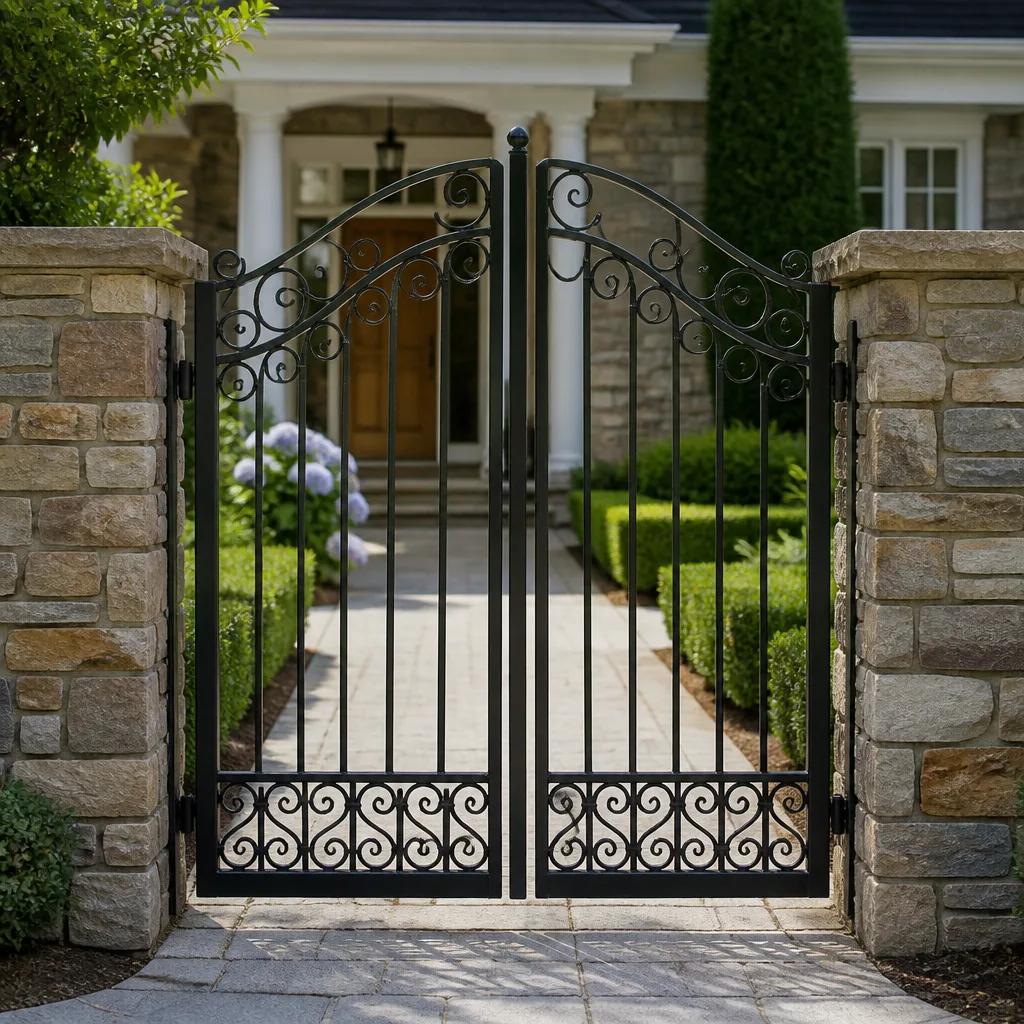
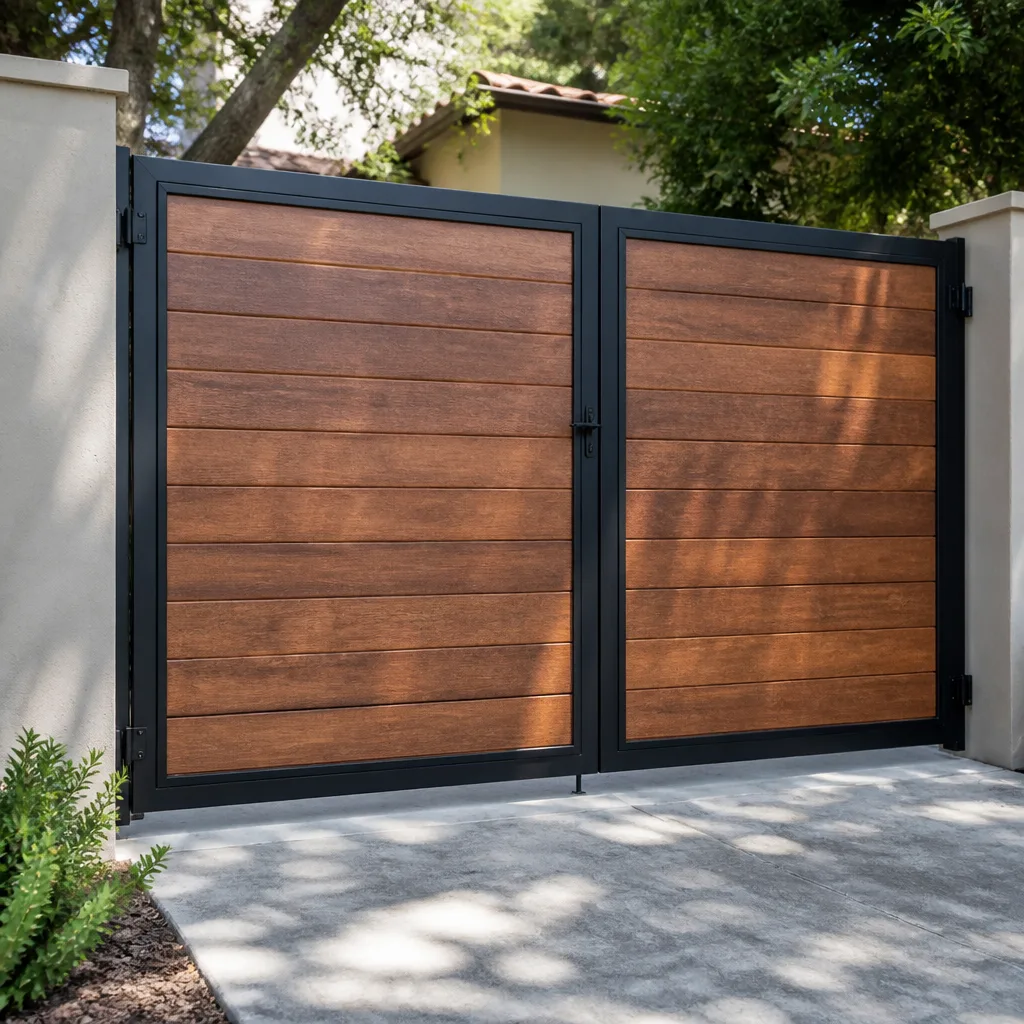
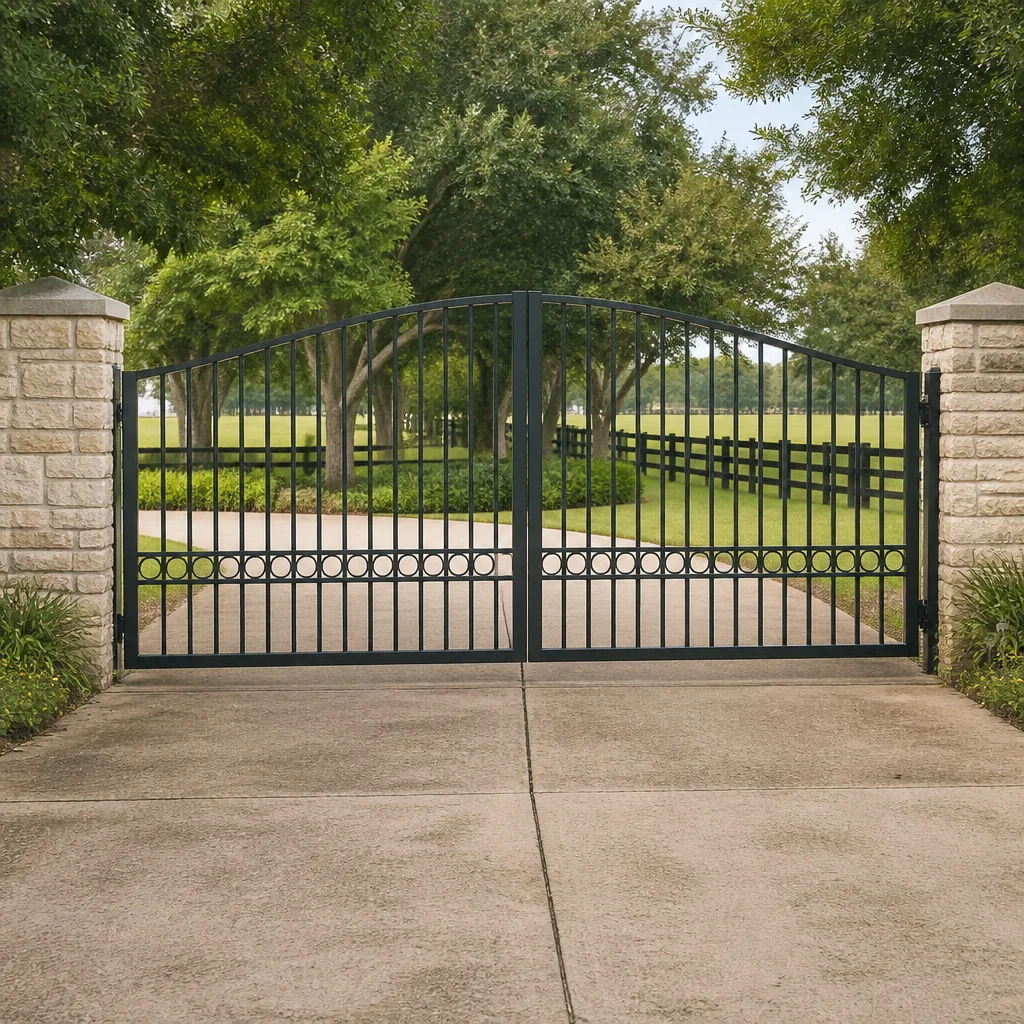
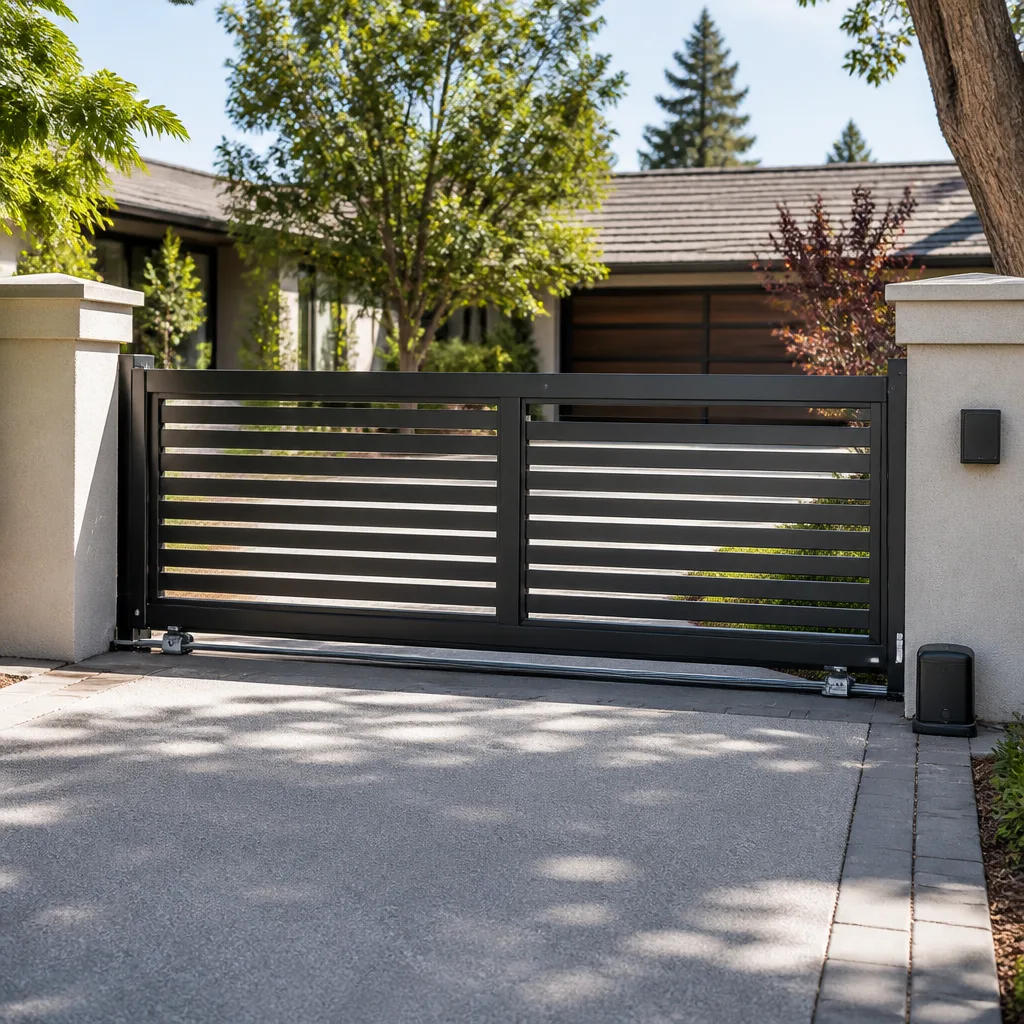
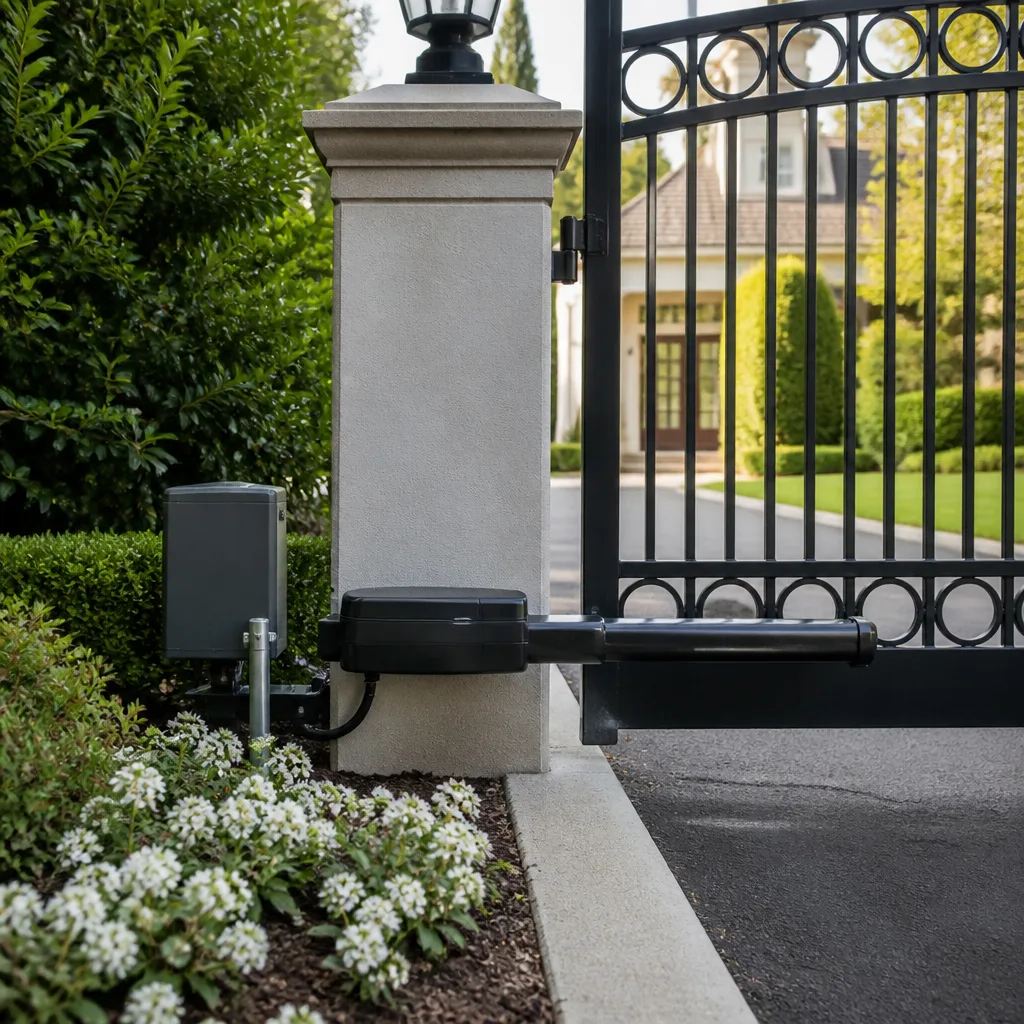
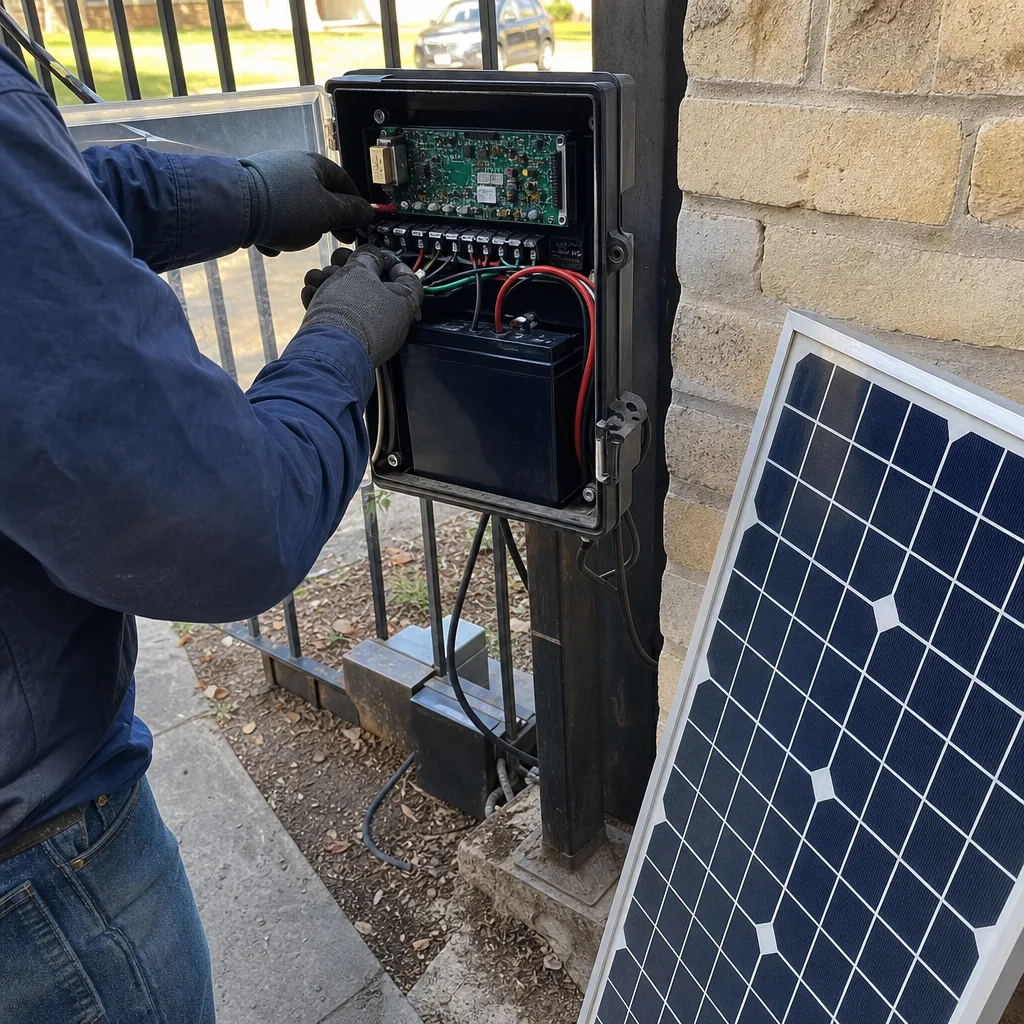
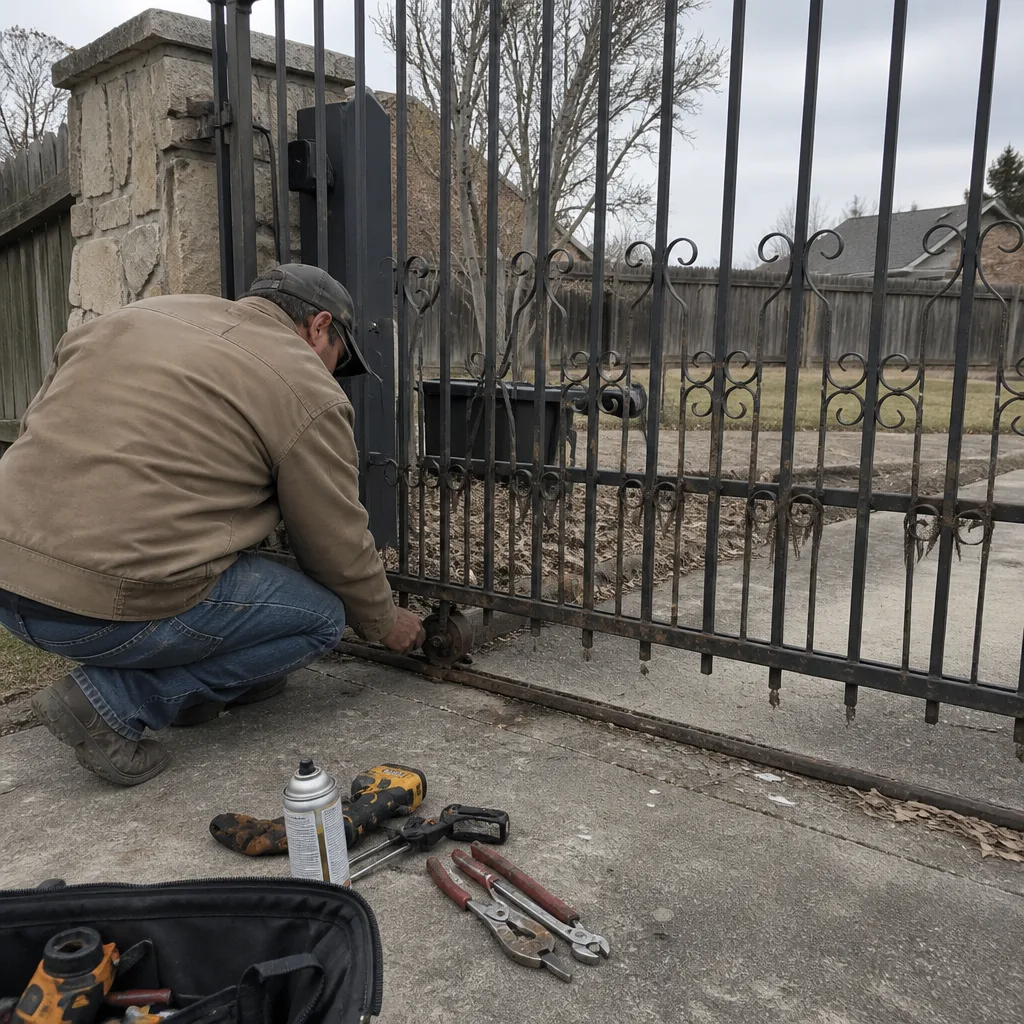 Before
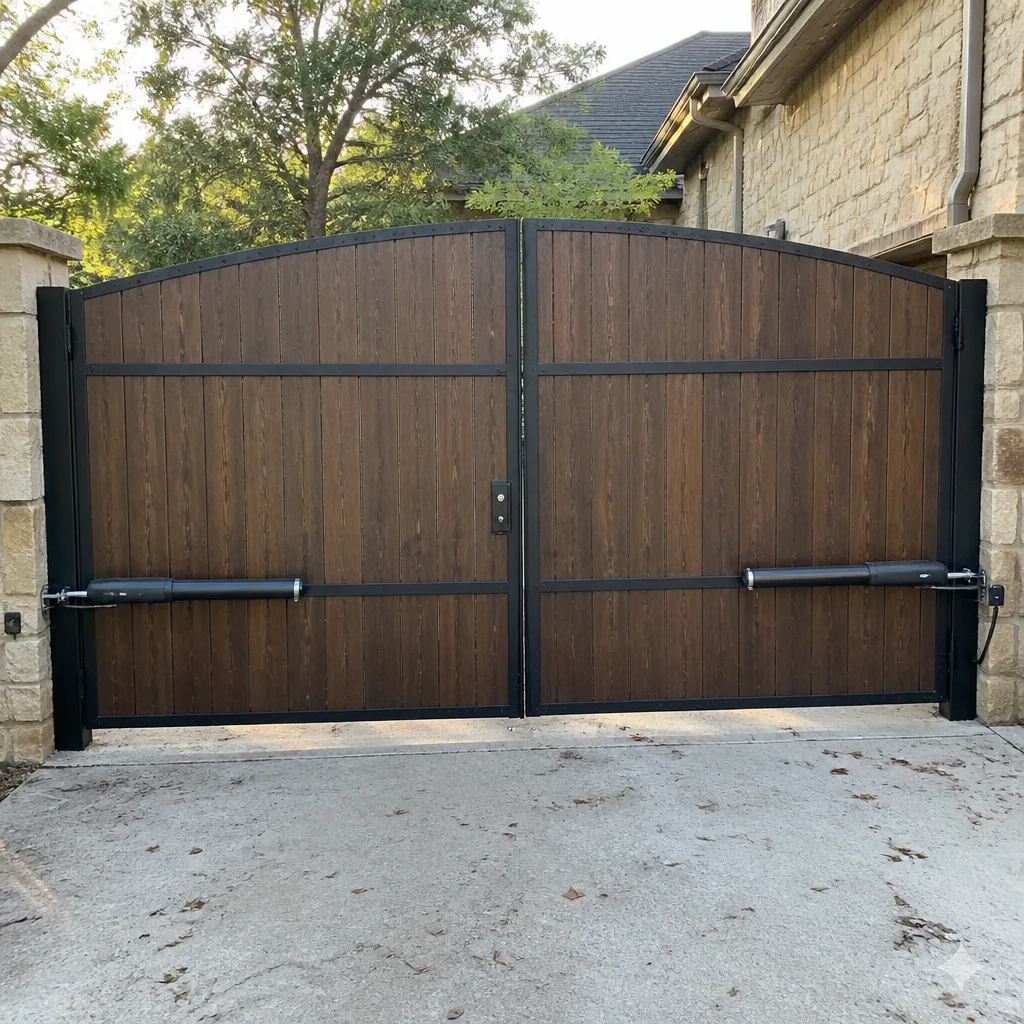 After
After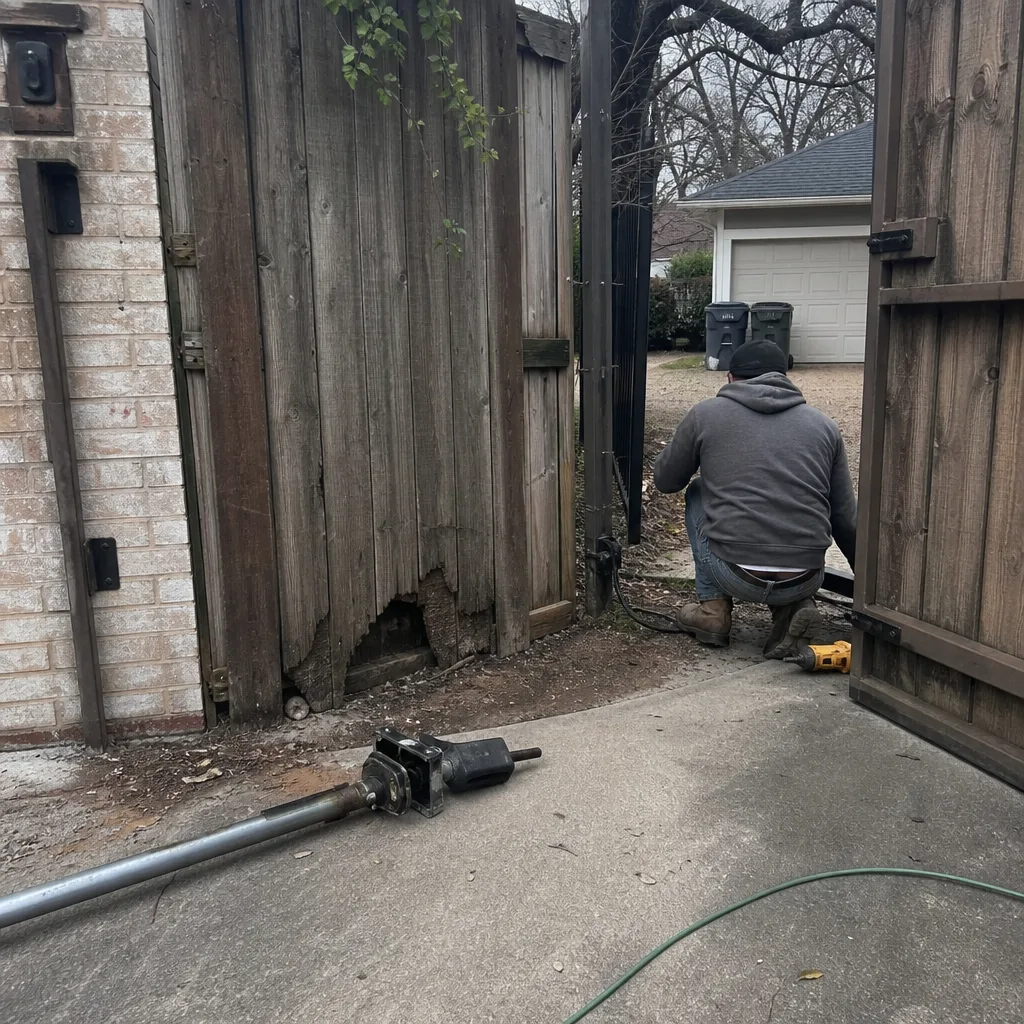 Before
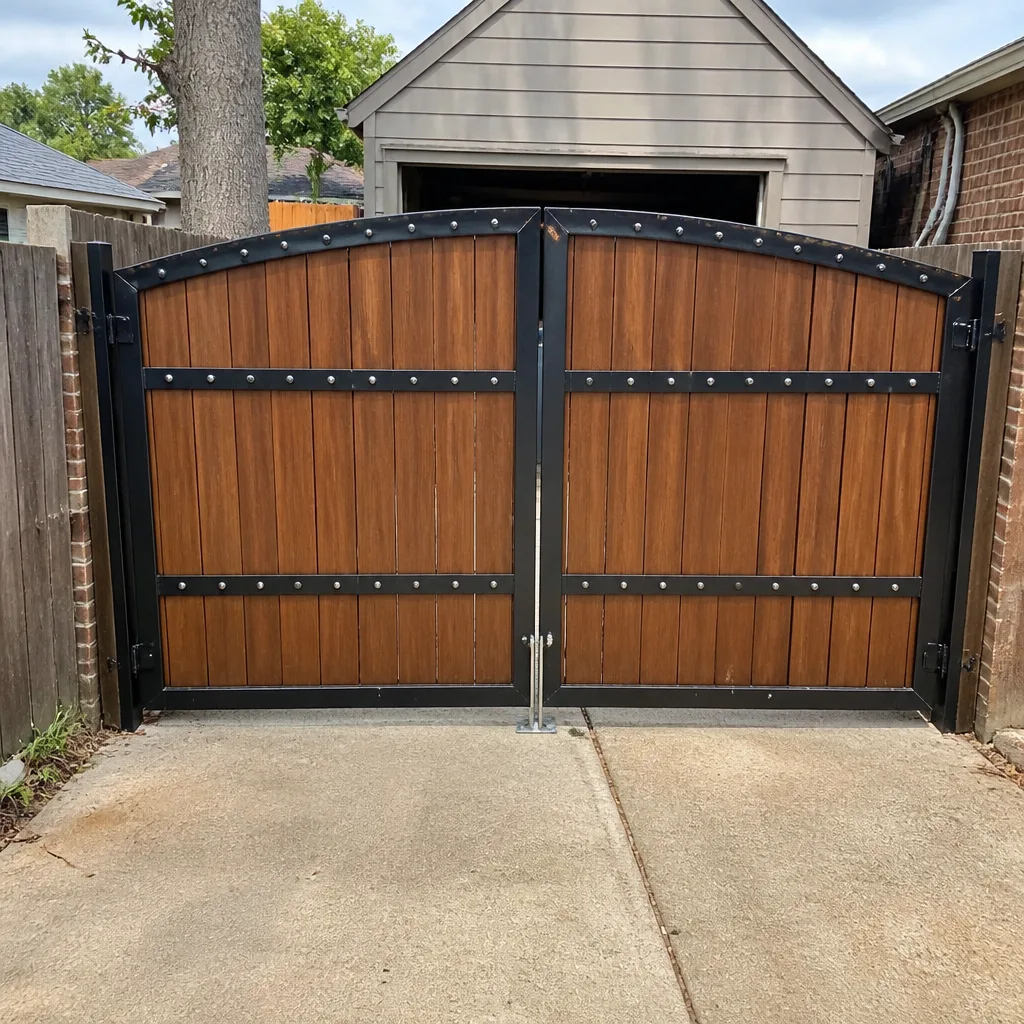 After
After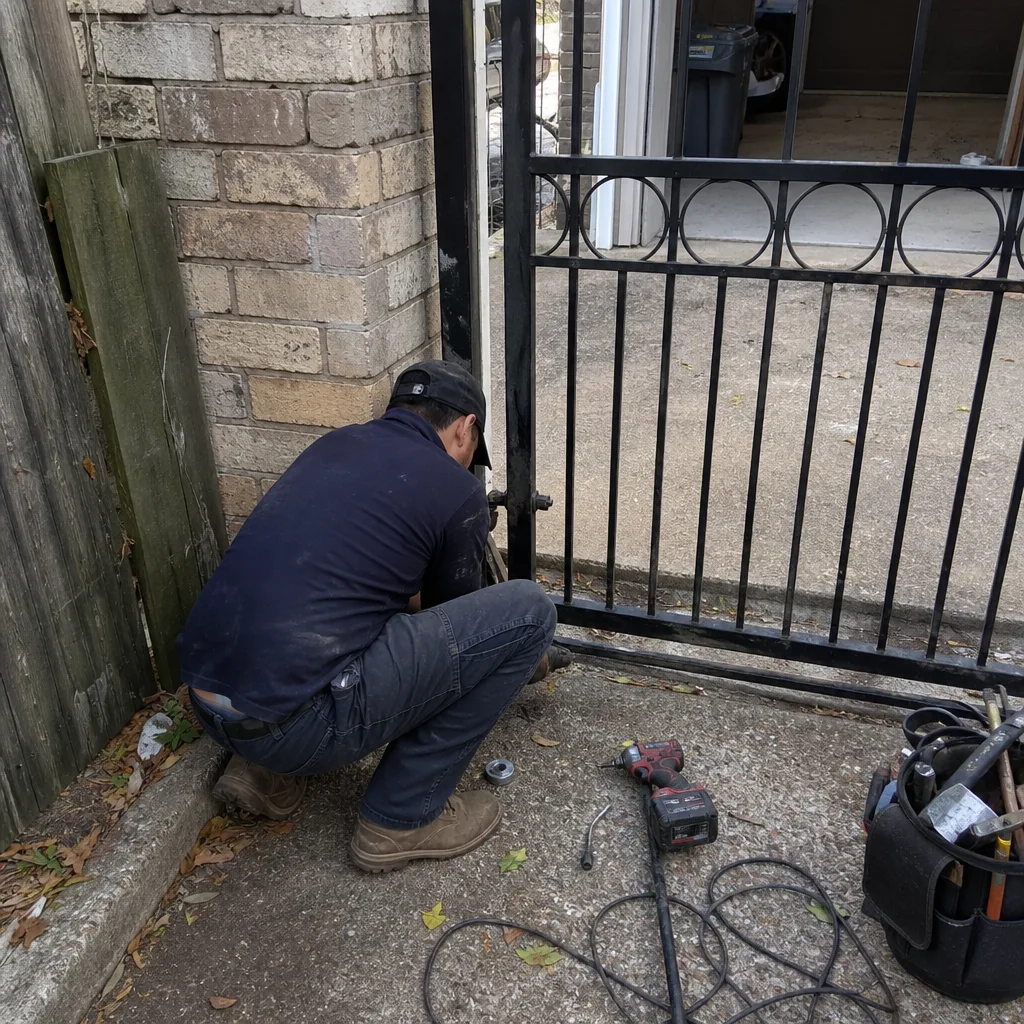 Before
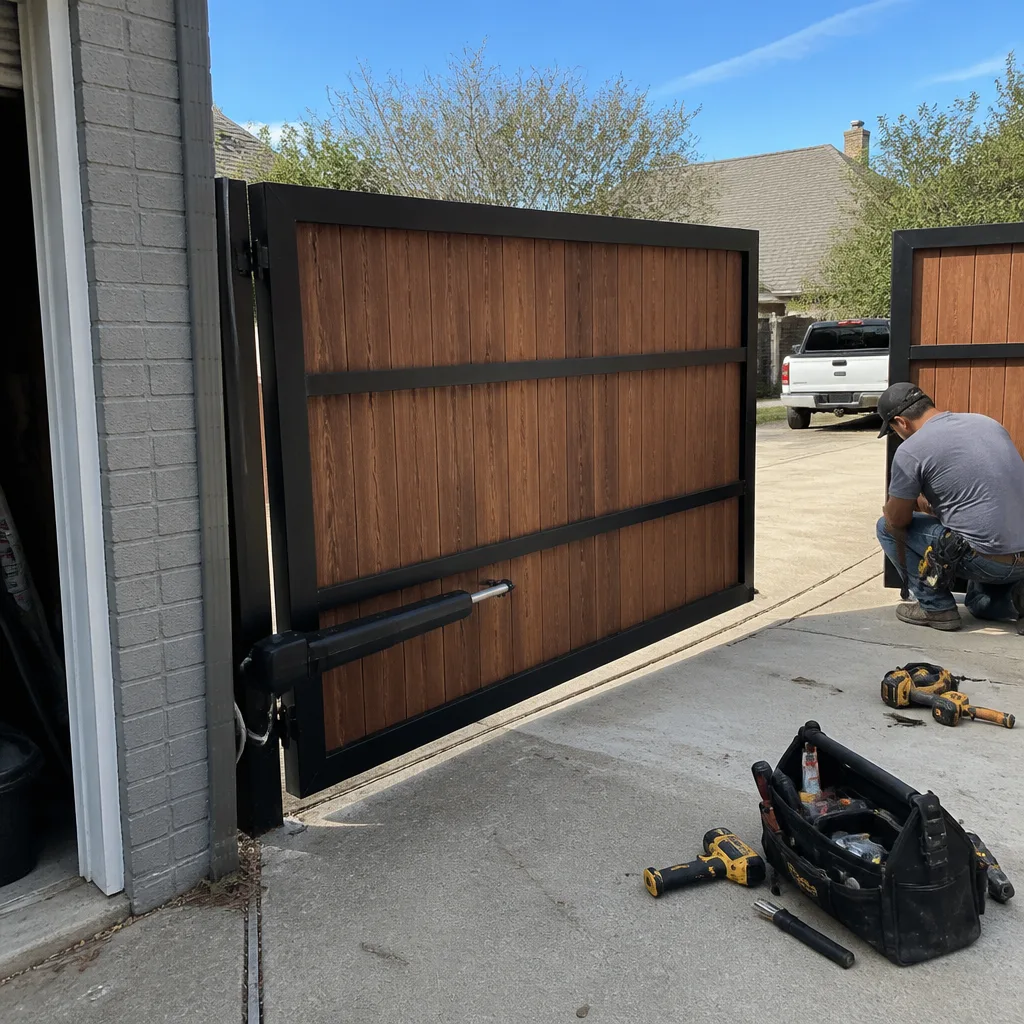 After
AfterHow to Hire a Gate Repair Contractor in Arlington: A Step-by-Step Guide
Hal once got called out to a gate in Arlington that had been “repaired” four months earlier. The previous contractor had bolted a steel bracket over a cracked weld instead of grinding the old weld out and doing it right. It looked fine from the curb. It wasn’t fine. The bracket was pulling the hinge post out of plumb, and the gate was dragging so bad the opener was burning itself out trying to move it. The homeowner paid twice: once for the patch job, once for us to undo it. This Complete Guide to Gate Repair in Arlington exists so you don’t become that homeowner. You’ll learn the exact questions to ask, the answers you should hear, and the red flags that tell you to keep dialing.
Quick Answer
Hiring a gate repair contractor in Arlington comes down to three things: verify they have a physical local address you can drive past, ask the questions that separate a gate specialist from a general handyman (welding capability, brand certification, warranty in writing), and get the quote on paper before any work starts. A real specialist answers the phone, fixes the gate where it sits, and stands behind the work in writing. A handyman orders parts, guesses at the problem, and disappears when the gate fails again.
Table of Contents
- The Three Questions That Separate a Gate Specialist From a Handyman
- Why “We’ll Order the Part and Come Back” Is Sometimes Legitimate… and Sometimes a Red Flag
- What a Real Warranty Looks Like in Writing (and What Disappears When You Call Back)
- How to Verify an Arlington Contractor’s Physical Address
- What On-Site Welding Capability Signals About a Contractor
- Step-by-Step: Hiring a Gate Repair Contractor in Arlington Without Getting Burned
- Common Mistakes to Avoid
- When to Call a Professional
- Frequently Asked Questions
- The Bottom Line
Key Takeaways
- A gate specialist fixes the problem where the gate stands. A handyman often replaces parts that didn’t need replacing because he doesn’t have the tools or knowledge to repair them.
- Always verify a physical address in Arlington. P.O. boxes and “service areas” without a shop should concern you.
- A written warranty with a named person behind it beats a verbal promise every time.
- The cheapest quote is rarely the cheapest job when the gate fails again in 90 days.
The Three Questions That Separate a Gate Specialist From a Handyman
Anyone can call themselves a gate repair contractor. There’s no gate police knocking on doors checking credentials. That means the burden falls on you to figure out whether the person on the phone has actually fixed a gate before, or whether they’re going to watch a YouTube video in your driveway and charge you for the education. These three questions do more sorting than twenty minutes of small talk.
Question 1: “Do you weld on site, or do you take the gate back to your shop?”
The answer you want to hear is “We weld it where it stands,” or “We have a truck rigged for it.” A gate that’s sagging, cracked, or pulling loose from its post almost always needs welding. The hinge plate tears. The frame cracks at a corner. The post collar breaks loose. If a contractor doesn’t weld, they’ll do one of two things: bolt a patch plate over the damage (which is the bracket-over-a-cracked-weld trick Hal keeps finding) or tell you the gate is beyond repair and sell you a new one. Both are expensive ways to avoid doing the actual work. Gate repair in Arlington should mean repairing the gate, not replacing it because the contractor lacks a welder.
The red-flag answer is “We don’t do welding” or “We can order a new section for you.” That’s not a repair specialist. That’s a parts swapper.
Question 2: “Which gate opener brands are you certified to work on?”
There’s a correct answer here, and it’s a list. A gate motor is not a garage door opener. Different brands use different control boards, different limit switch logic, different wiring. If someone says “we work on all of them” without naming any, they’re going to learn on your gate. A specialist will say something like “LiftMaster, FAAC, BFT, Linear, Viking, Ghost Controls, DoorKing, Elite, Mighty Mule” like they’re reading it off a label on their tool chest, because they are. We trained on these systems because Arlington gates run on all of them. Ask the follow-up: “What’s the most common failure you see with [your brand]?” A specialist will give you a direct answer in two sentences. A handyman will say “we’ll take a look.” That’s not an answer. That’s a stall.
Question 3: “What’s your warranty, and is it in writing?”
This is where the coy ones stutter. A verbal “we stand behind our work” is worth exactly as much as the air it’s spoken into. When the gate fails again in six weeks, you call, and the guy who “stands behind his work” doesn’t answer, or tells you it’s a new problem, or says the part he installed “must have been defective from the factory.” The answer you want is specific and written: “90 days, in writing, on the invoice, and if it’s not right we come back and make it right at no charge.” That’s how Gatewood Fence & Gate home has done it since 2001. The 90-Day Done Right Promise is printed on every job. It’s not a policy. It’s a piece of paper with Hal’s name on it.
If the contractor won’t put the warranty in writing, that’s your cue to find another contractor.
Why “We’ll Order the Part and Come Back” Is Sometimes Legitimate… and Sometimes a Red Flag
Gate openers fail in predictable ways. Control boards burn out. Capacitors swell. Limit switches wear. Photo eyes get knocked out of alignment. A serious gate repair contractor keeps the common parts in the truck or on the shop shelf, because people in Arlington don’t want to wait three days for a capacitor when their gate is stuck open at 8 p.m. So when you hear “we’ll have to order that part,” pay attention to which part they’re ordering.
If it’s a brand-specific control board for a 15-year-old opener, that’s legitimate. Nobody stocks every board for every model ever made. The difference is in what happens next. A real shop says, “I can have it in two days, and I’ll call you Thursday morning to schedule.” They have accounts with distributors. They know the lead time off the top of their head. They give you a date before they leave the driveway.
The red flag is when “we’ll order the part” follows a vague diagnosis. “It’s probably the board” is not a diagnosis. That’s a guess with your credit card attached. A specialist puts a meter on the board, checks voltage in and voltage out, and tells you why the board died. Because if the board died from a shorted wire or a failing capacitor, the new board will die too, and you’ll pay for two boards and still have a dead gate. “We’ll order the part” should come with an explanation of what killed the old one. No explanation, no job.
There’s another reason this matters. Some contractors use “parts are on order” as a way to collect a deposit, disappear for six weeks, and then tell you the part is backordered so you’ll settle for whatever they can source cheap. A real shop in Arlington has a physical inventory. Ask: “Do you have the part in stock, or are we waiting on a distributor?” and “What’s the exact lead time?” If they can’t answer both, they’re not managing your repair. They’re managing your patience.
What a Real Warranty Looks Like in Writing (and What Disappears When You Call Back)
Every contractor says they warranty their work. Fewer than half will hand you a piece of paper that says so. The difference matters more than you’d think, because when a gate fails after a repair, the failure usually happens at exactly the moment when the contractor is busiest with someone else’s job. Your callback goes to voicemail. Voicemail doesn’t honor warranties. Paper does.
A real warranty has three parts. First, it has a timeframe. “90 days” is what we put on the gate motor and opener work in Arlington. Some shops say 30. Some say they don’t do warranty work at all, which is the most honest answer you’ll get from some of them. Second, it states what is covered: the repaired part, the labor, and any adjustment needed if the gate isn’t operating right. Not just “parts only” while they charge you a trip fee and two hours of labor to reinstall a part they should have installed correctly the first time. Third, it has a name on it: the person who owns the shop, the person who answers the phone, the person who will show up. If the warranty is signed by “The Team” or “Customer Service,” you don’t have a warranty. You have a call center script.
Ask for the warranty before you sign the estimate. Not after. If the contractor gets vague here, get specific. “What happens if the same weld cracks again in two months?” The answer you want is “I come back and fix it. No charge. Here’s my cell number.” That’s it. That’s the whole warranty discussion. Everything else is hedging.
How to Verify an Arlington Contractor’s Physical Address
The oldest accountability in the trades is the one people forget in the age of internet search: a shop with a sign on it. If a contractor has a physical address in Arlington that you can drive past, that means they’ve signed a lease or bought a building. They have overhead. They have a reason to stay. If they screw up your gate and disappear, you know where they sleep. If they have a P.O. box and a website, they can be gone tomorrow and you’ll never find them.
Verifying an address takes five minutes. Plug the address into a map and look at the street view. Is there a shop, a yard, a truck with a phone number on it? Or is it a strip-mall mailbox store and a UPS store on the corner? Call the number and ask: “I’m driving by your shop later, are you at [address]?” Listen to the pause. A real shop says “Yeah, we’re here, gate’s on the side of the building, honk and I’ll come out.” A phantom says “We’re actually mobile, we don’t have a retail location.” Being mobile is fine. Not having any location that can be verified is not.
Hal’s address is published. The name is on the shop. You can drive down the road, walk in, and look the guy who’s going to fix your gate in the eye. That’s not a marketing gimmick. That’s the way it used to work before everyone got a website and a P.O. box and called themselves a business. It still works.
What On-Site Welding Capability Signals About a Contractor
There’s an investment in the trade that shows up in a specific piece of equipment: a mobile welding rig. A generator and a MIG welder mounted in a truck costs real money. Nobody buys a welding rig because they’re dabbling. They buy it because they’ve fixed enough gates to know that half the repairs an iron gate ever needs are welding repairs.
A gate sags in the hinge post, not in the middle. That’s the line Hal uses on estimates, because it’s the truth. The hinge plate pulls loose from the post, or the post itself shifts in the ground, and the whole gate starts to sag like an old porch. A contractor who welds on site will grind out the cracked weld, reweld the hinge plate, and have the gate swinging clean again in an afternoon. A contractor who doesn’t weld will tell you the gate is “worn out” and needs to be replaced. Or they’ll bolt on a plate and pray. Both outcomes cost you more than a proper weld.
On-site welding matters for another reason: it keeps the gate on its hinges. When a contractor hauls a gate back to their shop to weld it, they have to cut it off the posts. Then they have to reinstall it, re-hang it, re-square it, and hope it still lines up with the opener and the latch. When we weld in your driveway in Arlington, the gate never leaves its hinges. The geometry stays true. The job gets done in hours, not days. That’s what welding on site signals: a contractor who invested in the tools to do the job right where the gate lives.
Step-by-Step: Hiring a Gate Repair Contractor in Arlington Without Getting Burned
Here’s the process we’d hand to a neighbor who’s never hired for gate work before, or you can browse more guides & resources first. Follow it in order and you’ll end up with a specialist instead of a story about the guy who bolted a bracket over a cracked weld.
- Make a list of 3-4 contractors with Arlington addresses. Skip the national outfits. Skip the ones with no address at all. You want a shop you can drive past. If the address is real, you’re already ahead of most people.
- Call each one and ask the three questions from this guide. “Do you weld on site?” “Which opener brands do you work on?” “What’s your warranty, and is it in writing?” If they hesitate on any of them, cross them off. You’re not being harsh. You’re being an informed customer.
- Describe the problem once, clearly. “The gate sags on the latch side.” “The opener hums but doesn’t move the gate.” “The gate reverses halfway and goes back.” A specialist will usually give you a probable cause right on the phone. A handyman will say “we need to see it.” That’s true for diagnosis, but a specialist will have a working theory before they show up.
- Ask about trip charges and estimates up front. Around Arlington, some shops charge a flat trip fee just to show up. We don’t: no trip charge inside the county. Get it in writing. “Your estimate is free, right?” Say it out loud. Write down the answer.
- Look for certifications and brand knowledge on the estimate or the website. If the contractor lists the brands they service (LiftMaster, FAAC, BFT, Linear, Viking, Ghost Controls, DoorKing, Elite, Mighty Mule), that’s a good sign. If the estimate says “gate opener” with no brand, no model, no part number, that’s a quote written by someone who hasn’t identified what they’re fixing.
- Compare more than price. The cheapest bid on a welded hinge repair is often the one that doesn’t include welding. The cheapest bid on opener replacement often doesn’t include the safety edges or the photo eyes, which are legally required and will be added as a “change order” once the job is half done. Compare scope, not just the number at the bottom.
- Get the warranty in writing before you sign. If it’s not on the invoice, it doesn’t exist. Ask them to write it: “90-day warranty on parts and labor” or whatever they offer. A contractor who won’t write it down is telling you something important.
Follow those seven steps and you’ll hire a specialist, not a handyman with a ladder and a dream. It’s not complicated. It’s just a matter of asking questions that most people don’t know to ask.
Common Mistakes to Avoid
- Hiring the first contractor who answers the phone. Speed is not credentials. A live person answering the phone is a good sign, but it’s not the whole interview. Ask the three questions before you agree to anything.
- Accepting “we’ll order the part” without a diagnosis. If they can’t tell you why the part failed, the new one will fail the same way. Get a cause, not just a replacement plan.
- Paying a large deposit up front. A reputable Arlington gate contractor doesn’t need half the job’s cost before they’ve bought a single part. Modest deposits on custom work are normal; large deposits on routine repairs are not.
- Skipping the brand certification question. Gate openers are not generic. A contractor who doesn’t know the difference between a Viking and a BFT control board is going to learn on your gate, at your expense.
- Letting a contractor talk you into replacing a gate that could be welded. Repair-first is a philosophy. Replacement-first is a sales model. If the gate is structurally sound and the damage is to a hinge plate, a post collar, or a cracked frame corner, welding fixes it. You might be able to have a new gate installed in Arlington someday, but you shouldn’t be sold one because the contractor doesn’t own a welder.
- Not asking for the warranty in writing. Verbal warranties have a half-life of about two weeks. Paper doesn’t fade.
- Choosing a contractor with no verifiable local address. P.O. boxes and no-location websites are the modern version of a guy with a truck and a burner phone. You’ll never see him again, and neither will the next homeowner he burns.
When to Call a Professional
Some gate repairs are genuinely dangerous to attempt yourself, and high-tension springs and opener gear boxes top that list. If a torsion spring snaps, it releases stored energy that can maim or kill. If a gate closes on its own without resistance, the weight-load sensor has failed, and that is a crush hazard for kids, pets, and adults. If you smell overheated wires or see scorch marks on a control board, that’s a fire risk inside the opener housing. And if you have to lift a gate off its hinges and weld it, that’s not a Saturday project. That’s a job for someone with a rig in the truck and a decade of arc time. For Seasonal Gate Repair Care for Arlington: Year-Round Homeowner’s Guide, see our seasonal maintenance tips. Gatewood Fence & Gate offers free estimates in Arlington - call (817) 241-4067 and we’ll tell you what’s wrong and what it costs to fix, before any work starts.
Frequently Asked Questions
Ask three questions: Do you weld on site? Which gate opener brands are you certified to work on? Is your warranty in writing? A qualified contractor answers all three directly without stalling.
What should a gate repair cost in Arlington?
Most repair calls in Arlington run $200 to $450 for common jobs like hinge rew