
Last updated August 26, 2026
Free on-site gate assessment - hinges, posts, and your LiftMaster or Nice gate operator checked before anything is quoted
The assessment is free and the quote is the invoice.

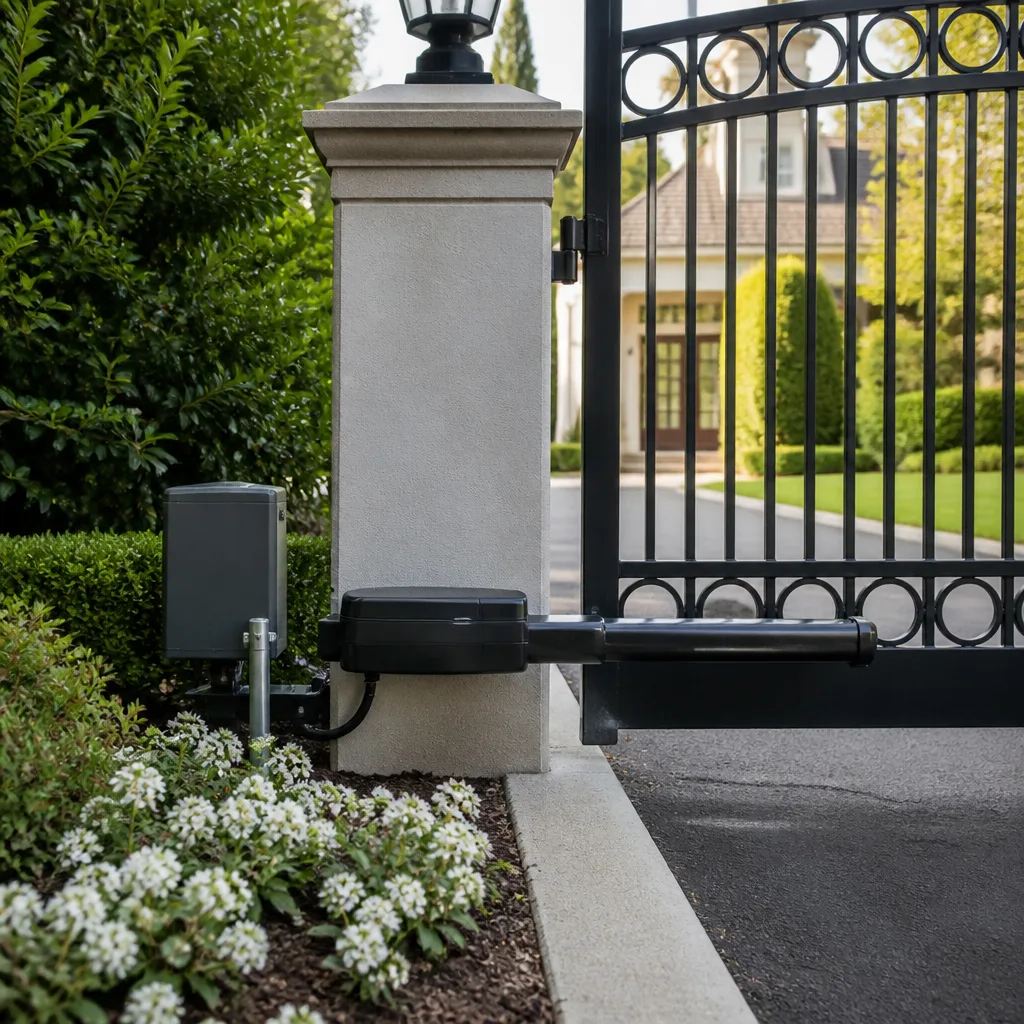
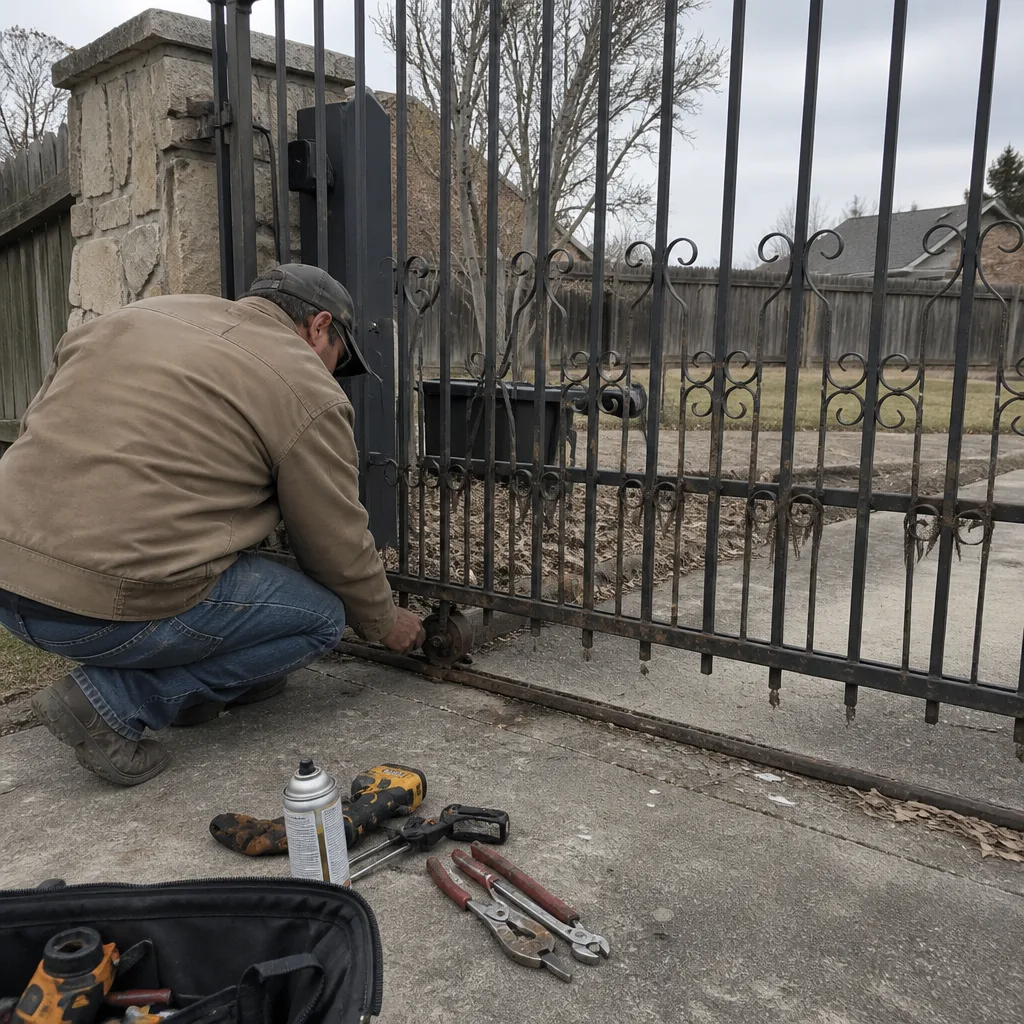 Before
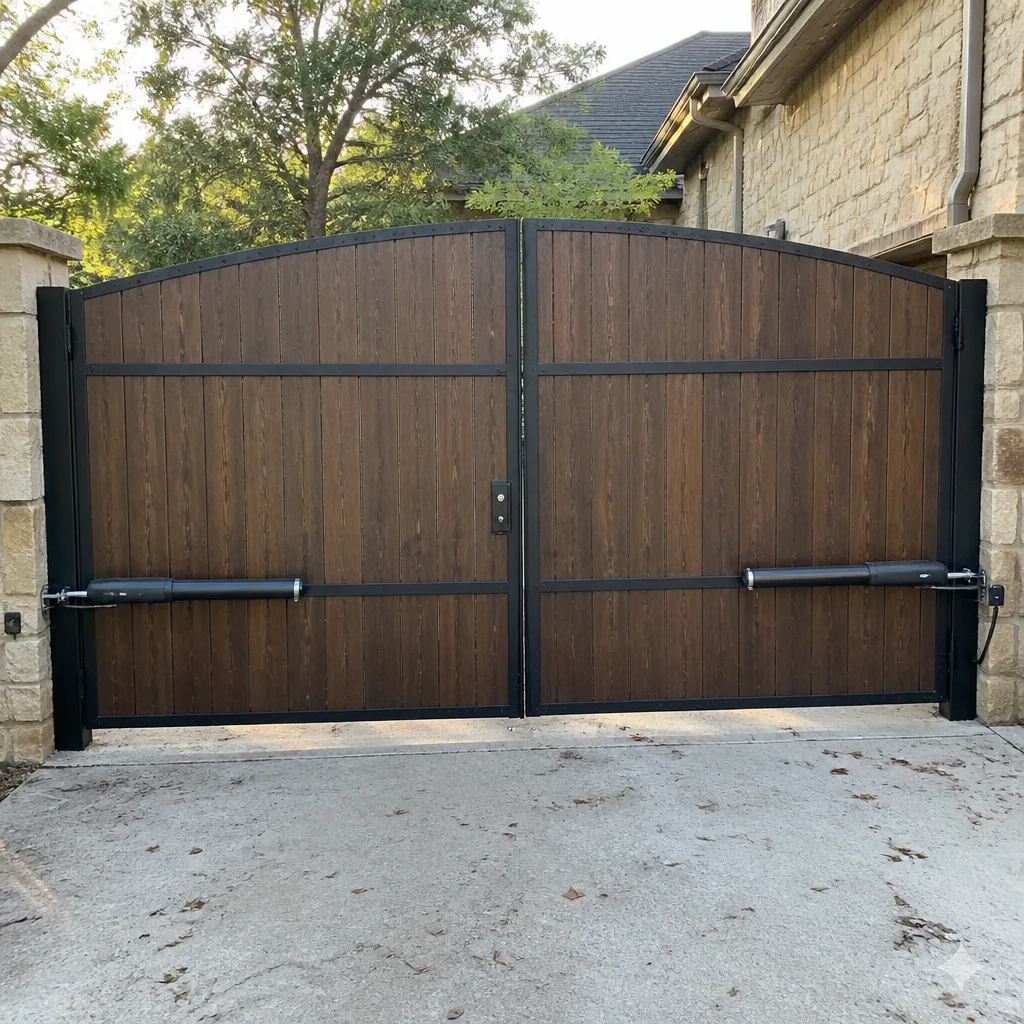 After
After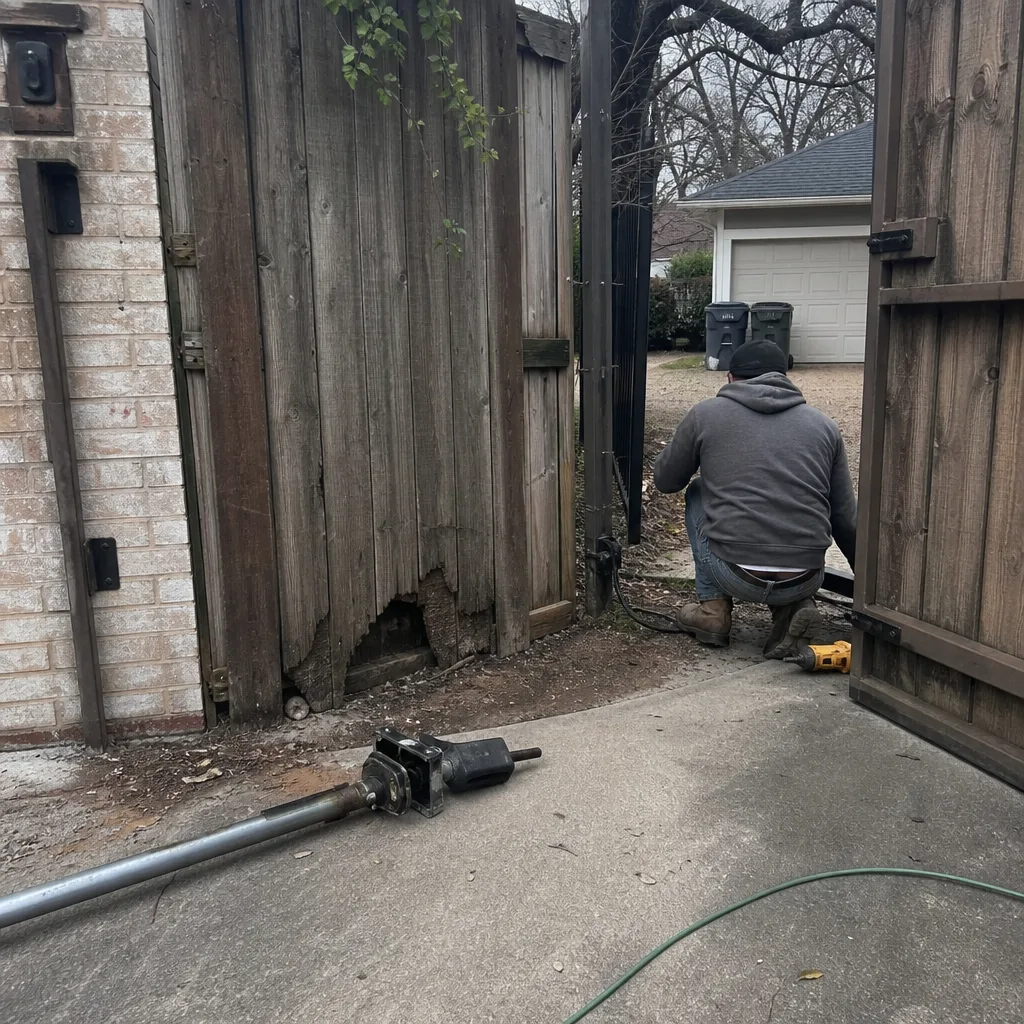 Before
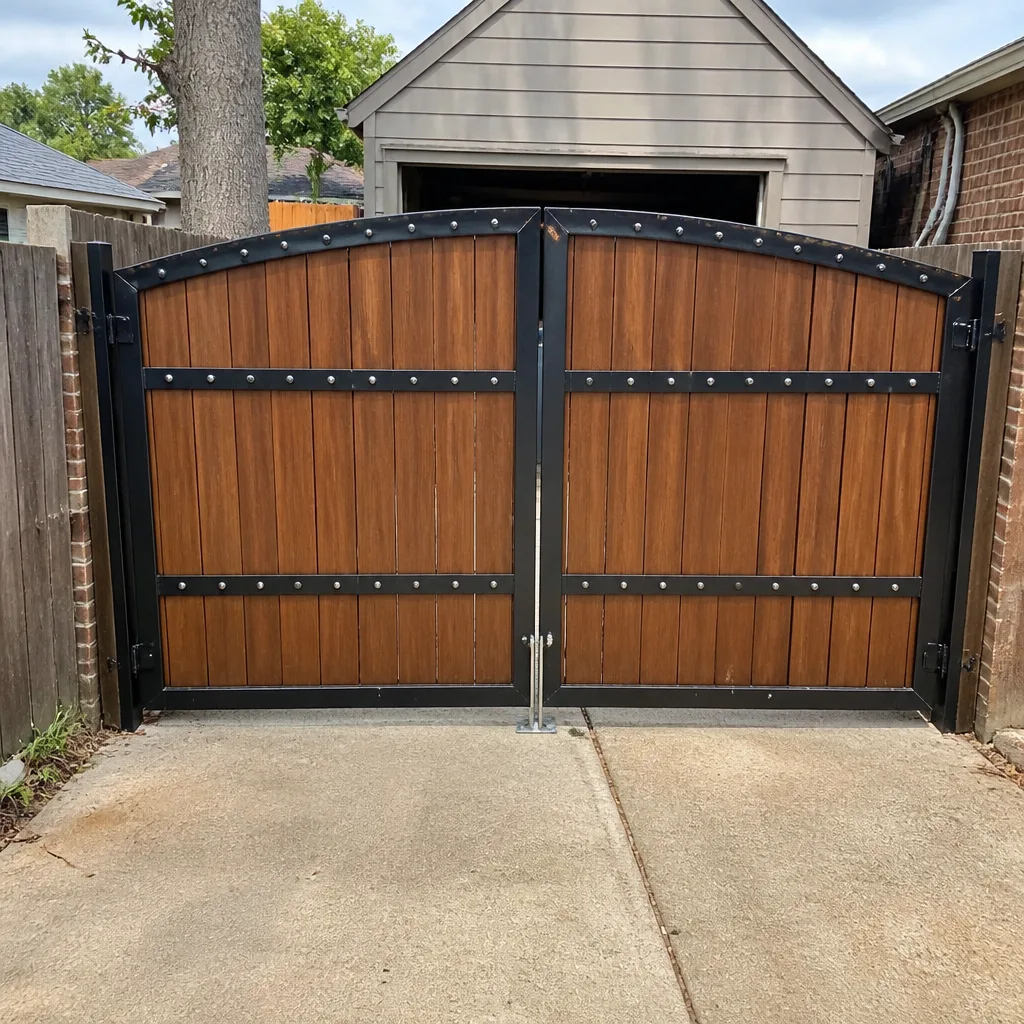 After
After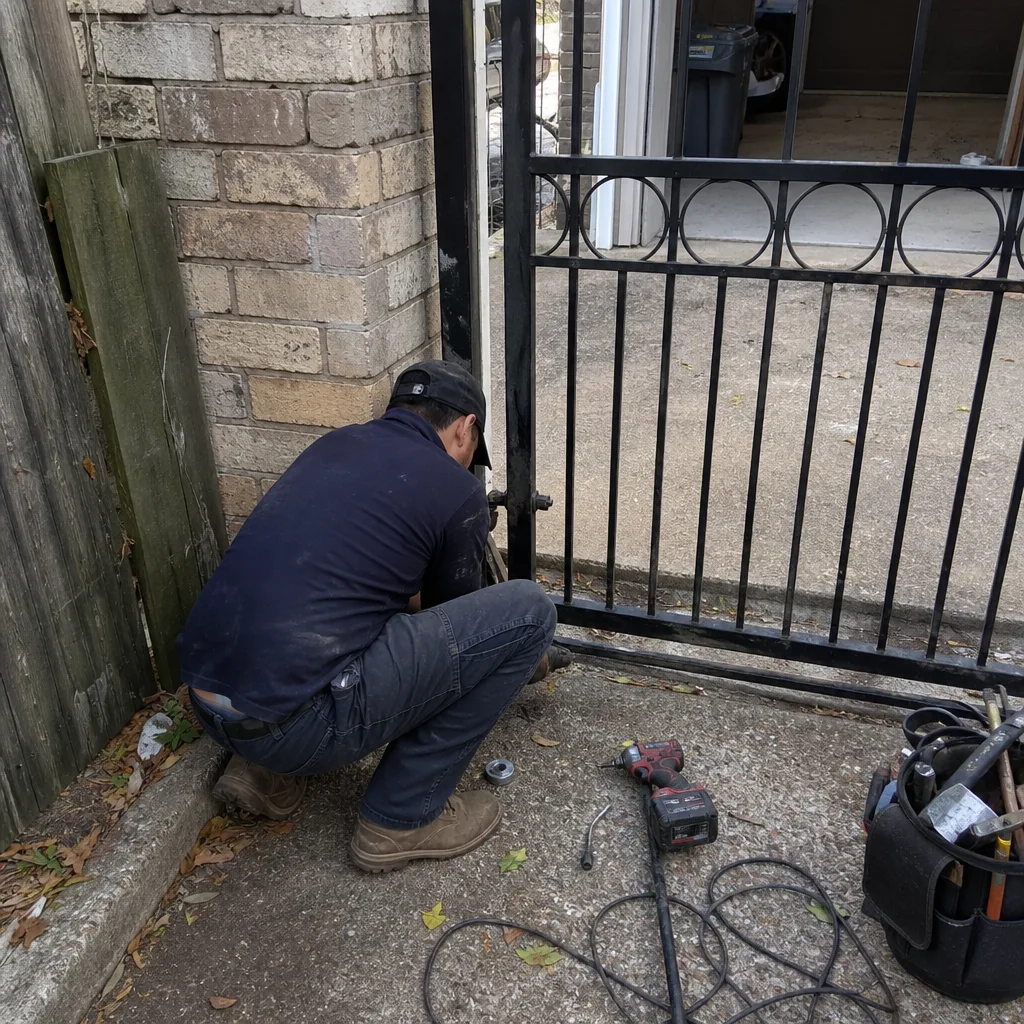 Before
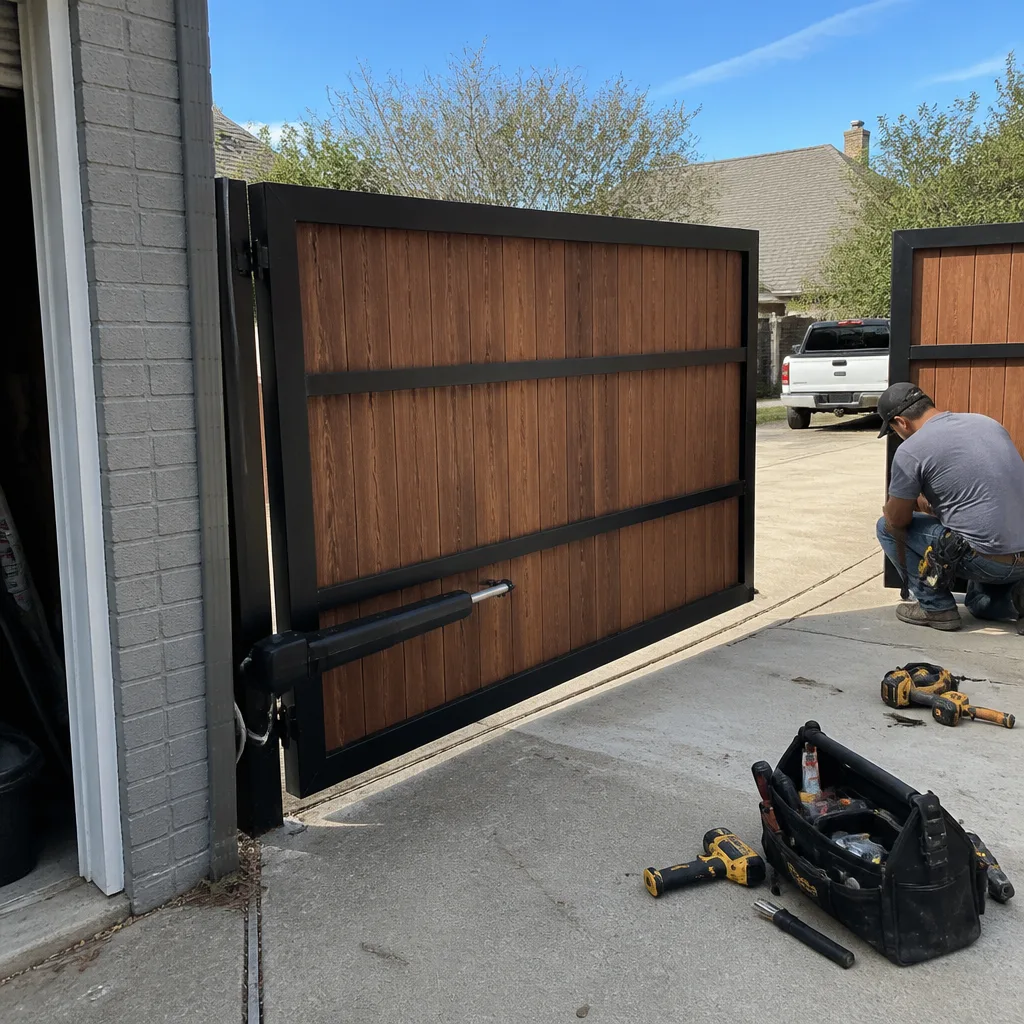 After
AfterSeasonal Gate Repair Care for Arlington: Year-Round Homeowner’s Guide
The gate calls we get in January aren’t random. They’re almost always from people whose operators were already marginal going into November and got finished off by the first hard freeze. The freeze didn’t break the gate. August did. In Arlington, we don’t have mild seasons. We have four distinct stress events every year, and each one creates a predictable failure pattern you can get ahead of if you know what to look for in that month. This guide is organized by what the season does to your gate, not by a generic calendar. For a deeper dive, see The Complete Guide to Gate Repair in Arlington. If you own an automatic gate in Arlington, TX, you’ll learn the exact month-by-month checks that catch most problems before they become a 10 p.m. emergency call.
Quick Answer
Seasonal gate care in Arlington means doing four specific things: checking your operator’s heat exposure each August before the fall, re-measuring post plumb after the clay soil shifts in October and November, lubricating and testing hinges before spring storm winds arrive in March and April, and preparing gate electronics for the first hard freeze in late November. Ten minutes a month beats a $400 emergency call, and the one-hour August check prevents most fall and winter failures.
Table of Contents
- Why Arlington Is Harder on Gates Than Almost Anywhere Else in Texas
- January Through March: The Freeze Didn’t Break It. August Did.
- April and May: What Wind Loading Does to a Gate That’s Slightly Out of Plumb
- June Through August: The One-Hour August Task That Prevents Most Fall Failures
- September and October: Clay Soil Contraction and the Post Footing Shift
- November and December: Freeze Prep That Actually Matters for a Texas Gate
- The Monthly Glance-and-Listen Routine That Takes Under Ten Minutes
- Brand-Specific Seasonal Notes: FAAC, BFT, Linear, and Viking
- Common Mistakes to Avoid
- When to Call a Professional
- Frequently Asked Questions
- The Bottom Line
Why Arlington Is Harder on Gates Than Almost Anywhere Else in Texas
Arlington sits in a climate pocket that punishes outdoor metal and electronics in ways Houston or Austin don’t. We get the freeze cycles of North Texas without the long stretches of stable cold that let materials settle. We get 100°F-plus heat for weeks at a time, but we also get February nights in the teens. That thermal swing, repeated every year, is the quiet killer. A steel gate expands in August heat and contracts in January cold. The paint flexes. The welds flex. The operator’s circuit board bakes inside a metal housing that can hit 140°F on a 100°F day with direct sun. And underneath it all, the clay soil under your posts is doing something different every month: swelling, shrinking, shifting. We’ve been fixing gates in Arlington since 2001, and the pattern holds year after year. The gate that fails in any given season was set up for it two seasons earlier.
January Through March: The Freeze Didn’t Break It. August Did.
When the first hard freeze hits Arlington, usually in late December or early January, gate operators that were running hot in August finally give out. The freeze is not the cause. It’s the trigger. Here’s what’s actually happening.
Operators are rated for a temperature range. Most consumer and light commercial openers, including the FAAC and BFT units we service regularly, are built for roughly -4°F to 140°F. Arlington temperatures stay inside that range, so the spec sheet says you’re fine. But the spec sheet doesn’t account for the accumulated wear of six months of Arlington summer. Here’s the sequence:
- In August, the operator’s internal temperature spikes with every cycle. The grease in the gearbox thins and starts seeping past seals.
- By October, the gearbox is running with 30% less lubrication than it had in May.
- When the first 25°F night hits in January, that remaining grease thickens to the consistency of cold peanut butter. The motor pulls harder. The amperage draw spikes.
- The circuit board, which has been baking at 130°F-plus for months, finally fails under the additional load.
The homeowner sees a gate that “just quit” in January. What actually happened took six months. In our experience, the fix is rarely the freeze prep you’ll read about on generic home improvement sites. Around here, the best January gate care is the August heat care we cover below. That said, there are two January-specific things worth doing:
- Listen to the operator on a cold morning. Open your gate at 7 a.m. on a sub-freezing day. If the motor sounds strained, labored, or slower than usual, that’s your warning. The gearbox is struggling, and the board is working harder than it should.
- Check the safety edges and photo eyes. Cold snaps cause condensation, and condensation on a photo eye lens means the gate thinks something is in the way. If your gate reverses for no reason on cold mornings, dry the photo eye lenses with a soft cloth and see if the behavior stops.
- Open the gate fully and look at the gap at the latch post. If the gap is wider at the top than the bottom, or vice versa, the gate moved.
- Stand at the hinge post and sight down the top rail. A gate that’s out of plumb will show a visible sag or twist. Trust your eye. If it looks off, it is off.
- Cycle the gate and watch the hinges. Look for any hinge that shifts or pops as the gate moves through its arc. That’s wear in the hinge barrel or the mounting points.
- Check the operator’s mounting bracket. Wind load transfers from the gate to the arm to the operator, and the bracket is the weakest connection. Look for loose bolts or fretting (dark metal dust) around the fastener holes.
- Shade-check the operator. Does the operator housing get afternoon sun? If so, consider a simple shade panel or positioning. We’re not saying every operator needs a shade structure, but knowing that your BFT or Linear is baking from 2 p.m. to 7 p.m. daily tells you to check it earlier in the fall.
- Inspect every seal, gasket, and edge strip. Look for hairline cracks, brittleness, or shrinking. Press on the rubber with a thumbnail. If it doesn’t spring back, it’s degrading.
- Feel the gate surface on a hot afternoon. If the panel is too hot to hold your palm on for five seconds, paint degradation is accelerating. Note the hottest areas, especially near welds and hinge points.
- Cycle the gate at 3 p.m. This is the worst-case thermal load. Listen for any change in motor pitch or cycle speed compared to a 7 a.m. cycle. Heat-related strain on the motor and board shows up in the afternoon first.
- Measure the gap at the latch post. Use a tape measure. The gap should be consistent top to bottom, and consistent from month to month. A change of more than a quarter inch means the post moved or the hinges are compressing.
- Check plumb with a 4-foot level. Place the level against the hinge post, then the latch post, then the gate panel itself. The post matters more than the panel. A gate sags in the hinge post, not in the middle, and that’s where we start.
- Look at the soil around each post. Gaps between the soil and the concrete footing, or visible cracking radiating from the post, are signs the clay is moving. This is normal in Arlington, but it means you should check the gate twice a year instead of once.
- Check the operator’s battery backup, if it has one. Many Arlington gates run on solar or battery-assist operators, especially on larger lots. Cold batteries deliver less current. If the battery is over three years old, test it before the first freeze. A marginal battery that works fine in October may not have the cold cranking capacity to open the gate on a 20°F January morning.
- Keep photo eyes and safety edges dry and clean. Condensation is the enemy. Arlington’s freeze-thaw cycles create heavy morning dew and fog. Photo eye lenses that are already dirty become useless when moisture beads on them. Clean the lenses in mid-November and again after any period of freezing fog.
- Cycle the gate at least once on the coldest morning you can manage. If you’re an early riser, cycle the gate on the first morning it drops below freezing. A gate that works at 7 a.m. on a 25°F morning will probably work all winter. A gate that strains, stutters, or reverses on that morning is telling you something.
- Lubricate hinges and rollers with a cold-rated lubricant. Not WD-40. WD-40 is a penetrant and solvent, not a lubricant. Use a silicone or lithium-based grease rated for low temperature. Do this in mid-November, not after the freeze has already set in.
- Glance at the gap. Stand at the latch post and look at the gap between the gate and the post. Is it even top to bottom? A wider gap at the top means the gate is sagging. A wider gap at the bottom means the latch post is leaning. This takes five seconds.
- Listen to the operator. As the gate opens and closes, listen. A smooth, even hum is normal. A grinding, straining, or pulsing sound means something is wearing. A change in the sound from last month is more important than the sound itself. This takes 30 seconds.
- Watch the full cycle. Watch the gate from start to stop. Does it open smoothly and stop without a jerk? Does it hesitate anywhere in the travel? Does it close smoothly and stop in the closed position without bouncing or reversing? This takes two minutes.
- Look at the hinges and hardware. Rust, wear, loose bolts, cracked welds, or anything that looks different from last month. Check the operator bracket and the safety edges. This takes three minutes.
- Check the photo eyes. Are they clean? Are they aligned? Are the lenses free of dirt and water spots? Wipe them with a dry cloth. This takes one minute.
- Look at the ground. Any new cracks in the soil around the posts? Any sign the footing is shifting? Any water pooling at the base of the gate? This takes one minute.
- Ignoring the August heat because the gate “works fine.” Arlington’s summer is the setup for fall and winter failures. The gate working in August doesn’t mean it’s healthy. The one-hour August check costs nothing and prevents the most common failure pattern we see.
- Using WD-40 on hinges and rollers. WD-40 is a solvent, not a lubricant. It strips the existing grease and evaporates, leaving the metal drier than before. Use a silicone or lithium-based grease rated for outdoor use. We see more hinge failures from over-application of WD-40 than from any other single cause.
- Assuming a sagging gate needs new hinges. The gate sags in the hinge post, not in the middle. Replacing hinges on a gate whose post has moved is a temporary fix that fails again. Check the post first.
- Buying a universal operator board and installing it yourself. We get calls in January from homeowners who installed a universal board in November and now have a gate that operates erratically. Universal boards are not tuned to your operator’s motor characteristics, and in Texas heat they fail fast. The money saved on the DIY board is usually spent on the service call to undo it.
- Waiting until the gate stops working entirely. By the time an Arlington gate has completely failed, the root cause has been developing for months. The repair is more expensive, and the operator may have sustained damage from running against a misaligned gate. Monthly routine beats emergency call.
- Letting the photo eyes get dirty for months. A gate that reverses randomly is often just a dirty photo eye lens. Clean the lenses monthly. It’s the fastest, cheapest gate maintenance there is, and it prevents the most frustrating “ghost” behavior.
- Ignoring frost heave in January and fixing the resulting gap in June. If your gate won’t latch in January because the ground swelled, address the alignment then. Waiting until summer means the gate has been out of alignment for six months, wearing the hinges and the operator the whole time.
For more on how we diagnose these cold-weather failures, see our Gate Repair in Arlington page.
April and May: What Wind Loading Does to a Gate That’s Slightly Out of Plumb
Arlington spring storm season brings gust fronts that routinely hit 50 to 60 mph. A solid steel gate can be 8 feet wide and 7 feet tall, which gives the wind roughly 56 square feet of sail area to push against. At 50 mph, that’s hundreds of pounds of force slamming into the gate panel, the hinges, and the post - and it’s not a steady push. It’s gusts, repeated, sometimes for hours during a line of storms.
Here’s what most homeowners don’t realize: the storm does not break a gate that’s in plumb. A gate that’s properly aligned sheds wind load through the hinges and into the post without much drama. But a gate that’s already an eighth of an inch out of plumb becomes a lever amplifying every gust. Each hinge takes more load than it was designed for. The lag screws or weld points at the hinge start working back and forth. After one storm season, that eighth of an inch becomes a quarter inch. After two, the hinge bolts are elongating their holes and the gate sags visibly.
What to do after a significant spring storm:
Show me a gate closing on its own and I’ll show you where it’s failing. A gate that drifted shut after a storm is a gate that was already out of balance. The spring winds just pointed it out.
If you find hinge movement or a sag after the April storms, get it addressed before June. A gate that’s out of plumb in June will cook its operator in August, because the misalignment means the opener is fighting the gate’s weight on every cycle. See our Gate Installation in Arlington page for what a properly set gate and post job looks like.
June Through August: The One-Hour August Task That Prevents Most Fall Failures
Arlington summers are the quiet season for gate failures, which is exactly the problem. The gate works fine in June. It works fine in July. Nobody thinks about it in August. Then September and October arrive, and the calls start.
Here’s what’s happening while the gate “works fine.” The operator housing, typically a dark gray or black metal box, absorbs direct sun. On a 100°F Arlington afternoon, the interior of that box can reach 140°F to 150°F. The circuit board inside is rated for a maximum operating temperature, usually around 149°F for consumer units. The board doesn’t fail at that temperature immediately. It degrades. Capacitors dry out slightly. Solder joints expand and contract. Then the next stress event, whether it’s a voltage spike from a lightning-storm power flicker or a cold snap in January, pushes it over the edge.
Rubber seals have a parallel story. The rubber or vinyl edge seals on a gate, and the gaskets around the operator housing, are petroleum-based products. Sustained heat above 110°F accelerates the outgassing of plasticizers, which are what keep the rubber flexible. By September, seals that looked fine in June are starting to hairline-crack. Rain gets through the operator housing gasket, or the edge seal starts to tear.
Painted metal tells the same story more slowly. UV exposure is the main culprit, not heat alone, but Arlington combines both. Powder coat fades and micro-cracks. Bare steel starts to flash rust. On a black gate, surface temperatures in August exceed 160°F, and the thermal cycling of day and night contributes to paint delamination around weld joints.
The one-hour August task:
This one-hour check costs nothing and catches 80% of the failures we see in October and November.
September and October: Clay Soil Contraction and the Post Footing Shift
North Texas sits on a band of expansive clay soils. You know this if you’ve ever seen cracks in your home’s foundation or watched your fence line heave after a wet month. Your gate posts sit in the same soil, and the gate’s weight sits on those posts. When summer heat dries the clay, it contracts and cracks. When October and November rains come, the clay swells. This cycle shifts post footings microscopically every year, and over three to five years, those micro-shifts become visible gate problems.
What to measure in October, after the first good fall rain:
The fix for a post that’s moved is not always “replace the post.” Often it’s re-shimming the hinges or adding a second hinge point to spread the load. We welded a brace onto a Viking opener bracket last October for an Arlington homeowner whose post had shifted three-eighths of an inch after the rains. The gate had been binding for two weeks, and the operator was pulling 40% more amperage with every open. We got the alignment back and the meter calmed down. That’s the repair-first approach. Fix the post without the hinge and you’ll fix it twice.
If you’re in this position, our Gate Motor & Opener in Arlington page explains how operator strain relates to gate alignment.
November and December: Freeze Prep That Actually Matters for a Texas Gate
Most freeze-prep advice for gates is written for places like Minnesota or Michigan, where the ground freezes solid and snow loads bury the gate. That advice is almost useless in Arlington. Our freezes are short, shallow, and wet. The ground rarely freezes more than an inch deep, and snow load is never the issue. What matters here is condensation, battery performance, and the one week of hard cold that finishes off an already-worn operator.
The freeze prep that actually matters in Arlington:
I will be there myself - or you can drive to the shop and look me in the eye. That’s the advantage of working with a gate specialist who lives in Arlington and has been doing this since 2001. When the freeze hits and your gate won’t open, the person on the phone is the person showing up, not a dispatcher in another state.
The Monthly Glance-and-Listen Routine That Takes Under Ten Minutes
Most gate failures don’t happen suddenly. They give warnings for weeks or months before the final break. The problem is that nobody is listening. This ten-minute monthly routine catches roughly 80% of the problems we get called for, often months before they become emergencies.
What to do each month, ideally on the first weekend:
Write down anything that looks or sounds different. If you keep a simple note on your phone, you’ll have a record of changes over time. When you call us, the ability to say “it started making a grinding sound about two months ago, but it still opens” gives us a head start on the diagnosis. And a note like that often means we can fix a problem for $150 on our first visit instead of $600 after the failure is complete.
Fix the panel without the post and you’ll fix it twice. The same principle applies to maintenance. Address the small change in month one and you skip the big failure in month six.
Brand-Specific Seasonal Notes: FAAC, BFT, Linear, and Viking
We service nine major gate operator brands, including FAAC, BFT, Linear, and Viking. Each has its own seasonal quirks, and knowing them can save you a service call.
FAAC
FAAC operators are common on residential gates in Arlington, and they’re generally reliable in our climate. The seasonal weak point is the hydraulic gearbox. FAAC units use an oil-filled gearbox, and the oil viscosity changes significantly between summer and winter. In August, the oil thins and the unit runs hot. In January, a thick oil means a slow start on the first morning cycle. If you have a FAAC, listen to the first cycle of the day especially carefully between November and February. A slow, labored first-open that improves later in the day is classic FAAC cold-oil behavior, and it typically means the gearbox oil needs changing. That’s a $90 to $150 service, not a replacement.
BFT
BFT operators are often found on sliding gates in the Arlington area. The seasonal concern with BFT sliding gate motors is the rack and pinion gear, which sits exposed or semi-exposed on most installations. Summer dust and grit accumulate on the rack, and when fall rains arrive, the dust turns into a grinding paste. The gate starts to sound like it’s chewing gravel. We recommend cleaning the rack with a dry brush in September, before the rains, and again in March after spring storms. A BFT rack that runs clean will last years longer than one that marinates in grit every winter.
Linear
Linear operators are workhorses. We see more Linear units on Arlington gates than almost any other brand, and they hold up well to Texas heat. The weak point is the limit switch mechanism. As temperatures change, the metal components expand and contract, and the limit switch contacts can drift. This shows up as a gate that stops a few inches short of fully closed in December, or a gate that overtravels and bounces in August. If your Linear gate starts stopping short, check the limit switches before you assume the motor is failing. It’s often a five-minute adjustment, not a part replacement.
Viking
Viking operators are built for heavy gates, often commercial or large residential. The seasonal issue with Viking units in Arlington is the battery in the backup system, if your unit has one. Viking battery backups are sensitive to repeated heat cycling, and a unit that sat through three Arlington summers may not have a reliable backup when a January freeze knocks out power. Test your Viking backup battery in October. A replacement battery is far cheaper than being locked out of your property on a cold morning.
Whatever brand you have, the monthly glance-and-listen routine above applies. The brand-specific notes just help you interpret what you’re seeing and hearing.
Common Mistakes to Avoid
When to Call a Professional
Some seasonal gate issues are homeowner-fixable with a clean cloth and a tube of grease. Others are not. Call a professional if your gate sags more than half an inch out of plumb, if the operator makes a grinding or popping sound, if the gate reverses repeatedly for no reason, if you find cracked welds or broken hinge bolts, or if the post footing has visibly shifted. High-tension components like gate springs and torsion bars carry stored energy that can cause serious injury if mishandled. That’s not a DIY project. Gatewood Fence & Gate offers free estimates in Arlington, and we offer a free second opinion on any written estimate you’ve gotten from another company. Call (817) 241-4067, and you’ll get a live person, not a phone tree.
Frequently Asked Questions
We recommend a professional inspection once a year, ideally in September or October before the fall rain and winter freeze season, plus the monthly glance-and-listen routine. Arlington’s heat and clay soil put more stress on gates than the national average, so a yearly professional check catches what the monthly routine can’t.
Most seasonal gate repairs in Arlington fall between $150 and $400, depending on whether it’s a hinge adjustment, a seal replacement, a gearbox oil change, or a circuit board issue. We quote the price before any work starts, and we offer $40 off any repair over $200 and a permanent 10% discount for seniors and veterans. Call (817) 241-4067 for a free estimate.
Yes. A gate that only fails when it’s cold is almost always a gearbox lubrication issue or a weak circuit board that’s been heat-cycled too many times by Arlington summers. We diagnose the specific cause rather than replacing parts unnecessarily, which means the fix is often less expensive than you’d expect.
The most common pattern we see is an operator failure in January caused by wear accumulated during the summer heat. The operator works through August, degrades through September and October, and gives out on the first hard freeze. The monthly routine and the one-hour August check catch most of these before the failure happens.
We’re certified to service nine major brands, including FAAC, BFT, Linear, Viking, Ghost Controls, DoorKing, Elite, LiftMaster, and Mighty Mule. If you’re not sure what brand you have, call us and describe the operator. We’ll help you identify it over the phone. Our percentage of repair-vs-replace is among the highest in the Arlington area because we fix the actual problem rather than selling new equipment.
In Arlington, the most useful freeze preparation is to clean and dry your photo eye lenses, cycle the gate on a cold morning to check for strain, and make sure your operator’s battery backup, if it has one, is healthy. Skip the elaborate winterization rituals written for colder climates. Our freezes are short and wet, and the realistic risks are condensation and lubricant thickening. If your gate struggles on the first cold morning, call (817) 241-4067 before the next freeze, not after it fails.
The Bottom Line
Arlington gates don’t fail randomly. They fail on a schedule set by the Texas climate and the clay soil under your feet. The August heat sets up the January failure. The spring winds expose the sag that started in October. The clay soil shifts every year, and the gate tells you about it if you’re looking. Ten minutes a month is the difference between a gate that runs for 15 years and a gate that needs a $600 emergency call in January. Start the routine now, and if something doesn’t look or sound right, call a gate specialist who lives in Arlington and whose name is on the shop. For more guides & resources on keeping your gate running, visit our blog. The name is on the shop, and the shop is down the road. That’s the oldest accountability there is.
Written by Hal Gatewood, Owner at Gatewood Fence & Gate, serving Arlington since 2001.