
Last updated August 26, 2026
Free on-site gate assessment - hinges, posts, and your LiftMaster or Nice gate operator checked before anything is quoted
The assessment is free and the quote is the invoice.

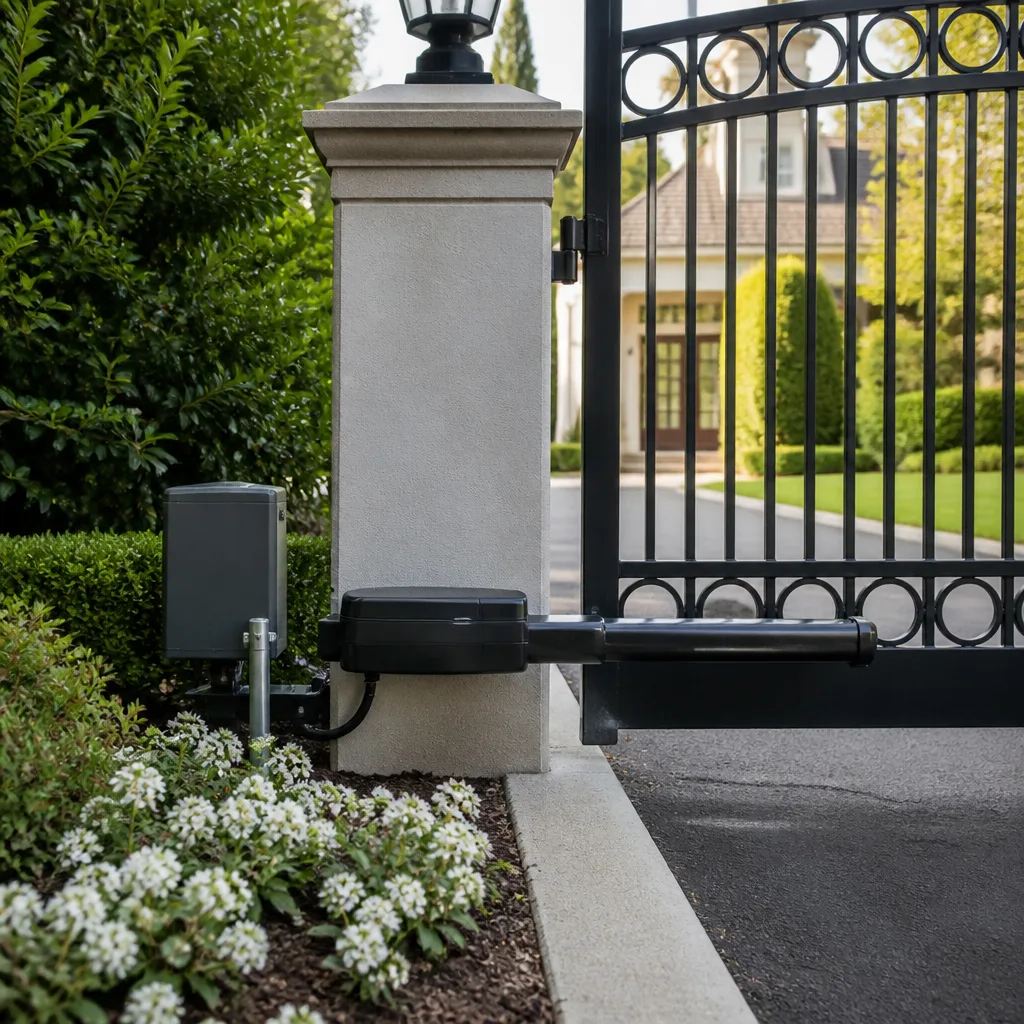
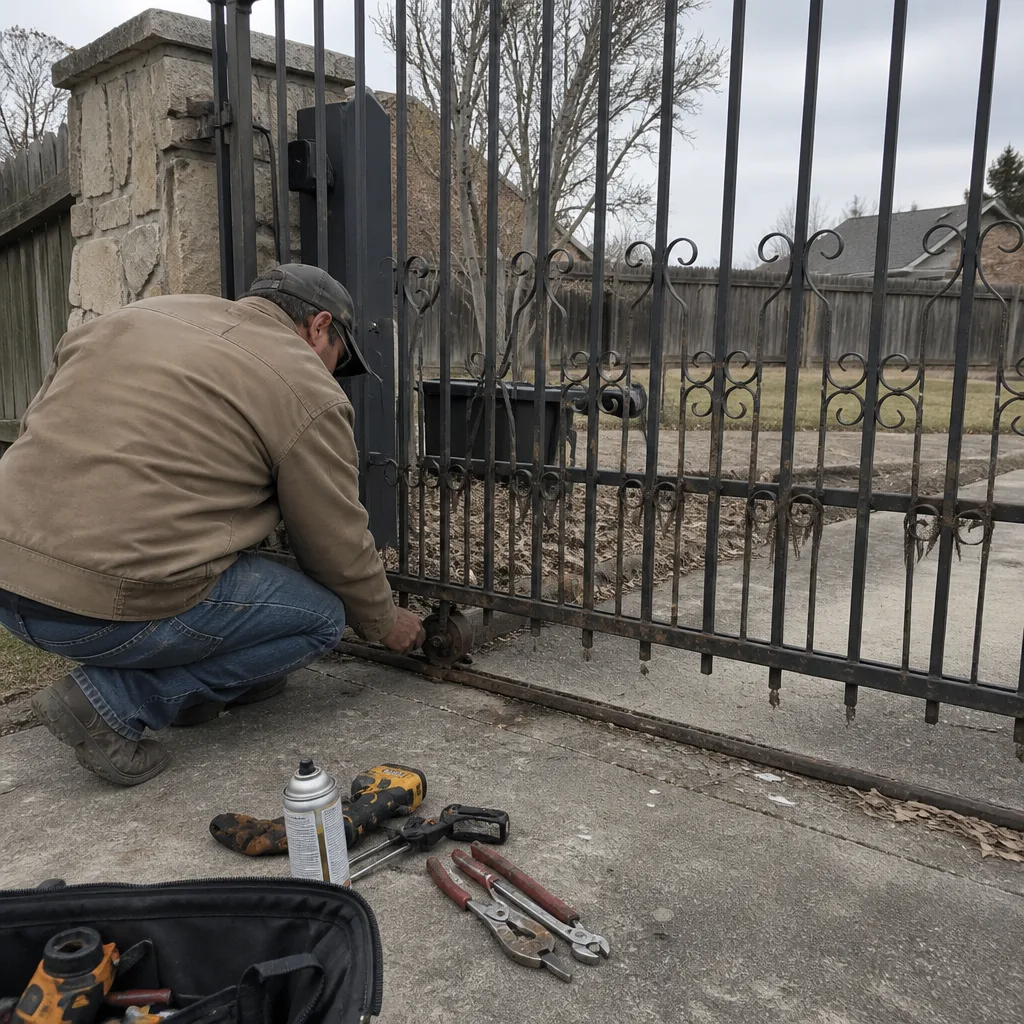 Before
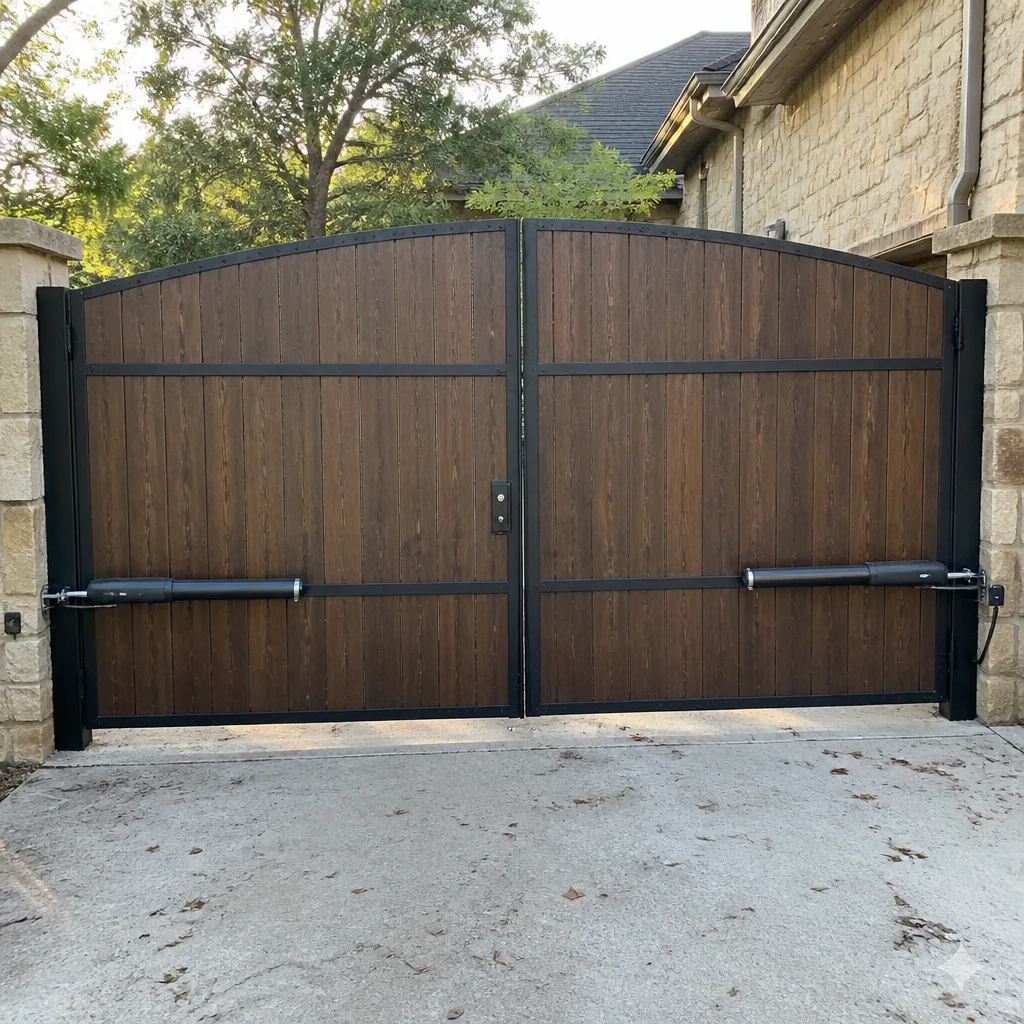 After
After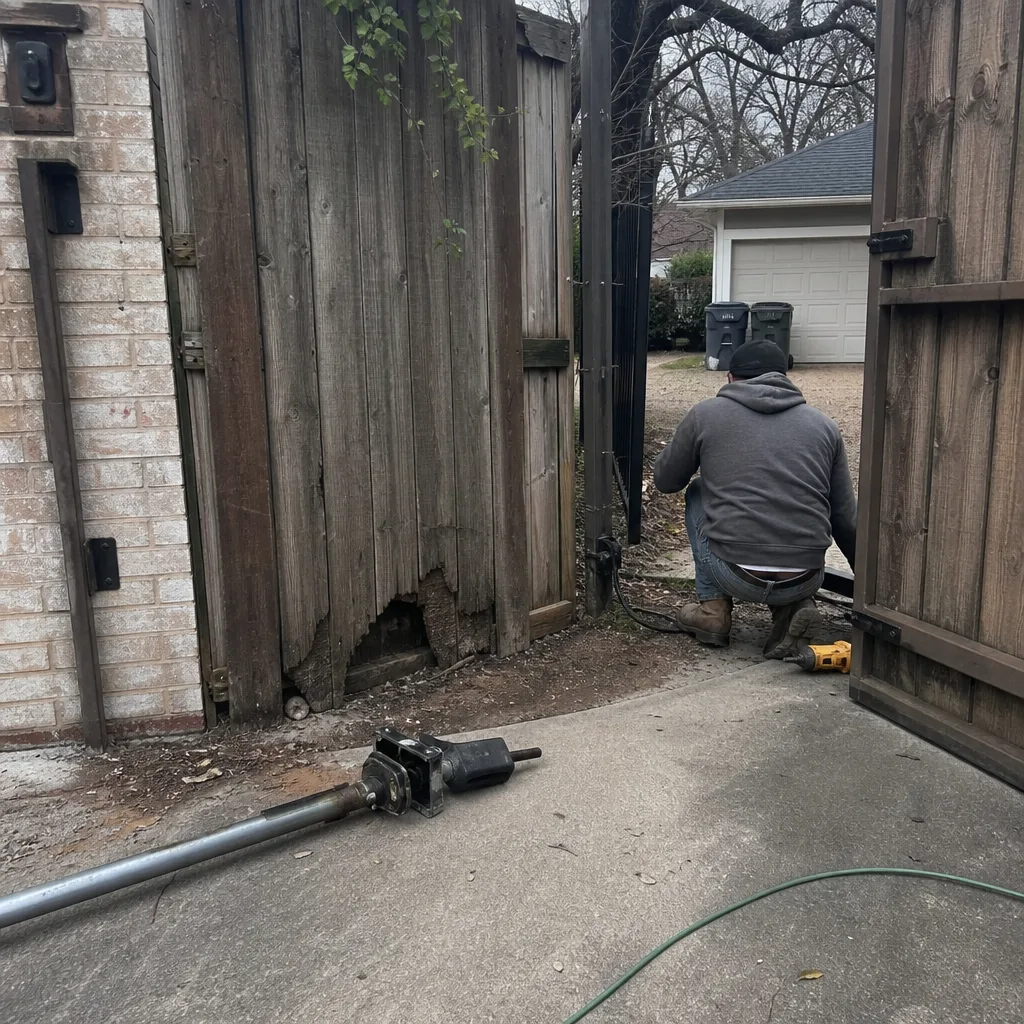 Before
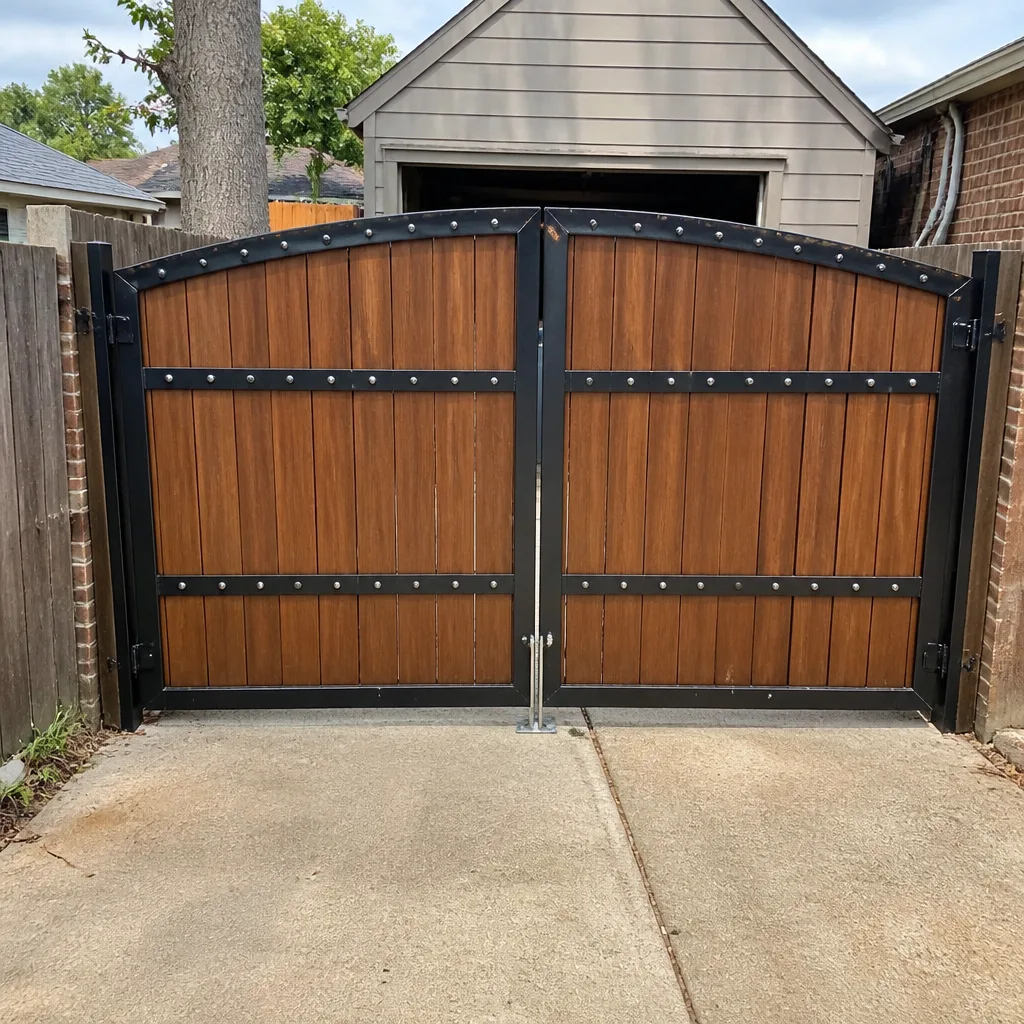 After
After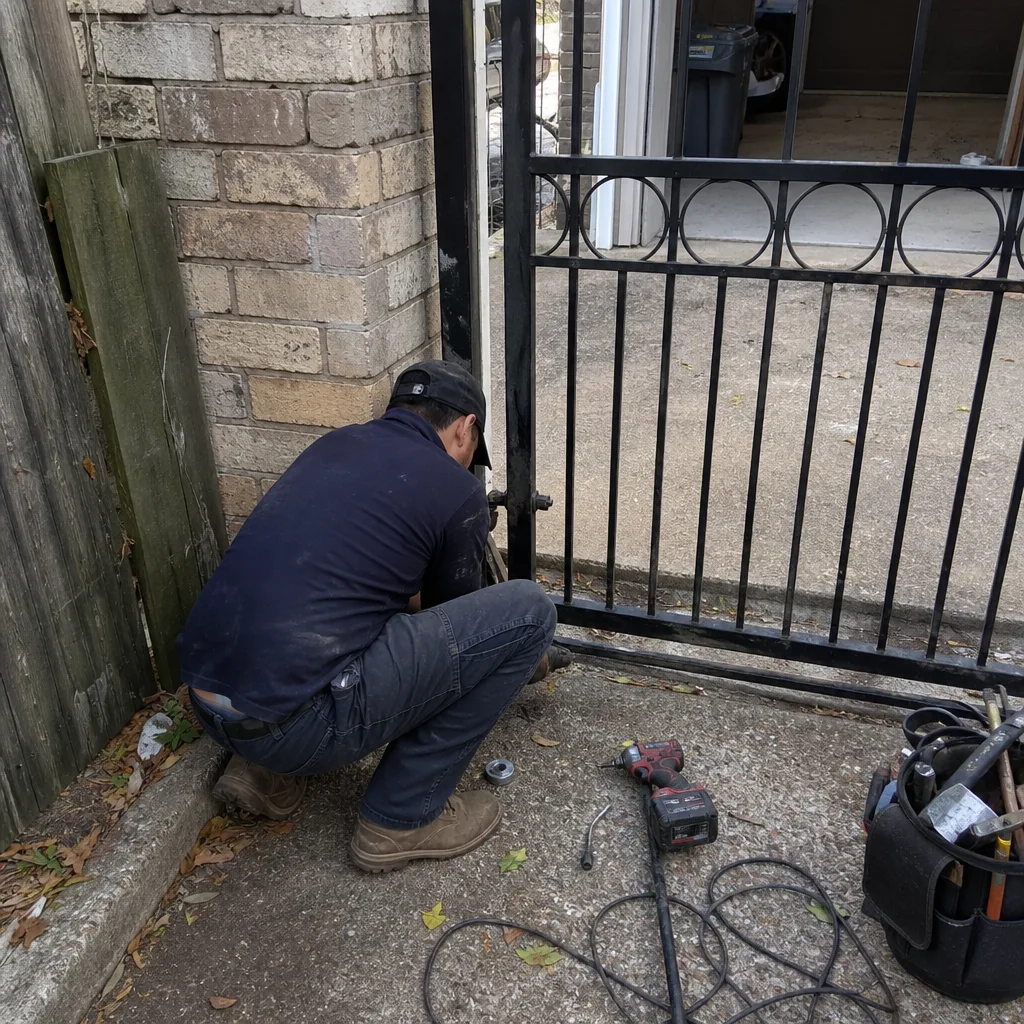 Before
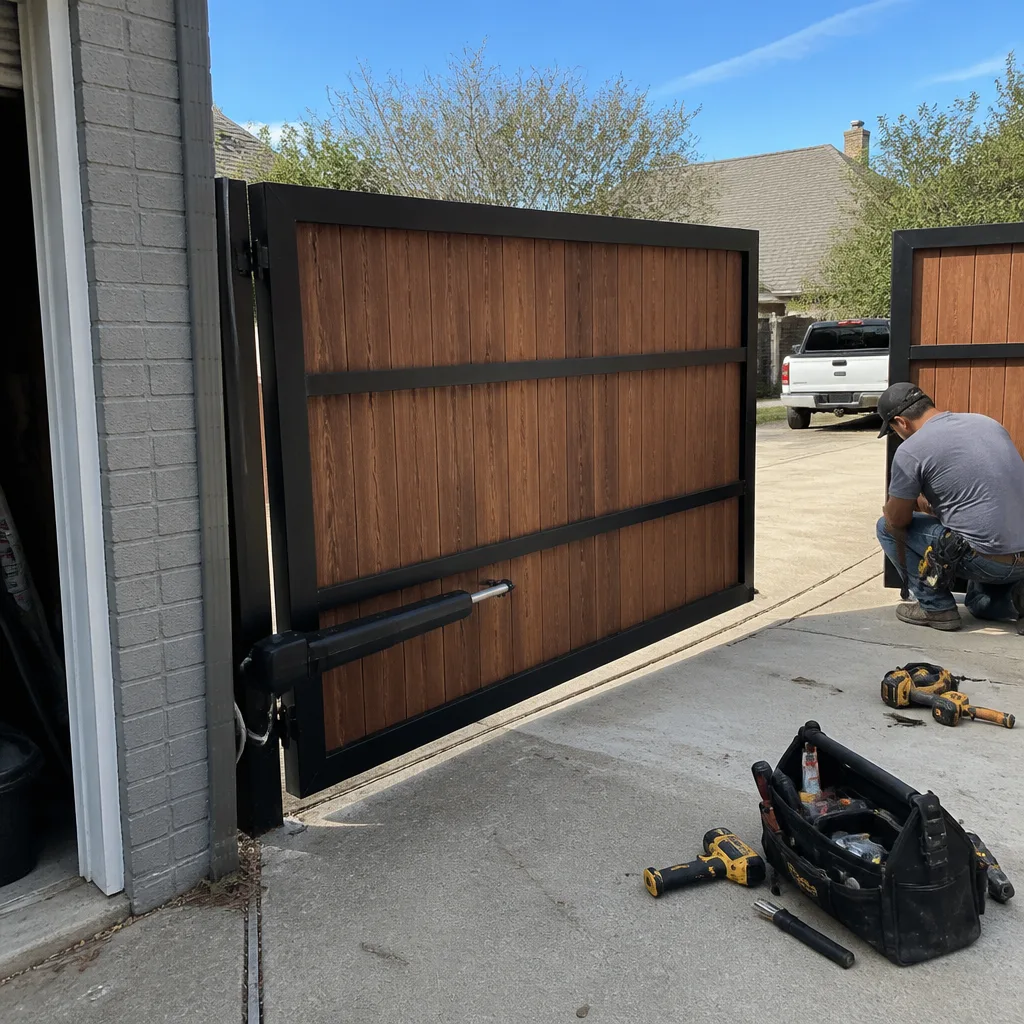 After
AfterGate Repair Warning Signs: A Arlington Homeowner’s Reference Guide
Here’s the thing about gates: they almost never fail all at once. They telegraph trouble for months. A gate that’s hard to close, a motor that hums a little longer than it used to, a scrape mark that wasn’t there last spring. In Arlington, where clay soil shifts with every wet-dry cycle and summer heat bakes the grease out of roller bearings, those little warnings stack up fast. Most homeowners write them off as quirks. By the time the gate refuses to open on a Tuesday morning with both cars still in the driveway, that $200 fix has grown into a $900 emergency. This guide is meant to change that. Read it now, while the gate still works, or check our more guides & resources for related help. Know what to listen for, what to look at, and when to stop using the gate entirely.
Quick Answer
The most common gate repair warning signs in Arlington are a gate that leans or scrapes the driveway when it closes, a motor that hums but moves the gate slowly or not at all, squealing or grinding sounds from the hinge side, and rust streaks running down from welds or bolt holes. Any of these means the gate is talking. If the gate leans visibly, reverses on its own, or the motor keeps running after the gate stops, stop using it and call a professional for Gate Repair before the post lets go or the opener burns out.
Table of Contents
- The Four Sounds a Failing Gate Makes in Arlington
- Rust, Cracks, and What to Look For on Iron and Steel Gates
- What a Slow Gate Opener Really Means
- Leaning Gate: Post, Hinge, or Operator Arm - Three Causes, Three Fixes
- Safety Warning Signs: Stop Using the Gate Now
- Why Arlington Soil and Weather Eat Gates Faster Than Other Places
- What You Can Check Yourself, and What You Shouldn’t Touch
- Common Mistakes to Avoid
- When to Call a Professional
- Frequently Asked Questions
The Four Sounds a Failing Gate Makes in Arlington
A gate that’s about to fail makes noise long before it stops working. The sounds are specific, and each one points to a different problem. You don’t need any trade knowledge to identify them, just a minute of standing near the gate while it opens and closes. Here are the four we hear described most often when Arlington homeowners call us.
1. The Squeal from the Hinge Side
A high-pitched squeal or shriek when the gate moves almost always comes from the hinges. In Arlington, the dust from dry summers works its way into hingeless bearings and turns the grease into grinding paste. A squeal means metal is rubbing on metal with no lubrication left. It’s the earliest warning a gate gives. Ignored long enough, the hinge pin wears oval, the gate drops a quarter inch, and then it starts dragging on the ground or the latch stops lining up. Fixing a squealing hinge is a ten-minute job. Replacing a worn-out hinge after the damage is done is a two-hour job.
2. The Grind When the Gate Reverses
A grinding sound that happens only when the gate changes direction, not when it’s moving steadily, usually points to the operator arm or the drive mechanism. Something is catching or binding at the end of travel. On BFT and Linear openers common around Arlington, that sound can mean a drive gear is stripping teeth off against a gate that’s grown too heavy from a sagging post or a wheel that’s flat-spotted. The motor keeps pushing, but the gear is losing. Left alone, the gear finishes stripping and the motor spins free while the gate sits still.
3. The Thump at the End of Travel
A thump or bang when the gate reaches fully open or fully closed is not normal. It means the mechanical stops have moved, the limit switches in the opener are set wrong, or the gate itself has shifted enough that it now hits metal on metal where it used to stop cleanly. A thump means impact, and impact is what breaks welds, bends the operator arm, and cracks concrete around the post. Think of it as the gate shaking hands with whatever it hits. Every handshake loosens something.
4. The Click-Click-Click with No Movement
A rapid clicking from the control box when you press the remote or the keypad, but the gate doesn’t move, usually means the capacitor or the start circuit on a swing gate opener. On Viking and Ghost Controls units, a clicking relay with no motion can also mean the power supply is reading low voltage at the board. That’s not a remote battery issue. That’s electrical. It’s a specific warning sign that the opener is getting power but can’t convert it into motion, and it usually happens right before the opener goes dead entirely.
If you hear any of these, don’t wait. The sound is the cheap fix. The silence after the sound stops is the expensive one.
Rust, Cracks, and What to Look For on Iron and Steel Gates in Arlington
Arlington has a lot of ornamental iron gates and tubular steel gates. They look strong, and they usually are. But the visual warnings they give off are easy to misread if you don’t know what separates a cosmetic problem from a structural one. Here’s how to read what the gate is showing you.
Rust Streaks That Matter vs. Rust That Doesn’t
Surface rust on a gate is cosmetic. It’s a brown-orange film that appears evenly across the flat surfaces of the pickets after a few Arlington winters. It’s ugly, and it’s worth treating before it goes deeper, but it doesn’t weaken anything on its own.
Rust that drips in a streak down from a specific point is different. When you see a rust streak starting at a weld joint, a bolt hole, or where two tubes meet and running downward, that’s not the gate rusting. That’s water getting inside the tube and draining out through the tiny gap at the joint. The water is rusting the inside of the tube, which you can’t see, and the streak is the evidence. On ornamental iron gates, rust streaks from the base of a picket where it meets the bottom rail mean the picket’s weld has cracked and water is seeping in. A cracked weld at the base of a picket is a structural failure waiting to happen, because that picket is now a lever.
Hairline Cracks at Weld Points
Look at the bottom corners of the gate frame where the vertical rails attach to the bottom horizontal rail. Look at where the hinge plates are welded to the gate. A hairline crack in a weld looks like a thin dark line, often with a rust stain along it. It’s the gate twisting under its own weight. Gates flex slightly every time they open and close, and the flex concentrates at the joints. A crack at a bottom corner weld means the gate is racking, and the weld will only hold for so long.
The Drag Mark on the Driveway
If you see a scratch or scrape in the concrete where the gate travels, the gate is hanging lower than it was when it was installed. It’s dragging on the ground. That scrape mark is one of the clearest signs in Arlington you’ll find, because driveways here are mostly concrete and the scratch is permanent. A gate that drags is putting the whole weight of the panel onto the opener every cycle. The opener is not designed to push a dragging gate. It will either burn itself out or the hinge side will fail. Usually the hinge side fails first, and the gate drops.
Wobble at the Post Base
Stand at the hinge post and push the gate gently, away from you and toward you, while someone watches the base of the post. If the post shifts in the concrete at the base, even a sixteenth of an inch, that’s a warning sign with a short fuse. A gate post that moves is no longer anchored. The gate’s weight is now working as a lever on the concrete pad, and Arlington clay doesn’t grip concrete the way people assume. The pad will crack, the post will lean, and the gate will drop. All of it. Potentially onto a car or a person.
Fix the panel without the post and you’ll fix it twice. That’s the oldest rule in gate work.
What a Slow Gate Opener Really Means
When a gate opener starts opening slower than it used to, the first thing most people check is the remote batteries. Then the sensor. Then maybe the keypad. And none of those are the problem. A slow gate opener means the opener is working harder. That’s the whole answer. It’s not a sensor issue, not a remote issue, and not bad luck. Here’s what “slow to open” actually indicates on an automatic gate system.
The Opener Is Moving a Gate That Got Heavier
Openers move a specific weight range. When the gate was installed, the opener was matched to the panel. Over years, gates collect weight. The panel picks up moisture inside the tubes if the seams have started to crack. A wheel loses its bearing and stops turning, so now it’s sliding instead of rolling. A wind strut gets filled with mud. The post leans a couple degrees and the gate’s center of gravity shifts. All of that makes the gate heavier to move, and the opener responds by working harder and moving slower. The opener is not the problem. The opener is the symptom. Ignore it and the opener burns out. Then you have two problems.
The Capacitor Is Fading
On swing gate openers and many sliding models, the capacitor is the part that gives the motor its starting punch. Capacitors degrade slowly over time, especially in Arlington heat. A fading capacitor means the motor doesn’t start at full power, so the gate opens slower from a standstill but may move normally once it’s going. It’s a five-minute part swap. But if it’s not caught before the capacitor dies entirely, the motor tries to start with no assist and burns itself out. That’s a full opener replacement for what was a $30 part.
The Limit Switches Are Out of Adjustment
If the gate slows down dramatically right before it reaches the closed position, and then the opener keeps humming for a second or two, that’s usually a limit switch or a force setting issue. The opener thinks the gate is traveling farther than it is, or it’s meeting resistance it was never set to expect. On Ghost Controls and BFT units, a slow final approach can mean the soft-close setting is engaging too early. It can also mean the gate is binding at the latch and the opener is pushing against misalignment. Either way, the opener is telling you something’s off at the end of travel.
Slow to open is never just slow. It’s a resistance reading, and it points somewhere. The question is whether you read it before the opener does any more pushing.
Leaning Gate: Post, Hinge, or Operator Arm - Three Causes, Three Fixes
A gate that leans is the most obvious warning sign there is, and also the most misdiagnosed. People see a leaning gate and assume the post is failing. Sometimes it is. But sometimes the post is solid and the hinges are worn. Sometimes the operator arm is bent and pushing the gate out of line. These are three different causes, three different fixes, and three very different price points. Here’s how to tell which one you’ve got.
Cause 1: The Hinge Post Is Moving
Signs: the post itself is visibly out of plumb, the concrete pad at the base has a new crack or a gap, or the gap between the gate and the post changes as the gate swings. You can check it by standing at the post and watching the base while the gate moves.
A moving post is the most serious of the three. A gate sags in the hinge post, not in the middle, and that is where we start. The fix involves digging out around the post base, re-setting the post in new concrete with a bigger footing, or in some cases replacing the post entirely. On Arlington soil, the footing usually has to go deeper than the original to get below the clay shift zone. This is a structural job, not a hardware job. It costs more, and it should, because it’s the only fix that lasts.
Cause 2: The Hinges Are Worn
Signs: the post is straight, but the gate droops on the latch side and scrapes the ground. The gap at the top hinge is tight but the gap at the bottom hinge opens up when the gate is under load. The gate wiggles up and down if you lift it from the latch side.
Worn hinges are the least expensive of the three. Hinge pins and bearings wear out, the gate drops, and the whole panel sits crooked. The fix is replacing the hinges, sometimes upgrading from a light residential hinge to a heavier ball-bearing hinge that can carry the gate’s actual weight. After the hinges are replaced, the gate typically comes back to level without touching the post at all. This is the fix we do most often in Arlington, because the gate was undersized for the hinge hardware from the start.
Cause 3: The Operator Arm Is Bent or Binding
Signs: the gate leans only when the opener is connected. Disconnect the opener and the gate swings freely and level. The gate also moves jerkily or makes a popping sound when the arm extends and retracts.
A bent operator arm, or an arm that’s binding at one of its pivot points, will torque the gate sideways as it pushes. The gate looks like it’s leaning, but the lean isn’t the gate and it isn’t the post. It’s the arm forcing the panel out of alignment every time it cycles. The fix usually means straightening or replacing the arm section, checking the mounting bracket on the gate, and re-setting the opener’s travel limits so it stops fighting the gate’s natural swing. A bent arm can also bend the gate itself over time, so this one’s worth catching early.
If you’re not sure which of the three you have, call us. We’ll come out and look at it for free inside the county, and you’ll get a straight answer without any guesswork. For more detail on choosing the right pro, see How to Hire a Gate Repair Contractor in Arlington: A Step-by-Step Guide.
Safety Warning Signs: Stop Using the Gate Now
Some warning signs mean “schedule a repair soon.” A few mean “do not use this gate until someone has looked at it.” These are the second kind. No waiting, no “just lift it a little when you open it.” If you see any of the following, shut the gate off if you can, lock it in place if you can’t, and call a professional the same day.
The Gate Reverses on Its Own
If the gate starts closing and then reverses back open without hitting anything, that’s the safety edge or the obstruction sensor falsely triggering. But the phrase “falsely triggering” doesn’t mean it’s harmless. A gate that reverses unpredictably can close on a child, a pet, or a car that’s halfway through. It also means the control board is getting a signal it doesn’t understand, which can worsen into the gate closing when it shouldn’t close at all. Show me the gate closing on its own and I’ll show you where it’s failing. Stop using it.
The Gate Keeps Running After It Stops
If you hear the motor humming for several seconds after the gate has reached the open or closed position, the limit switches are not stopping the motor. The opener is now pushing against a stationary gate. That’s how gears strip, arms bend, and motors overheat. It’s also how gates get stuck in the half-open position with no way to move them manually. Cut power to the opener and call for service. This is not a one-cycle inconvenience. It’s the opener failing to know where the gate is.
The Gate Drops When You Release It
If the gate falls closed or falls open when you release it manually, the counterweight, tension spring, or hinge geometry has failed. On a heavy ornamental iron gate, that panel can weigh 300 pounds or more. A gate in free-fall is not controllable by hand. If it drops and someone is in the swing path, they will not stop it. Lock the gate in place with chain and a padlock until it’s repaired.
The Post Is Loose
If the post moves when you push on it, stop using the gate. A moving post is a structural failure in progress. The gate is now a lever with the post as the fulcrum, and the only question is when the concrete lets go. It will not get better, and it will not wait for a convenient day.
Safety edges, photo eyes, and limit controls are not optional accessories. They are what keep a 400-pound steel gate from becoming a hazard. If any of them are failing, the gate is unsafe to operate. Period. We take that seriously in Arlington, and so should you.
Why Arlington Soil and Weather Eat Gates Faster Than Other Places
Gates in Arlington live a harder life than gates in most of the country. It’s not that the gates are worse. It’s the environment. Two things in particular do the damage: clay soil and summer heat.
Clay Soil and Post Movement
Arlington sits on expansive clay. In the wet season, the clay swells as it absorbs water. In the long dry stretches, it shrinks and cracks. That swelling and shrinking moves everything sitting in it, including concrete footings. A gate post footed in a standard 18-inch hole will shift with the seasons, because 18 inches is above the moisture fluctuation line. The post doesn’t have to move much to lean the gate. A quarter inch at the base is two inches at the top of an eight-foot gate. Over five or ten years, that seasonal movement works the footing loose. That’s why so many gates in Arlington lean toward the downhill side or drift toward the driveway, regardless of how well they were built. It’s the ground moving under the post. A proper footing for a heavy gate in this area has to go deeper than standard, below the shrink-swell zone, or the post will move eventually.
Heat Load on Everything That Moves
Arlington summers bake the lubrication out of hinges, wheel bearings, and operator arms. Grease that would last a year in a cooler climate dries out in a season here. Bearings run dry, metal-to-metal contact starts, and the wear accelerates. The same heat stresses capacitor packs in opener boards. A capacitor that runs hot every day degrades its internal insulation, and a degraded capacitor means a hard-starting or dead motor. We see a spike in opener failures every August in Arlington, not because openers are failing early, but because the cumulative heat load finally catches up. For a full maintenance calendar, see Seasonal Gate Repair Care for Arlington: Year-Round Homeowner’s Guide.
Dust and Grit
Dry conditions mean dust. Fine Arlington dust settles on gate tracks, into roller carriages, and into limit switch housings. A sliding gate that lives on a limestone driveway picks up grit on the rollers, and the grit wears flats into the wheel surface. A flat-spotted roller doesn’t turn, it slides, and a sliding wheel doubles the drag on the opener. For sliding gates, keeping the track and rollers clean is more than tidiness. It’s load management for the motor.
What You Can Check Yourself, and What You Shouldn’t Touch
There’s a real line between what a homeowner can safely inspect and what should be left to someone who does this every day. That line mostly comes down to stored energy and pinch points. Here’s a clear breakdown.
Safe to Check Yourself
- Listen. Stand near the gate and open it a few times. Note any of the four sounds from the section above. You’re not fixing anything. You’re gathering information.
- Look at the welds. Run your eyes along every joint where two pieces of metal meet. Look for hairline cracks, rust streaks, or fresh metal showing through old paint.
- Watch the post base. Push the gate gently and watch where the post meets the concrete. If anything moves, note it.
- Check the concrete near the gate path. A new scrape mark or crack in the driveway tells you the gate is dragging or the post is shifting.
- Test the release. Most openers have a manual release lever or key. Pulling it disconnects the opener so the gate swings or slides by hand. Do it slowly, with the gate empty of people and cars, and see if the gate moves freely or drags. This tells you whether the problem is the gate or the opener.
Leave These Alone
- Torsion springs on slide gates. These are under enough tension to cause serious injury if they let go while someone is in the path. Do not adjust, remove, or “just tighten” a torsion spring. Call a professional.
- The control board wiring. The board inside an opener handles line voltage in some models and low-voltage control wiring in all of them. A loose wire shorted against the wrong terminal destroys the board in a second. Leave the cover on.
- Any hinge replacement on a heavy gate. Driving out a hinge pin while the gate is still hung risks the gate dropping off the post because once the top hinge is out, the bottom hinge is carrying the entire panel weight alone. That is not a one-person job, and it is not a two-person job unless those two people have done it before.
- Limit switch adjustment on a gate that misbehaves. The limit switches control where the gate stops. Getting it wrong means the gate travels too far, runs into its end stops at speed, or fails to close fully. It’s tempting to turn the little dial. It’s also the fastest way to turn a minor issue into a broken opener.
The rule of thumb: if it’s storing energy or carrying the weight of the gate, step back. It’s not about whether you’re handy. It’s about whether the thing will hurt you if the part you’re touching lets go. High-tension springs, cables under load, and a heavy hanging panel all qualify. We’ve seen the aftermath of a torsion spring that let go in someone’s hand, and it wasn’t a phone call we want to take again. Let a trained professional handle it.
Common Mistakes to Avoid
- Greasing everything without checking anything. Spraying lubricant on a gate that’s already damaged just makes the next failure quieter. A squealing hinge that gets greased without checking for wear still has the wear. It just stops complaining until it lets go.
- Replacing the opener before the gate. A slow or dead opener is usually a symptom of a gate that’s gotten heavy. If you replace the opener without fixing the gate, the new opener works hard from day one and fails again in a few years. We see this constantly in Arlington, and it’s the most expensive mistake on this list.
- Buying a new gate when the old one is repairable. Ornamental iron gates from sixty years ago are often better built than what you can buy off the shelf today. A cracked weld is a repair. A bent picket is a repair. Hal has welded on-site since 2001, and a lot of “replacement” jobs should never have been replacements. If a company’s first answer is “we can sell you a new gate,” get a second opinion.
- Ignoring a gate that opens slowly all winter. In Arlington, the ground doesn’t freeze the way it does up north, so a gate that moves slower in January isn’t fighting ice. It’s fighting resistance. Cold weather slows grease, but it doesn’t slow a healthy gate enough to notice.
- Adjusting the close force setting to “fix” a dragging gate. Turning up the opener’s force setting to push through the drag is like taking painkillers for a broken arm. The opener works harder, the gate keeps dragging, and you’re just wearing out equipment faster. The drag is the problem. Fix the drag.
- Watching the gate and assuming the post is fine. A gate sags in the hinge post, not in the middle. If you only look at the gate, you miss the cause. Look at where the post meets the ground. That’s where the story starts.
- Waiting for the gate to stop working entirely before calling. By the time a gate won’t open, whatever was failing has now broken. That turns a repair into a replacement with distressing regularity. The cheapest gate repair is the one done before the failure is complete.
When to Call a Professional
Call a professional the day you notice any of the four sounds, the drag mark, a post that moves, or a gate that opens slower than it did six months ago. That sounds aggressive, and it is. Every one of those signs is the gate telling you something specific. None of them self-correct. Call the same day if you see a safety warning sign, a reversing gate, a motor that keeps running, a gate that drops, or a loose post. Do not use the gate until it’s been looked at. Gatewood Fence & Gate offers free estimates in Arlington. Call (817) 241-4067 and a real person answers. We’ll come out, look at the gate, and tell you what it needs. And if you already got a written estimate from someone else, bring it. Hal will give you a free second opinion, and if he can fix it for the same or less, he’ll tell you that too. The price gets quoted and agreed before any work starts. That’s how it’s been done since 2001.
Frequently Asked Questions
Gate repair in Arlington typically runs $180 to $340 for common jobs like hinge replacement, limit switch adjustment, roller work, or a capacitor swap. Larger structural repairs like re-setting a hinge post or replacing a bent operator arm run $600 to $1,400 depending on the size of the gate and the condition of the concrete. We quote the job up front, in writing, and the price doesn’t change at the door. Call (817) 241-4067 for an exact quote; estimates are free inside the county. We also knock $40 off any repair over $200.
In most cases, yes. We keep repair work on the schedule daily, and a live person answers the phone 24/7 at (817) 241-4067. If the gate is down, stuck open, or unsafe, we treat it as an emergency and get someone there the same day. If it’s a maintenance item, we’ll schedule a time window that we actually keep, with no trip charge inside the county.
Disconnect the opener using the manual release and push the gate by hand. If it moves freely and swings or slides without dragging, the opener is the likely issue. If the gate is hard to move by hand, scrapes, or leans, the gate itself or the hinge post is the problem. We walk through this check on the phone in about two minutes, because it changes what we bring on the truck and it saves you a second visit.
We service nine major brands, including LiftMaster, FAAC, BFT, Linear, Viking, Ghost Controls, DoorKing, Elite, and Mighty Mule. We carry common parts for all of them on our trucks, and if your opener is a brand not on that list, we’ll still diagnose it honestly. The opener matters less than the gate it’s attached to.
Yes. A full gate installation includes the panel, the hinges, the footing work, the electrical run, the opener, photo eyes or safety edges, and the final adjustment so the gate stops where it should. Everything is priced up front as one number, not a base price with add-ons. For free estimates and a written quote on a new gate, call (817) 241-4067. Seniors and veterans always get 10% off our installation work.
Surface rust on the flat faces of the pickets is usually cosmetic and the gate remains structurally sound. Rust streaking from welds, bolt holes, or tube joints means water is inside the frame, and that rust is structural. It weakens the welds from the inside out. If you see streaking rust where two pieces connect, have it looked at before the weld lets go. On ornamental iron gates in Arlington, streaking rust at the picket bases is the most common pre-failure warning we see.
If the frame is sound and the post is solid, repair it. We repair gates other companies want to replace, because a well-built old gate with new hinges, fresh welds, and a properly set post will outlast most new panels. If the frame is rusted through in multiple places or the post footing has failed completely, replacement starts to make more sense. We’ll tell you straight, and we’ll show you why we made the call we made. You’ll see the same face on the day of the job that you saw on the estimate.
The Bottom Line
Your gate has been telling you something for months. The squeal, the scrape mark, the slow open, the lean. None of it is random. Each warning sign points at a specific part of the system: a hinge, a post, an opener, a weld. The sequence is predictable, and the price of the repair climbs every week you ignore it. In Arlington, where the clay moves and the heat ages everything faster, reading those warnings is not a hobby. It’s the difference between a $200 hinge job and a $900 post replacement. If you’ve noticed any of what’s in this guide, or if you’re not sure what you’re hearing, call us. We’ll look at it for free, tell you what it needs, and fix it right. The name is on the shop, and the shop is down the road.
Written by Hal Gatewood, Owner at Gatewood Fence & Gate, serving Arlington since 2001.